
Asgaard Metals

In Frederiksværk, “metal fatigue” is no longer a thing.
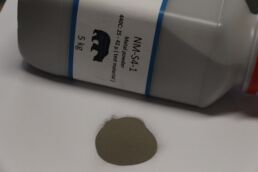
The company Asgaard Metals collects machine and steel parts that would otherwise have been sent abroad as scrap, and recycles them into metal powder for Additive Manufacturing (AM) and industrial 3D printing. The company is a sister company of Nordisk Staal and supports a simple, tailored and circular approach, where customers can hand in their scrap and have it remelted, so they can get it back either as a steel billet, as a powder for 3D printing—or both.
“Today, it is a challenge to reuse worn metal parts from industry. But now companies can deliver their scrap steel to us, and then they get new material back in the same quantity as they delivered. We can offer identical solid steel and powder produced in the same process. As far as I know, right now we are the only ones in the world who can do that,” says Niels Appel, CEO of Asgaard Metals.
In this way, Asgaard Metals is revolutionising the industry with a material that is far more sustainable—and the company has also obtained concrete documentation that it produces metal powder sustainably.
“Through DTU, we have had a life cycle assessment (LCA) carried out on our powder for 3D printing. It shows that the powder has a reduced CO2 footprint of as much as 61% compared with conventionally produced metal powder,” says Niels Appel, emphasising that the company also uses only green energy in production.
Results from programmes with Dansk AM Hub
- A reduced CO2 footprint of as much as 61% compared with conventionally produced metal powder,
- More sustainable
- Service life is extended by 30–50% compared with tools produced using conventionally produced steel.
- New opportunities to expand the market
Stronger and more durable
Asgaard Metals’ metal powder has unique properties in terms of strength and durability. These special properties are achieved due to the spray forming technology (Spray Forming) used by the company. Metal powder production takes place alongside the production of steel billets. Both powder and steel are particularly well suited for producing tools for, for example, injection moulding.
Asgaard Metals has found a niche with spray forming technology. In traditional production of steel components, steel is melted in a “ladle” and processed in a mould. When spray forming is used, molten steel is “sprayed” into open air, thereby creating a cylindrical billet. In this process, sparks of steel particles fly out. These are the particles that are collected and converted into powder for 3D printing.
Niels Appel elaborates on what this special manufacturing method means:
“Because of the Spray Forming technology, the material achieves properties that are not possible with traditional manufacturing. We achieve hardness levels that you cannot otherwise obtain. A positive effect is that service life is extended by 30–50% compared with tools produced using conventionally produced steel.”
Is your production setup a limitation—or a strength?
And are there new opportunities?
The Danish AM ecosystem was activated during the development phase
Asgaard Metals originated from Nordisk Staal, which in 2018 began exploring the possibilities of using surplus metal powder from production for AM. This happened when the USA, one of the largest buyers of steel billets, imposed a 25% tariff on foreign steel, which led to a temporary halt in production.
The Managing Director of Nordisk Staal, Jan Sørensen, contacted Dansk AM Hub as one of the first. Dansk AM Hub helped facilitate contact with particularly international players in the AM ecosystem and carried out a market study of the opportunities for the metal powder.
“Dansk AM Hub’s efforts were an important contribution for us at an important time. Both the contacts with the major foreign printer companies and the overall market study were important contributions to our decision to establish Asgaard Metals and invest in sustainable metal printing powder produced in Denmark,” explains Jan Sørensen.
About the company
Asgaard Metals
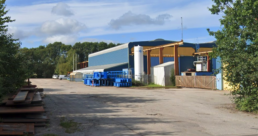
Industrivej 25, 3300 Frederiksværk
Number of employees: 4
Asgaard Metals is a Danish metal recycling company that produces high-quality tool steel and metal powder for 3D printing.
DTU and Force Technology have been essential partners from the outset in testing and developing the metal powder. Asgaard Metals also continues to collaborate with DTU and FORCE Technology to test more of their powders, patent their technology and, not least, find a number of partners interested in having their steel scrap remelted into powder. This process has been initiated with support from the Innovation Fund in a project called DECOR.
Asgaard Metals is launching in the Danish market and will expand—first to the European market and then to the American market. Scrap steel should not be transported over long distances. The vision is to enter into joint venture companies where production facilities are established in different countries. Establishing multiple factories will also strengthen Asgaard Metals’ guarantee of security of supply for its customers.