
MDT A/S
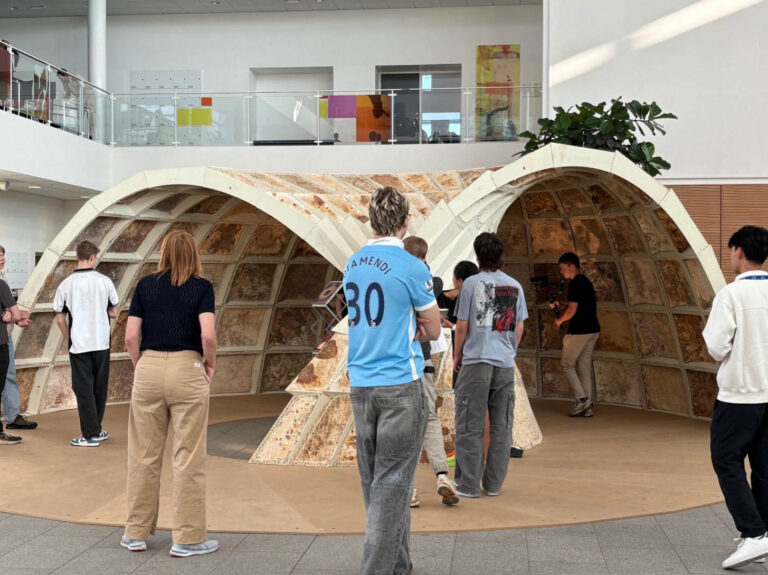
Meet Apex Wall – a 1:1 prototype of a wall
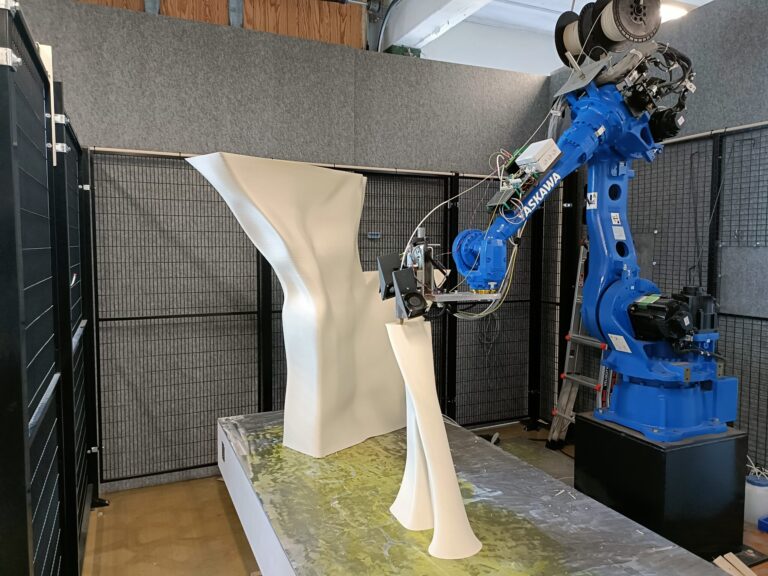
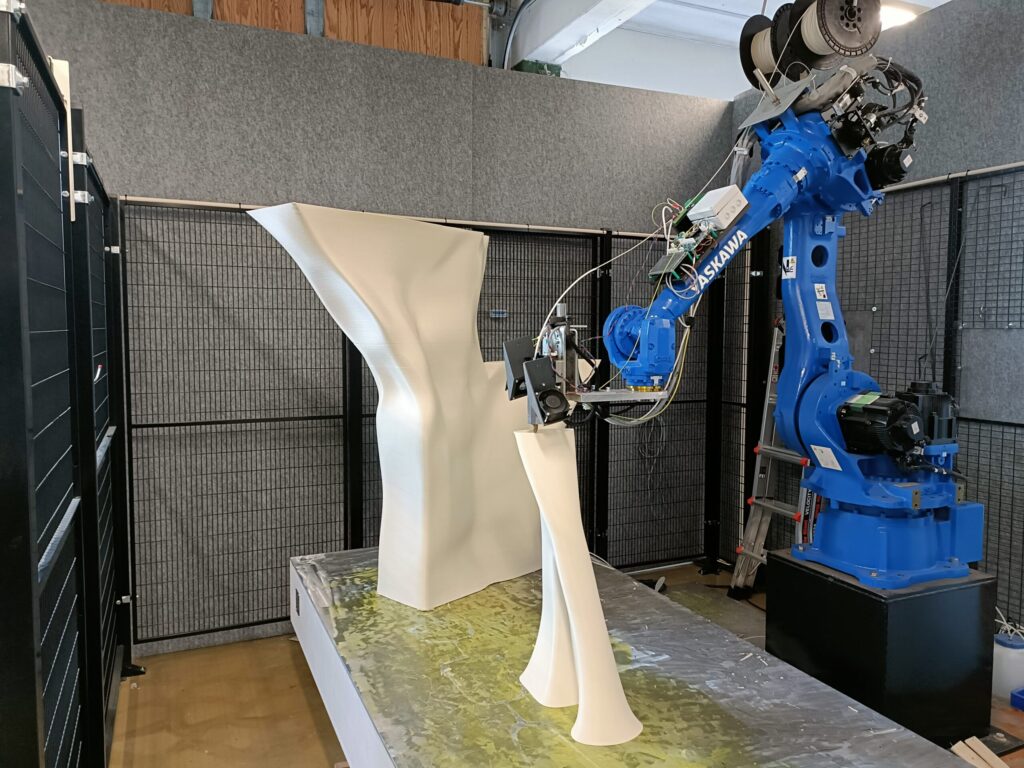
Apex Wall was designed and 3D-printed in collaboration with MDT Flexible Products from Kolding and is a remarkable example of how topology optimisation can revolutionise the construction of 3D-printed, load-bearing elements. By leveraging modern 3D software and technology, it has been possible to significantly reduce material consumption without compromising the structure’s strength and load-bearing capacity.
Design and printing process
Topology optimisation is a design method that identifies and removes unnecessary material from a structure that does not contribute to carrying loads. By applying this method to Apex Wall-a wall 4 metres long, 3 metres high and 30 cm thick-it was possible to reduce material by up to 80% without compromising its load-bearing capacity. The result is an extremely lightweight structure that can still withstand the applied loads, and which is only possible to produce with 3D printing technology.
As a result of the design method, different iterations of the wall were generated, with the software calculating where forces run through the structure and where the material is not under load. Subsequently, the computer gradually removed unnecessary material from the structure-that is, material that does not carry any load in the construction. Using advanced algorithms and analyses, the software precisely identified the areas where the material would not contribute to load resistance. This resulted in a unique and complex geometric pattern containing only the absolutely necessary material to support the load.
Facts about Apex Wall
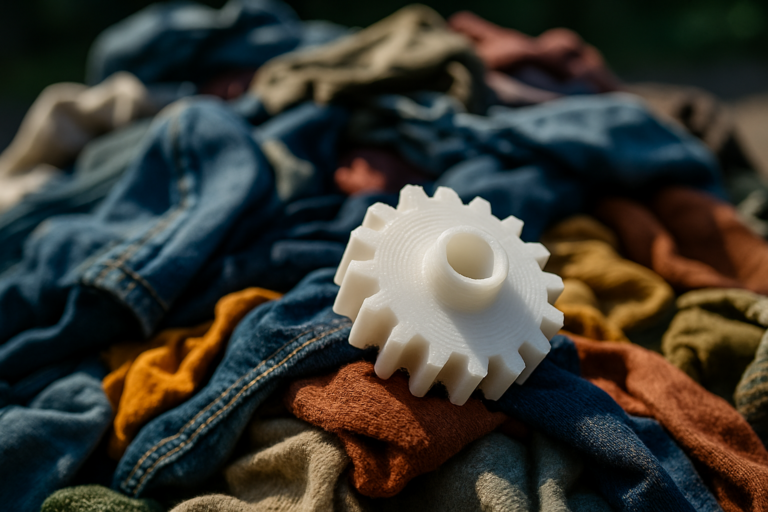
- Material: Recycled PLA matte – eggshell
- Weight: 35 kg
- Size: 4x3x0.3 metres
- Total print time: 144 hours
- 3D printer: Yaskawa 6-axis robot (max print size: 3x2x1.8 metres)
- Slicer software: Ai-Build
- 3D topology software: Autodesk Fusion & Apex Generative Design
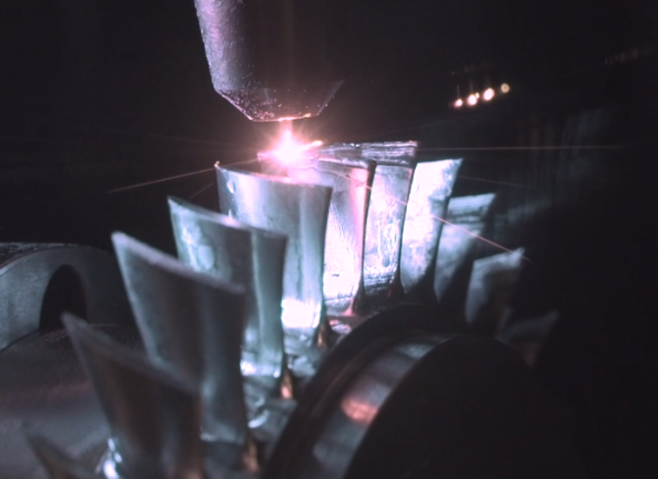
- Apex Wall is printed in recycled plastic as a showcase of a 1:1 wall, but its design and strength are calculated to withstand loads of almost two tonnes if it is 3D-printed in 2.5 mm thick stainless steel using a welding robot.
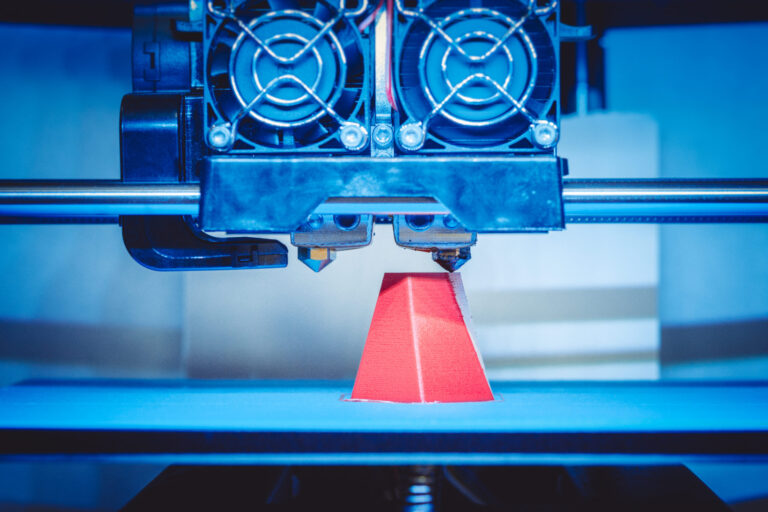
Finally, a digital model is generated that can be 3D-printed in, for example, concrete, metal or recycled plastic. The only thing the software needs to know is the strength of the chosen material so this can be accounted for in the calculations. After the design phase, Apex Wall was therefore 3D-printed using advanced 3D printing technology, and after 144 hours of printing, the wall stood at full size.
Compared with this process, traditional manufacturing methods would have struggled to produce the complex geometry and lightweight design achieved. In addition, the amount of waste material would be significantly higher than with this production method. However, 3D printing technology also made it possible to manufacture the wall without limitations.
How we developed Apex Wall
1: The maximum size of the structure is drawn in a CAD system as the basis for the calculation.
2: In optimisation software, loads and constraints are applied, along with the strength of the chosen material, and the safety factor is entered.
3: The optimisation software performs 48 strength calculations, removing the areas with the lowest load between each calculation-this gradually optimises the part more and more.
4: Once the part has been fully optimised, a digital model is exported and transferred to a 3D printer.
5: Finally, the 3D printer builds the part layer by layer from bottom to top.
Is your production setup a limitation-or a strength?
And are there new opportunities?
About the company
MDT A/S
Industrivej 5, 6000 Kolding
Number of employees: 13
MDT A/S specialises in tailored lightweight designs and structures, with a focus on complex, curved geometric forms.
Great potential
Apex Wall demonstrates the potential of topology optimisation and 3D printing technology to reduce material consumption and maximise efficiency in the construction of load-bearing elements. By removing unnecessary material and using only what is needed, raw material consumption can be significantly reduced. This has positive environmental impacts and contributes to more sustainable manufacturing.
In addition, 3D printing technology enables the production of complex geometries that traditional manufacturing methods would struggle to achieve. This opens up innovative design opportunities and structures optimised for their specific purpose. Apex Wall is therefore an example of the lightweight, efficient and more sustainable structures of the future.
I AM MSHRM
MDT has participated in the I AM MSHRM project-a groundbreaking development project that rethinks the construction industry through circular materials and additive manufacturing.Read more about the project here
Is your production setup a limitation-or a strength? And are there new opportunities?
Get input on how hybrid production can support your business strategy.