
Women in 3D Printing
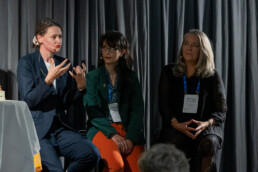
The breakout session titled ‘Women in 3D Printing’ addressed the challenges and opportunities that sustainability offers to additive manufacturing users and innovators. As reflected in the session title, there was also a focus on the experience of being a woman in what is typically a male-dominated industry. Women in 3D Printing (Wi3DP) is a global organisation dedicated to promoting, supporting, and inspiring women who use Additive Manufacturing technologies.
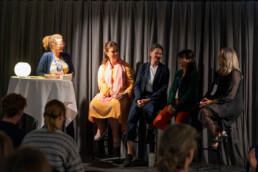
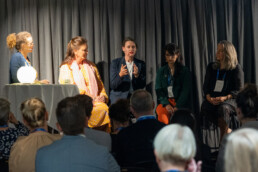
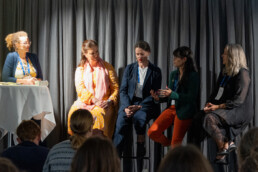
The session was moderated by Nora Touré, Founder and Chair of the Board at Wi3DP. The panellists were:
- Thea Wulff Olesen, Group CEO, Ossiform (formerly Particle3D)
- Stefanie Brickwede, Managing Director, Mobility Goes Additive & Head of AM, Deutsche Bahn
- Mandaná Moshiri, Senior Technology Manager, The LEGO Group & Wi3DP Ambassador Denmark, Women in 3D Printing
- Greta d’Angelo, AM Business Development Lead, Gränges Powder Metallurgy
What does sustainability mean to you?
Nora Touré began by asking what sustainability in AM means to each panellist. Emphasis was placed on maintaining a holistic view of the value chain (not only the printing process itself and saving material through optimised design, but also how the material that makes up the powder is extracted, how the powder is produced, the energy source, how the products perform, and comparisons with other technologies). Other answers centred on the importance of considering how the powder is manufactured, and how a printed component can perform better than a conventionally manufactured one (especially in bio-applications, as Thea Wulff Olesen mentioned).
How does your company approach sustainability?
Nora then asked how each company approaches sustainability. Within the LEGO Group, climate impact and collaboration with partners—also with a strong focus on sustainability—are key factors in any decision on strategy, projects, or investment.
Emphasis was also placed on scouting for more sustainable materials and investigating how to reprocess scrap steel to produce new powder. Research, LCA studies, and how to dispose of the printed part once it reaches the end of its life cycle were also common approaches and challenges mentioned.
Diversity and Inclusion
The discussion focused on the importance of diversity and inclusion, and the activities that each panellist’s company is undertaking to address these issues. Unsurprisingly, the panellists were unanimous in their assessment that these issues are extremely important. Despite largely positive experiences, the gender gap has always been significant, potentially due to stereotypes about “careers for men or for women”, among other factors. In the wider panel discussion, it was noted that when people hire someone new, they tend to look for someone “similar”—for example, men hiring other men—since this can create a more “comfortable” workplace, even if it is less creative and efficient, as diversity can spark innovation and boost an organisation’s development.
A simple, yet potentially quite impactful initiative to improve the gender balance within the industry was proposed: Bring your daughter to work. As mentioned, children are often inspired to work in the same fields as their parents. Planting a seed of inspiration in one’s daughter could therefore go a long way towards breaking down gender barriers.
The art of networking
A question from the audience, mainly addressed to Greta d’Angelo, concerned how to build a network to find new customers when developing a new material/powder. Greta mentioned how difficult this is without an existing network. Across the panel, the view was that it is important to proactively reach out to people, especially at events such as AM Summit.