
Danes 3D-print tourniquets for the wounded in Ukraine
The Ukrainian military has an urgent need for help in the form of tourniquets for both wounded soldiers and civilians – and therefore the Danish 3D-printing community is now coming together to produce and send 3D-printed tourniquets to Ukraine.
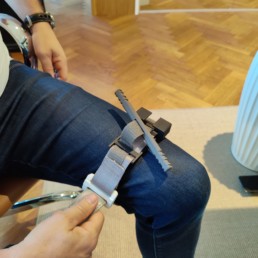
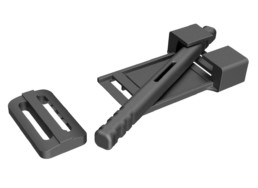
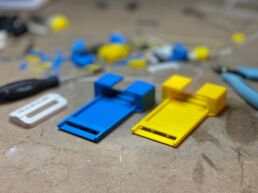
Specifically, it is the handle and buckles that are 3D-printed, and those parts will already be sent to Ukraine next week, where they will be assembled and fitted with fabric so that, for example, they can be used as first-aid equipment.
“The technology offers a flexibility and speed that make it well suited to the situation Ukraine is in, where they lack basic equipment and have difficulty obtaining it. In Denmark, we have an invisible factory with thousands of 3D printers – both private and professional – and we are now putting that factory to work,” says Frank Rosengreen Lorenzen, CEO of Dansk AM Hub, which works to promote the adoption of Additive Manufacturing – also known as industrial 3D printing.
Dansk AM Hub supports the initiative by, among other things, donating material – the filament – for the 3D-printed parts, which is recycled PLA produced in Europe from reprocessed food packaging purchased through Lostboyslab in Malmö, which has tested the design with paramedics in several countries.
The first spools of filament from Dansk AM Hub are already on their way to 3D Verkstan’s Danish office at Herningsholm Erhvervsskole og Gymnasier, from where it will be distributed to Danish volunteer so-called makers – that is, people who gather in groups to make and produce things with a shared desire to solve current challenges.
“The makers community is able to respond extremely quickly to a crisis and redesign things so they fit the specific situation and needs, especially in times of crisis. Through our network of companies and private individuals, we can respond immediately and produce exactly what is needed to save lives,” says Michael Lysgaard, founder of MakersHelp.
Michael Lysgaard expects that as early as next week, thousands of tourniquets can be sent to Ukraine. The association Bevar Ukraine is responsible for logistics and final assembly of the tourniquets, while Center for Industri in Viborg has contributed its knowledge within health and medical 3D printing and assisted with the development and testing of the 3D-printed tourniquets.
This is not the first time the Danish 3D-printing community has come together to help address equipment shortages in crises. When an urgent need for protective equipment arose worldwide during the COVID-19 crisis, they also joined forces to deliver free 3D-printed solutions in the form of masks, visors, and safety equipment.
Read the coverage of the initiative here:
TV 2 News