
BEWI
25% shorter lead time through 3D print design optimisation
Greater design freedom that creates value for the business

In the 3D print design programme Design for Additive Manufacturing (DfAM), the polystyrene manufacturer BEWI succeeded in reducing both the weight, cost, and lead time of some of the tools used in the process—and they also appear to be more efficient.
In the video, Development Manager Ole Krebs from BEWI talks about the design programme and the potential of 3D printing technology.
The case – overview and context
BEWI is a plastics company that produces polystyrene—also known as Styrofoam—in customised solutions. In our 3D print design optimisationprogramme DfAM, the company looked at optimising one of the tools used in the moulding process. The goal was to achieve a printed solution that could provide flexibility—and it succeeded. During the programme, BEWI optimised the tool design and thereby primarily reduced the weight by 74% compared to traditional tooling, while also improving time-to-market by, among other things, cutting lead time by 25%.
Results of the programme with Dansk AM Hub
- Enormous design freedom and flexibility
- 25% shorter lead time
- 53% price reduction compared to traditional tooling
- 74% weight reduction compared to traditional tooling
“It provides enormous flexibility and represents a potential where, by optimising the tool, we can offer more complex and better solutions in terms of both quality and cost, and thereby address the challenges that our machine settings cannot help us with. In addition, we are seeing signs that the optimised component can increase our production capacity and reduce energy consumption in production if we implement it broadly—simply because it is more efficient,” says Ole Krebs, Development Manager at BEWI.
Is your production setup a limitation—or a strength?
And are there new opportunities?
About the company
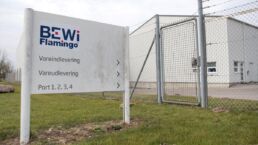
BEWI A/S
Østerled 30, 4300 Holbæk
Number of employees: 52
BEWI is a leading European supplier of packaging, component, and insulation solutions. Through a circular business model, the Group produces raw materials and goods, while used materials are collected and recycled into new products.
Overall, BEWI sees great potential in 3D printing. Today, the company faces production challenges that machine settings cannot solve—but by optimising the tool with 3D printing, BEWI achieves greater design freedom, meaning it can offer a more complex solution.
“It provides enormous flexibility and represents a potential where, by optimising the tool, we can offer more complex and better solutions in terms of both quality and cost, and thereby address the challenges that our machine settings cannot help us with. In addition, we are seeing signs that the optimised component can increase our production capacity and reduce energy consumption in production if we implement it broadly—simply because it is more efficient.”
Ole Krebs
Development Manager, BEWI
Is your production setup a limitation—or a strength? And are there new opportunities?
Get input on how hybrid production can support your business strategy.