
Heatflow
How Heatflow turned energy efficiency into a competitive advantage
A redesign in the engine room generated new revenue

What if a necessary cost could become a new source of revenue? Through a strategic redesign of a cooling system, it was possible to convert excess heat into district heating—while also improving efficiency, security of supply, and climate footprint. The case shows how additive manufacturing can be used as a lever for business development in existing facilities.
The case—overview and context
At Heatflow, we looked where few people look: in the engine room. Where systems run reliably, year after year, without anyone really questioning whether they also create maximum value. The systems did their job—but they did not work strategically.
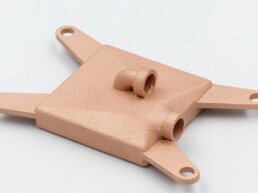
The starting point for our collaboration was a classic design consisting of several assembled parts. It did its job, but left clear potential for improvement. The question was whether it was even possible to design our way out of the problem—and whether energy efficiency could be seen as something other than a necessary cost. The case is interesting because Heatflow succeeded in turning a technical constraint into a strategic asset.
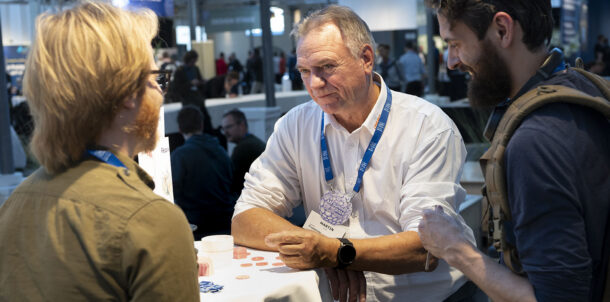
As in many companies, the departments had different success criteria that did not necessarily point in the same direction. This can easily slow the implementation of new technology. By clarifying the departments’ goals and aligning them with the company’s overall vision, it became possible to identify where 3D printing could genuinely create value.
The case shows how relatively simple strategic tools can create a shared direction and ensure that new technology is implemented as part of the business, rather than as an isolated project.
Results from programmes with Dansk AM Hub
- Improved design
- New customers
- Reduced CO2 footprint
Value and impact for the company
Dansk AM Hub helped mature the idea and ensured that the solution did not remain an experiment. Through sparring, access to knowledge, and a relevant network, the technology was placed within a business framework.
In this case, a cooling system was not viewed as a technical constraint, but as a strategic asset. This changed the premise for the investment. Where the focus is traditionally on operational stability and energy consumption, the system now became part of the company’s value creation and sustainability strategy.
Is your production setup a limitation—or a strength?
And are there new opportunities?
From challenge to advantage
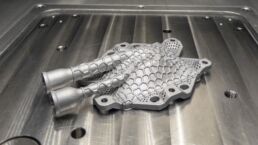
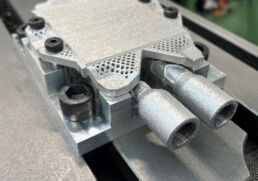
By thinking of the component as a single integrated unit, internal structures in the cooling system could be shaped so that what used to be joints and transitions were printed as one coherent solution.
The result was not only better performance, but also a simpler design with lower material consumption and more efficient heat transfer. Better heat utilisation means lower costs, less energy waste, and a stronger competitive position with customers who demand performance and sustainability.
“We wanted to optimise our systems so we could cool the electronics even better and transfer the excess energy with as little loss as possible. This enables our customers to use more of the excess heat themselves or transfer it to the district heating network. We got a solution where the design works for us—not against us,” says Dennis Naldal Jensen, VP of Technology at Heatflow.
About the company

Heatflow
Hobro, North Jutland
Number of employees: 1–10
Heatflow primarily operates within the manufacture of air-conditioning systems. The company specialises in advanced thermal solutions, cooling, and cooling/ventilation systems for industries such as automotive, EV, telecommunications, and aerospace.
Learning and insights
The case shows how 3D printing can push the boundaries of what is possible—and how innovation in existing infrastructure can open up new business models, so that the technology’s potential was translated into a product that can be scaled.
What does the company say 2 years later?
What has been the greatest value in relation to the process with Dansk AM Hub?
“We have, in a way, got started with the technology and demonstrated something that works. Going from an idea to something that actually works has been important. It has been defining for the 3–4 projects that have followed” – VP of Technology, Dennis Naldal Jensen.
When would it make the most sense to get help from Dansk AM Hub?
“Early in the idea phase, when you need to understand your options in relation to an idea. You may not know all your options, so having a strong strategic partner involved from the start is a help” – VP of Technology, Dennis Naldal Jensen.
“We wanted to optimise our systems so we could cool the electronics even better and transfer the excess energy with as little loss as possible. This enables our customers to use more of the excess heat themselves or transfer it to the district heating network. We got a solution where the design works for us—not against us”

Dennis Naldal Jensen
VP of Technology, Heatflow
Is your production setup a limitation—or a strength? And are there new opportunities?
Get input on how hybrid production can support your business strategy.