
Changing Paradigms
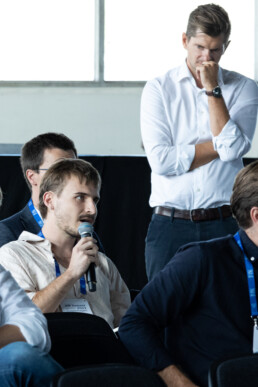
The AM Summit breakout session “3D Printing Sustainable Cities” focused on how additive manufacturing technologies can help build the sustainable cities of the future. 3D printing houses, systems, and components can help create more affordable housing options and even entire residential areas. The session addressed how 3D printing technology is the future of construction, with its multitude of unrealised sustainable and economic opportunities.
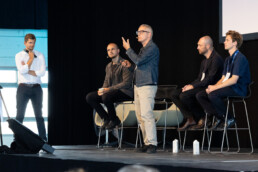
The breakout session was moderated by Frank Rosengreen Lorenzen, CEO, Danish AM Hub. The panellists included:
- Morten Bove, Founder and CEO, WOHN
- Sebastian Aristotelis, Co-Founder and Lead Architect, SAGA Architects & 3DCP Group
- Paul Nicholas, Associate Professor, CITA, The Royal Danish Academy, School of Architecture
- Henry Glogau, Architect, GXN Innovation
The construction sector is one of the most environmentally damaging industries globally, and yet despite this knowledge it has been very slow to respond. New technologies such as additive manufacturing offer major advantages and have the potential to significantly improve the environmental impact of construction and architecture.
Demonstrate how AM contributes to sustainable construction
The panellists agree that it is important to showcase what is possible and demonstrate the potential of AM for sustainable construction. This includes documenting resource streams and value streams. Architects and designers are early adopters, but there is also a movement among other actors in the construction industry, where the approach to construction projects is multidisciplinary by nature.
The shift towards using and developing renewable materials is underway, for example through cooperation between industry and academia. Scaling up 3D printing for construction projects is also in progress. From the perspective of CITA, The Royal Danish Academy, School of Architecture, sustainability is increasingly a focus for students. For example, students grow new AM materials such as mycelium, design their own tooling, and generally use AM technology to move from traditional methods to a more integrated process.
A key point highlighted by the panellists in the move towards a more sustainable construction industry is to build smaller and to support design for disassembly. Changing expectations of buildings and materials is also significant, which leads to the issue of regulation.
Regulation is not adapted to AM and new materials
Demand for sustainable construction is increasing, but regulation is not keeping pace. A key challenge in realising the potential of AM in construction is to drive changes in regulation and standards. New materials need to meet standards, especially regarding moisture and fire safety, and consequently insurance becomes a barrier to using new materials. Attention should therefore be directed towards finding faster and alternative ways for materials to enter the market.