
BenBen

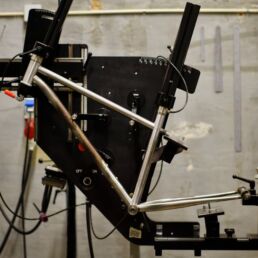
In professional cycling, it is important—indeed, almost crucial—to achieve exactly the right balance between strength and weight. No one knows this better than BenBen Cykler, which manufactures hand-built bicycle frames, and this is why the company chose to take part in the 3D print design optimisation programme, Design for Additive Manufacturing (DfAM), where they explored the possibility of optimising several different custom components using 3D printing.
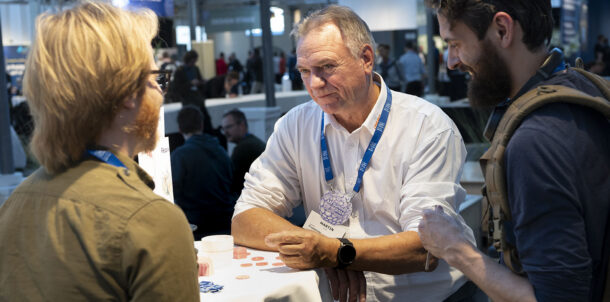
In the video, you can hear co-owner Ari Rosenzweig explain how 3D printing helps BenBen push the bike to the limit.
BenBen Cykler is a small company with a bicycle workshop and shop on Amager, from where they, among other things, produce hand-built bicycle frames in steel and titanium—frames that are built entirely from scratch. BenBen wanted to explore some of the possibilities of metal 3D printing and therefore took part in the design optimisation programme Design for Additive Manufacturing (DfAM).
Results from programmes with Dansk AM Hub
- Enormous design freedom and the ability to make more complex parts
- Lower weight than before
- Higher strength—and a better strength-to-weight ratio
- Financial advantage with smaller order sizes, avoiding large inventories
In the project, BenBen optimised various parts—both entirely new parts and existing parts that have been redesigned. Specifically, this involved a small part for a seatpost and some parts for the frame itself. Here, they succeeded in reducing the weight while maintaining strength, resulting in an optimised strength-to-weight ratio.
Is your production setup a limitation—or a strength?
And are there new opportunities?
About the company
BenBen
Annasvej 2, 2900 Hellerup
Number of employees: 4
BenBen Cykler is a small company with a bicycle workshop and a shop on Amager. Here, they produce, among other things, handmade bicycle frames in steel and titanium.
At the same time, BenBen highlights the enormous design freedom as well as short lead times for custom components in small quantities as major advantages—not to mention the financial benefits, as BenBen could manage with smaller production runs instead of previously having to order thousands of parts for it to make economic sense.
“3D printing is exactly the right method to use for this new part we have made. It is a very, very small part, and if it were to be made using traditional machining on a CNC machine, it would require an extremely large amount of machining—and very detailed, very fine, and very small. And I think it would become quite complicated to make.”
Ari Rosenzweig
Co-owner, BenBen
Is your production setup a limitation—or a strength? And are there new opportunities?
Get input on how hybrid production can support your business strategy.