
Qufora A/S
Development time has been significantly reduced, allowing for more iterations during the development phase


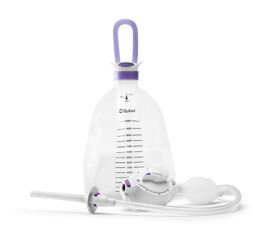
At Qufora, they often say they work with an unresolved taboo. The company develops and sells continence aids such as e.g. urine bags, urinary catheters and transanal irrigation, i.e., flushing the bowel with water to support bowel function. And it is precisely the latter that, through our AM Hybrid project, they have developed using FIM.
Qufora helps the approximately 10% of the population who have problems with bowel movements—either being unable to hold them in or to pass them— and who, as a result, experience limitations in everyday life, both privately, at work and, for example, during sports, because they are afraid of accidents.
The case – overview and context
Product development with FIM technology
Qufora is a product that introduces water into the colon via the anus, and the water stimulates the bowel so that stool is emptied. In collaboration with Krebs&Co, Qufora has further developed its cone system and the cone that is inserted into the rectum and transports the water onward. Today, Qufora sells cones to most European countries in a growing market.
FIM stands for Free Injection Molding.
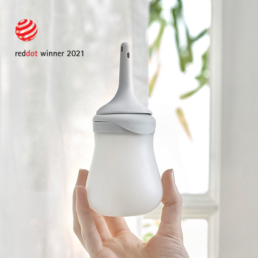
Qufora A/S is a medical device company that was founded in 2006. Since then, Qufora has established itself as a fast-growing and innovative company driven by a relatively low time-to-market—that is, the time from product development to having the product on the market.
Results from programmes with Dansk AM Hub
- Test and demonstrate the product to customers faster
- At least six months saved in the development phase
- Saved around DKK 300,000 through fewer adjustments and fewer trips to China
- Product in thinner and less environmentally impactful material
Qufora says about:
Product: Our task is to create something that is both appealing and addresses people’s reservations and concerns, which is why factors such as material, thickness and colour are important in our product development. With FIM, the product development phase is better, because we can show and test the product with users more quickly and make better decisions from our desk regarding design and usability. For us, FIM has been a major step forward. We have started to incorporate the technology as part of our product development, and in the future it will be a natural part of our product development phase. It has been an incredible experience and, in fact, a minor revolution.
Time: In terms of time, we have probably saved at least six months of project time in the development phase, because we quickly obtained a prototype that we could test with the user and adjust immediately afterwards. It is a great tool, because we get so much information in such a short time. Development time has been significantly reduced, allowing for more iterations during the development phase. We are impressed by the time savings, and the technology would receive top marks if we had it available ourselves.
Is your production setup a limitation—or a strength?
And are there new opportunities?
About the company

Qufora A/S
Gydevang 28-30, 3450 Lillerød
Number of employees: 61
Qufora is a medical device company working to enable people with chronic bowel diseases to live a better life
Qufora says about:
Economy: In addition to the value in time and time-to-market, we have saved around DKK 300,000 through fewer adjustments and fewer trips to China, where we previously carried out product development. At the same time, we use about half the material compared to before. For this product, we pay around DKK 60–70 per kilo, so if we can halve material consumption, that is a lot of money.
Sustainability: The new cone is both thinner and made from a less environmentally impactful material. By optimising the parts, we can help reduce material consumption and waste. In addition, we also save a significant amount of CO2 on transport to and from China. However, the really big leaps will only come once we have a soft, biodegradable material. The technology supports making that leap possible.
Is your production setup a limitation—or a strength? And are there new opportunities?
Get input on how hybrid production can support your business strategy.