
Scan-Speak A/S
During a programme with Dansk AM Hub, Scan-Speak had the opportunity to take on the development of highly detailed prototypes

Scan-Speak is a small company from West Jutland that develops hand-built, high-end loudspeakers for DIY builders and several major companies—both nationally and internationally. To gain a better understanding of the possibilities and potential of 3D printing for loudspeaker components, Scan-Speak chose to take part in the 3D print design programme Design for Additive Manufacturing (DfAM) at Dansk AM Hub.
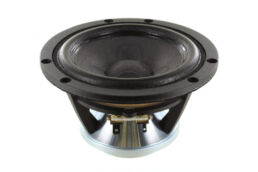
When it comes to the design possibilities for loudspeaker drivers, there are, however, certain limitations. The drivers operate in closed systems, because pressure and impact are essential to producing exactly the right sound from the loudspeakers. Therefore, optimising, for example, weight was not Scan-Speak’s starting point. Instead, there was strong interest in the possibility of 3D-printing high-quality, highly accurate prototypes to ensure an efficient process aimed at optimising and developing the entire production line.
Discovered the high quality of prototypes
Prior to the project, Scan-Speak was already familiar with 3D printing, as the company had previously invested in an older 3D printer. The issue, however, was that it did not always deliver a satisfactory result when it came to prototypes requiring a higher level of detail.
“In the DfAM programme, we started by printing some test units that were actually of very high and precise quality, unlike the prototypes we have been able to print ourselves. This meant we could see what it would look like as a finished product. When we received the printed prototype, we were genuinely positively surprised by both the quality and the appearance,” says Jacob Sand Nielsen, Mechanical Engineer at Scan-Speak.
Results from programmes with Dansk AM Hub
- Material and technology: Nylon and aluminium printed with Laser Powder Bed Fusion, as well as TPU (flexible plastic) printed with Multi Jet Fusion
- Tolerances: Approved
- Surfaces: Approved
- Lead time: 10 working days
Printing prototypes makes excellent sense
With the positive result, Scan-Speak printed several more prototypes, and the great potential of 3D printing technology was unmistakable:
“Among other things, we had a custom-designed sleeve (case, ed.) printed for a customer who was going to have some loudspeakers. Here, we had the opportunity to try printing in a soft plastic material, so this sleeve turned out as it will be in the end, and we also tested printed components in aluminium. It is of great importance that we can test before we start additional tooling—just as it has been a revelation that you can print in a soft material,” Jacob Sand Nielsen explains:
“That is why it has made very good sense to have prototypes printed before you press the big button and set a larger machinery in motion. That way, we can test everything, including both finish and materials.”
Is your production setup a limitation—or a strength?
And are there new opportunities?
About the company
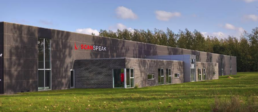
Scan-Speak A/S
HI-Park 387, 7400 Herning
Number of employees: 65
Scan-Speak is a world-leading company in the development and production of high-end transducers for the world’s leading international loudspeaker brands within home audio/video, professional solutions, the automotive aftermarket, and the aerospace segment.
“You just have to take the leap”
For Scan-Speak, participation in the DfAM programme has provided unique sparring on future opportunities within 3D printing, as well as renewed knowledge. For that reason, Scan-Speak’s message is also clear if a company is considering taking part in a future DfAM programme.
“You just have to take the leap! And if you do not have a 3D printer, it is an obvious opportunity to see what the technology can do—especially compared with traditional manufacturing, where you may find that a tool does not fit and something needs to be moved a millimetre—but you cannot just recast something by a millimetre, so you have to start all over again, and that is expensive. So if there is anyone who has not yet got started with 3D printing technology, you should simply try it,” says Jacob Sand Nielsen.
Is your production setup a limitation—or a strength? And are there new opportunities?
Get input on how hybrid production can support your business strategy.