
DAFA A/S

At DAFA, they manufacture products in foam, rubber and plastic materials for construction, industry and wind energy—such as gaskets, sealing tapes, and sound- and vibration-damping solutions. In short, everything in foam and rubber—anything that can dampen, protect and seal. It could be in a speaker fitted in a car door, in a display in a car dashboard, in an oven door, in a kitchen appliance or a power drill, or in a wind turbine that needs to be sealed against rainwater.
DAFA has now also invested in a 3D printer. This follows their participation in Dansk AM Hub and Center For Industri’s 3DP Try Out, where companies can borrow a printer for a month.
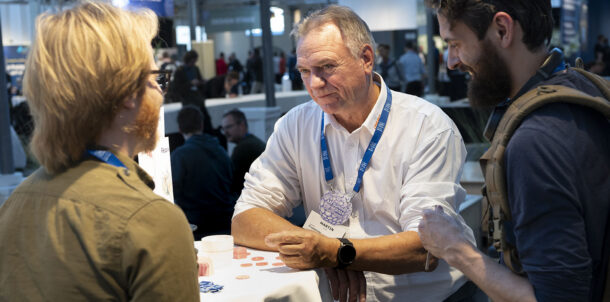
Henrik Pedersen is a Project Manager at DAFA and explains that their decision to explore 3D printing and invest in their own printer is to meet customer needs within the segment known as “moulded gaskets”. This requires specially manufactured tooling, and by 3D printing the design they can verify it immediately.
“Normally, it is a long process from having the product drawn to receiving the first samples from moulded tooling, which typically takes between 6–10 weeks depending on how complex it is. We would very much like to skip that process so we can validate the design by creating a 3D model. If we then print a 3D model, we essentially have the answer immediately, which we can test in our application or send directly to the customer, and we can make adjustments straight away. When the customer is satisfied, we order the tooling. You effectively save a prolonged development process, and you save a lot of tooling,” explains Henrik Pedersen.
This means that when you order the tooling, it is correct the first time, and for our customers that is a major time and cost factor that we reduce.
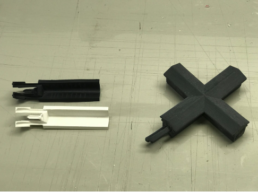
Results from programmes with Dansk AM Hub
- Cut eight weeks off the development process
- Faster to the customer
- Enables printing at the hardness customers request
DAFA took part in 3DP Try Out at the beginning of 2020 and has since invested in its own printer and received orders for some of the items they have 3D printed and sent to customers.
“This means we have cut eight weeks off the development process, and the customer gets verification that this design fits into the construction before we order moulds. So for us, it means we reach the customer faster and have a higher likelihood of winning an order. At the same time, the customer also saves time compared with having to go back and modify the tooling. In our view, this gives them better service than they would have received before, when they had to wait. So we have only positive experience with 3D printing,” says Henrik Pedersen.
Is your production setup a limitation—or a strength?
And are there new opportunities?
An enthusiastic sales team
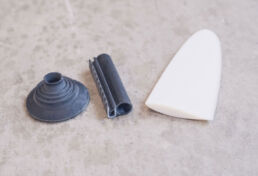
DAFA’s sales team has also welcomed the 3D-printed prototypes, because they can deliver prototypes within one working day.
“If you receive an enquiry, as a salesperson you can prepare by having a model printed before the first sales meeting, so you actually have a model with you that you can show the customer and use as a basis for discussion—and it is always nice to have something in your hands, so there is not far from idea to order. And ultimately, that is one of the reasons we have invested in 3D printing—to generate more revenue,” says Henrik Pedersen, who expects DAFA to use 3D printing both internally and for customer enquiries.
About the company
DAFA A/S
Holmstrupgårdvej 12, 8220 Brabrand
Number of employees: 98
DAFA Building Solutions for the construction sector, focusing on holistic and environmentally friendly solutions that seal and make buildings durable and sustainable.
For DAFA, investing in 3D printing is a strategic initiative intended to increase their development speed. They have invested in a significantly more advanced 3D printer than the one they used in the project. With it, materials can be mixed digitally—that is, a very hard and a very soft material can be blended digitally—so they can decide the hardness they print at, and they can combine a hard and a soft rubber in the same print.
“This makes it possible to print at the hardness customers request, whereas if we had invested in a slightly cheaper technology, we would have had a hard, rubber-like material, but not at all in the soft variants we need. That is why we have chosen to invest in a machine that is a bit more expensive, but is more aligned with the world DAFA is part of—namely rubber and moulded components,” concludes Henrik Pedersen.
Is your production setup a limitation—or a strength? And are there new opportunities?
Get input on how hybrid production can support your business strategy.