

The LEGO Group
LEGO does not play around with production – they build it smarter
When play becomes an innovation strategy

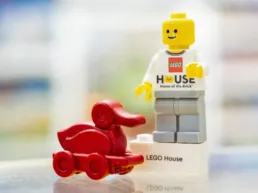
The LEGO Group uses 3D printing technology to experiment with new product forms and engage users in the innovation process. A 3D-printed duck sets the scene for greater flexibility, faster development, and a closer connection with fans of all ages, integrating technological innovation into LEGO’s long-term product strategy. This is not about toys – but about maintaining speed and quality in an extremely complex production setup.
The case – overview and context
Innovation rarely starts with ready-made answers. It starts with questions and curiosity. Just like play. For a brand like The LEGO Group, where creativity, imagination, and play have always been at the core, technological innovation is not just a tool – it is a strategic component of future product development.
Last year, they launched their first 3D-printed element, a replica of their iconic wooden duck. It was sold for a limited period and formed part of a larger pilot project at The LEGO Group, aimed at collecting feedback from fans that can inspire future creations.
In a global market where consumer expectations are rising and flexibility is a competitive parameter, LEGO’s use of AM shows how technology can be integrated into a long-term innovation strategy – not only to optimise production, but to strengthen customer relationships, test new concepts, and increase the value of play as both product and experience. The case shows how additive manufacturing can be a strategic tool – long before production begins.
Results of the programme with Dansk AM Hub
- Greater design possibilities
- Co-creation as a strategic growth driver
- Flexibility in innovation and production
Value and impact for the company
Dansk AM Hub has collaborated with The LEGO Group for many years, contributing inspiration and knowledge on exploring additive manufacturing as an innovation tool – long before the technology was to be scaled in production. The role has been to qualify the dialogue on where and how additive manufacturing creates the most value in an extremely complex and mature manufacturing company.
Through insight into both the technology’s opportunities and limitations, we helped frame experiments that not only tested new product forms, but also new ways of engaging users and collecting feedback. The focus was not on volume, but on learning, speed, and flexibility – and on using 3D printing as a strategic tool in the early innovation phase.
Dansk AM Hub’s role was therefore to support LEGO in using additive manufacturing as part of a long-term innovation strategy, where technology is used to reduce uncertainty, strengthen customer insight, and create a better basis for decision-making before investments become substantial.
Is your production setup a limitation – or a strength?
And are there new opportunities?
From challenge to advantage
At The LEGO Group, 3D printing technology has been used since the 1990s, but this is the first time they have launched a consumer product produced exclusively using Additive Manufacturing. The replica has particularly helped The LEGO Group experiment with moving functions, as the 3D-printed duck has a movable beak.
“We are very excited about the opportunities that additive manufacturing gives us, and we look forward to hearing what our fans say. We will use their feedback to help shape future innovation as we continue to push the boundaries of 3D printing technology,” says Ronen Hadar, Head of The LEGO Group’s Additive Design & Manufacturing team.
In combination with 3D printing, they use injection moulding technology at their factories to produce bricks. This combination means that the bricks can be produced faster, there is greater flexibility, and they can produce more varied units in smaller quantities, giving The LEGO Group the opportunity for increased product development and innovation.
About the company

The LEGO Group
Billund, Southern Jutland
Number of employees: 31,000+ globally
The LEGO Group is a world-leading, family-owned toy company known for the iconic LEGO bricks.
Learning and insights
The case demonstrates how innovation can start long before production, and how technology can be used as a strategic tool for learning, experimentation, and customer involvement. Here, additive manufacturing is not about volume, but about speed, flexibility, and insight.
The key learning is that innovation should not always be measured by short-term ROI. By using new technologies to test ideas, involve customers, and explore new forms of value, companies can reduce risk in later decisions. The case underlines that competitive advantage is often created where you dare to play, experiment, and learn – before the market demands it.
“We are very excited about the opportunities that additive manufacturing gives us, and we look forward to hearing what our fans say. We will use their feedback to help shape future innovation as we continue to push the boundaries of 3D printing technology”

Ronen Hadar
Vice President, Element & Additive Engineering, The LEGO Group
Is your production setup a limitation – or a strength? And are there new opportunities?
Get input on how hybrid production can support your business strategy.