
Job: Senior Innovation Consultant with experience in driving innovation processes from idea to market
Senior Innovation Consultant with experience in driving innovation processes from idea to market
Would you like to help create product innovation and tangible business benefits for Danish companies? Can you drive innovation processes in cross-disciplinary teams and accelerate the development of new products from idea to market? Then you may be our new Innovation Consultant to run the Biobuild Business innovation programme.
Dansk AM Hub works to make Danish companies world-leading in the use of new production technology. We help them develop better products, processes and business models with a lower CO2 footprint, less waste and greater resilience.
Responsibilities of the position:
As a Senior Innovation Consultant, you will be responsible for developing and running a new innovation programme that will accelerate the development of new products, including bio-based components for the construction sector. You will work at the intersection of technology, business and sustainability in close collaboration with companies, researchers and designers—and ensure that new bio-based building solutions become commercially viable.
Your primary tasks will be:
- Project management of Biobuild Business from start-up to implementation and scaling (supported by Realdania)
- Develop and master innovation tools (such as the Business Model Canvas from Strategyzer), processes and methods (such as design thinking, preetotyping, etc.), and be able to bring these together into value-creating approaches from idea to prototype to market.
- Establish and manage collaborations with universities, companies and experts.
- Design and facilitate accelerator programmes and innovation sprints.
- Communicate results through events, publications and networks
- Ensure alignment with related projects
The profile we are looking for:
We imagine that you have 5–7 years of experience driving innovation processes, where you have worked at the intersection of business and technology and have contributed to the development of new business models, the composition of innovation teams, and the design and facilitation of innovation processes. In addition, we expect that you:
- Have solid experience in project management of complex innovation or development projects
- Have worked with innovation, business development or accelerator programmes
- Have insight into, or an interest in, the construction industry, materials technology or sustainable production
- Understand the interplay between technology, design and business
- Have experience facilitating cross-disciplinary collaborations
- Have strong analytical skills and can work in a market- and data-driven way
- Thrive in a dynamic environment with many stakeholders
We offer:
- A key role in an ambitious project with major significance for the green transition of the construction sector
- The opportunity to work with frontrunners in technology, architecture and sustainability
- A strong professional environment at Dansk AM Hub with a high level of innovation
- A high degree of responsibility and influence on the project’s direction and methodology
- A broad network across industry, research and startups
Dansk AM Hub
Dansk AM Hub is a commercial foundation and Danish industry’s innovation partner, helping companies translate production technology, including Additive Manufacturing (AM), into product innovation. We were initiated and developed by Industriens Fond. In addition, we have a number of commercial activities and projects.
BioBuild Business is an innovation programme that develops new bio-based building systems and business models through cross-disciplinary accelerator programmes. The project works with a market-first approach and aims to make sustainable solutions commercially attractive and scalable. The programme brings together companies, researchers and designers around specific challenges and develops solutions from idea to prototype and market.
At Dansk AM Hub, we are a team of 12 employees with offices in Valby, Herning (AM-Lab West) and Frederikssund (AM-Lab East). The position as Innovation Consultant will be based in Valby. We work quickly and competently within a broad network with both national and global reach. We offer a flexible working environment, health insurance, a pension scheme and a lunch scheme.
Is this you we are looking for?
Send your CV and a short note about your motivation to info@am-hub.dk, marked “Innovation Consultant”.
If you have any questions, you are welcome to contact Birgitte Arendsdorf Olsen, Innovation & Project Director, at +45 6162 7165.
Applications are reviewed on an ongoing basis.
Application deadline: 10 May 2026
Start: As soon as possible
We look forward to hearing from you.

Job: Project Manager with a flair for communication
Project Manager with a flair for communication
Would you like to help create product innovation and tangible business benefits for Danish companies? And can you drive projects forward, maintain an overview, and at the same time communicate the good stories along the way? Then you may be our new project manager.
Dansk AM Hub works to make Danish companies world-leading in the use of new production technology. We help them develop better products, processes, and business models with a lower CO2 footprint, less waste, and greater resilience.
Areas of responsibility for the position:
You will be the project manager for cross-cutting innovation and development projects—among others within the training of the skilled workers of the future, construction, and the green transition of industry. You will lead your own projects and contribute to others. At the same time, you will contribute to communication and dissemination across projects.
You will be part of a team working at the intersection of technology, industry, and education. And we succeed together.
Your primary tasks will be:
- Responsible for continuously developing, managing, and contributing to our active projects within, among others, innovation, construction, and resilience.
- Ensure ongoing project follow-up, including monitoring milestones, deliverables, and finances.
- Develop new and innovative projects that involve international and Danish partners and move Danish manufacturing companies in a more sustainable direction.
- Manage project communications across projects, with the opportunity to take an operational role.
- Ensure that project results are communicated and disseminated effectively, so that more companies can benefit from the learnings and experience.
- Ensure synergy and collaboration across the project portfolio.
We imagine that you:
- Have 2–4 years of relevant experience in project management, collaboration with companies, or communication/dissemination.
- Have a relevant education in, for example, project management, business, communication, or similar.
- Work in a structured manner and thrive on keeping track of multiple tasks at the same time.
- Can communicate fluently in Danish and English, and are able to get key messages across.
- Have worked with project communications for stakeholders and the general public, possibly in collaboration with external partners.
- Are strong analytically and can work in a market- and data-driven way.
- Thrive in a dynamic environment with many stakeholders.
It is an advantage if you have prior knowledge of production technology, Danish industry, or innovation—but it is not a requirement.
We offer:
- A key role in a project on skills development for the skilled workers of the future and their competencies
- The opportunity to work with frontrunners in technology, education, and sustainability
- A strong professional environment at Dansk AM Hub with a high level of innovation
- A high degree of responsibility and influence on the project’s direction and methodology
- A broad network across industry, research, and startups
Dansk AM Hub
Dansk AM Hub is a commercial foundation and Danish industry’s innovation partner, helping companies translate production technology, including Additive Manufacturing (AM), into product innovation. We were initiated and developed by the Danish Industry Foundation. In addition, we have a number of commercial activities and projects.
At Dansk AM Hub, we are a team of 12 employees with offices in Valby, Herning (AM-Lab West), and Frederikssund (AM-Lab East). The position as innovation consultant will be based in Valby. We work quickly and competently in a broad network with both national and global reach. We offer a flexible working environment, health insurance, a pension scheme, and a lunch scheme.
Are you the one we are looking for?
Send your CV and a short note about your motivation to info@am-hub.dk, marked “Project Manager”.
If you have any questions, you are welcome to contact Birgitte Arendsdorf Olsen, Innovation & Project Director, at +45 6162 7165.
Applications are reviewed on an ongoing basis.
Application deadline: 10 May 2026
Start: As soon as possible
We look forward to hearing from you.
Danish project aims to make repair a genuine alternative to new production in industry
Danish project aims to make repair a genuine alternative to new production in industry
Today, many Danish manufacturing companies scrap worn components and production equipment, even though parts of them still have value. This costs time, money, and materials—and at the same time increases the climate footprint.
This is what the project Circularity in the Production Hall – Transition your production to circularity aims to challenge. The project examines and demonstrates how hybrid manufacturing can give components and production equipment new life instead of being discarded.
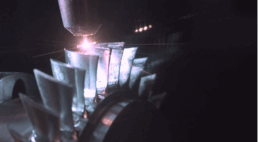
In the project’s first completed test programme, the research and innovation centre DAMRC has shown that it is technically possible to repair worn gears by combining additive and subtractive processes—instead of producing new ones.
From scrap to functional component
In the test, wear was simulated by removing the teeth from a gear. New material was then built up using welding-based additive manufacturing, after which the teeth were machined to the correct shape and tolerances.
The aim is not only to show that repair is possible, but to investigate whether repaired components can function in practice and meet industrial requirements.
Aarhus University has tested the repaired gears and compared their mechanical properties with traditionally manufactured gears. At the same time, Dansk AM Hub has used its CO₂ calculation tool to analyse the climate and resource consumption of the repairs compared with new production.
What does this mean for manufacturing companies?
If repair and remanufacturing can be used more systematically in industry, there is significant potential—especially for small and medium-sized manufacturing companies:
- Less material waste and lower resource consumption
- Shorter lead times for critical components
- Less dependence on new raw materials
- Extended service life of existing equipment
- Potential for cost savings
The project therefore addresses competitiveness, security of supply, and the green transition—without companies necessarily having to invest in entirely new production equipment.
Circularity directly in the production hall
Circularity in the Production Hall aims to investigate how far circular solutions can be implemented directly in existing production environments. The project looks not only at repairing worn parts, but also at handling misproduced items, material savings, and subsequent scaling up to larger components and robot-based production.
The project is carried out by DAMRC, Dansk AM Hub, and Aarhus University with support from the Danish Industry Foundation and runs until 2028. The first test results mark an important step towards making repair and remanufacturing a more integrated part of the industry of the future.
Project facts
Project: Circularity in the Production Hall – Transition your production to circularity
Focus: Hybrid manufacturing, repair, remanufacturing, and circular production
Partners: DAMRC, Dansk AM Hub, Aarhus University, in collaboration with the Danish Industry Foundation
Period: 2025-2028
Dansk AM Hub strengthens its Board with leading AI and product design expert and bids farewell to long-standing member
Dansk AM Hub strengthens its Board with leading AI and product design expert and bids farewell to long-standing member
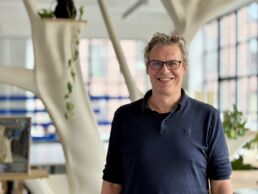
As of March 2026, Dansk AM Hub is updating its Board with the appointment of Janus Juul Rasmussen as a new member. At the same time, Mads Damkjær is stepping down after many years of service, while Poul Skadhede and Jacob Himmelstrup have been reappointed for a new two-year term.
Janus Juul Rasmussen is the founder and engineer behind the companies Component AI and Component 2.0. With a strong technological profile and solid experience in innovation, product development and industrialisation, he brings valuable insight to Dansk AM Hub’s work to accelerate the adoption of new production technology in Danish industry.
In addition to his role in his own companies, Janus Juul Rasmussen is Chair of the Board at MICROLOCK ApS and a Board member of both Component 2.0 A/S and Component AI A/S.
Chair of the Board Poul Skadhede states:
“We are very pleased to welcome Janus to the Board. He represents a strong entrepreneurial spirit combined with deep technical understanding and experience in turning technology into concrete solutions. These are competencies that are absolutely central to Dansk AM Hub’s continued development and ambition to strengthen the competitiveness of Danish industry.”
Janus Juul Rasmussen says about his appointment:
“Dansk AM Hub plays an important role in bringing new production technologies closer to companies. I look forward to contributing my experience in developing and scaling technological solutions and to helping strengthen Denmark’s position in additive manufacturing.”
At the same time, Dansk AM Hub bids farewell to Mads Damkjær, who is now stepping down after seven years on the Board – and previously two years as CEO.
Poul Skadhede states:
“Mads has made a truly outstanding contribution to Dansk AM Hub over many years. He has helped shape the organisation from its early days and has left a significant mark on the development of both strategy and activities. We owe him a great deal of thanks for his commitment and contributions.”
With the extension of Poul Skadhede and Jacob Himmelstrup, continuity in the Board’s work is ensured, along with a continued strong anchoring in Dansk AM Hub’s strategic direction.
The Board of Dansk AM Hub will thereafter consist of:
- Poul Skadhede (Chair), Chair of Odense Maritime Technology
- Jacob Himmelstrup (Vice Chair), CEO, Regaco
- Tim Frank Andersen, Co-founder & Partner, Institute of AI
- Ingrid Reumert, Senior Vice President, Ørsted
- Janus Juul Rasmussen, Founder, Engineer & Inventor, Component AI and Component 2.0
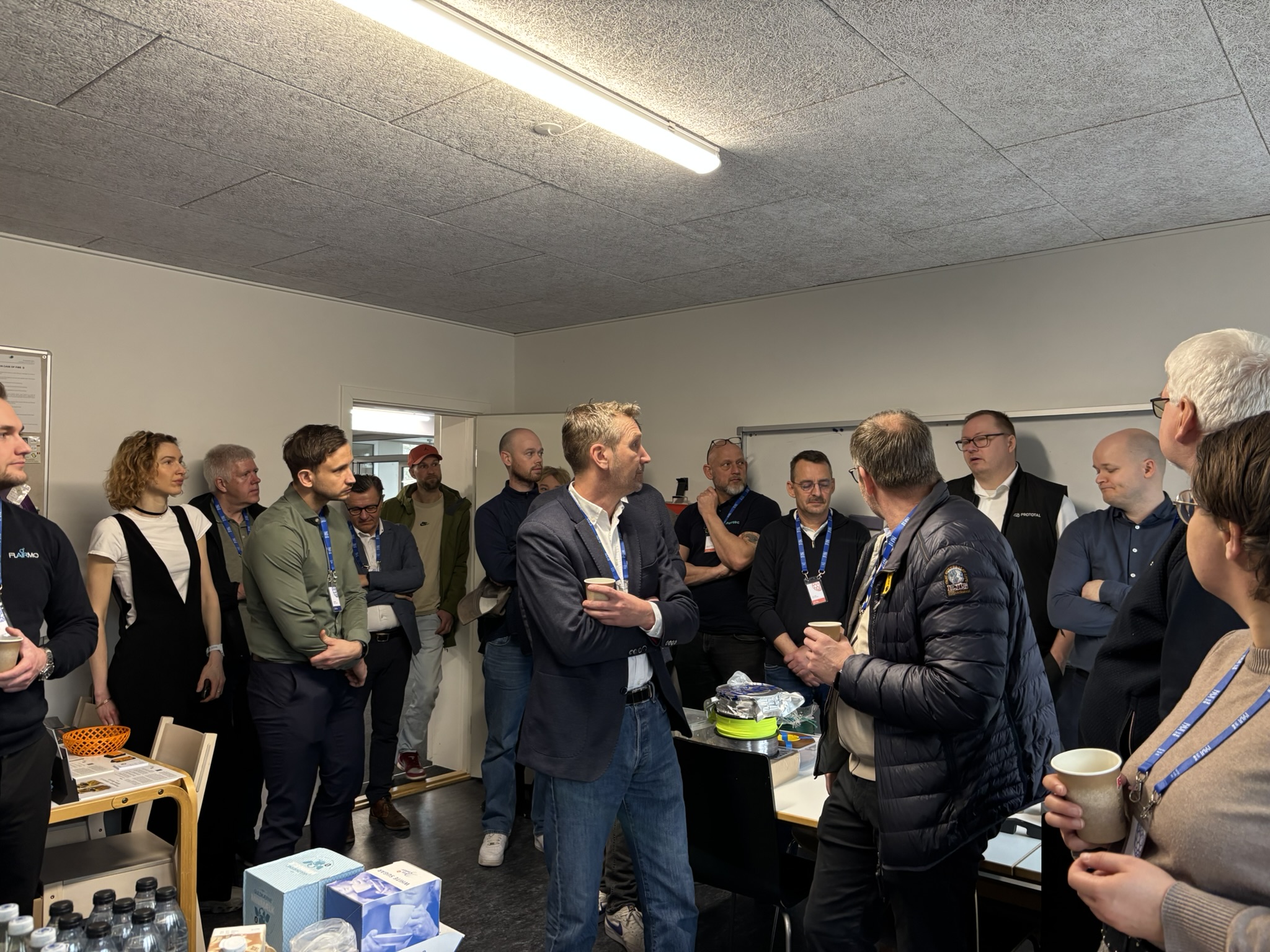
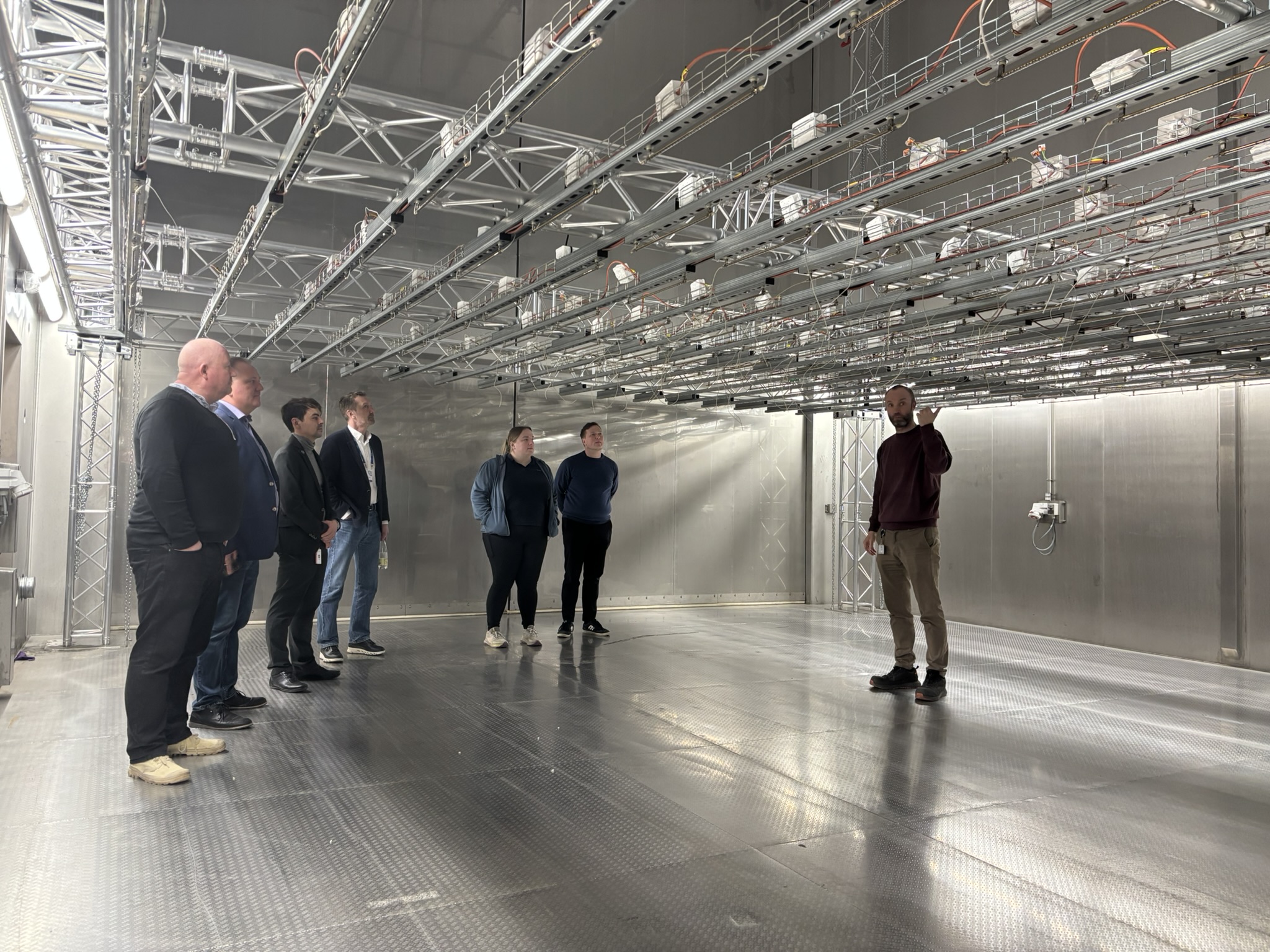
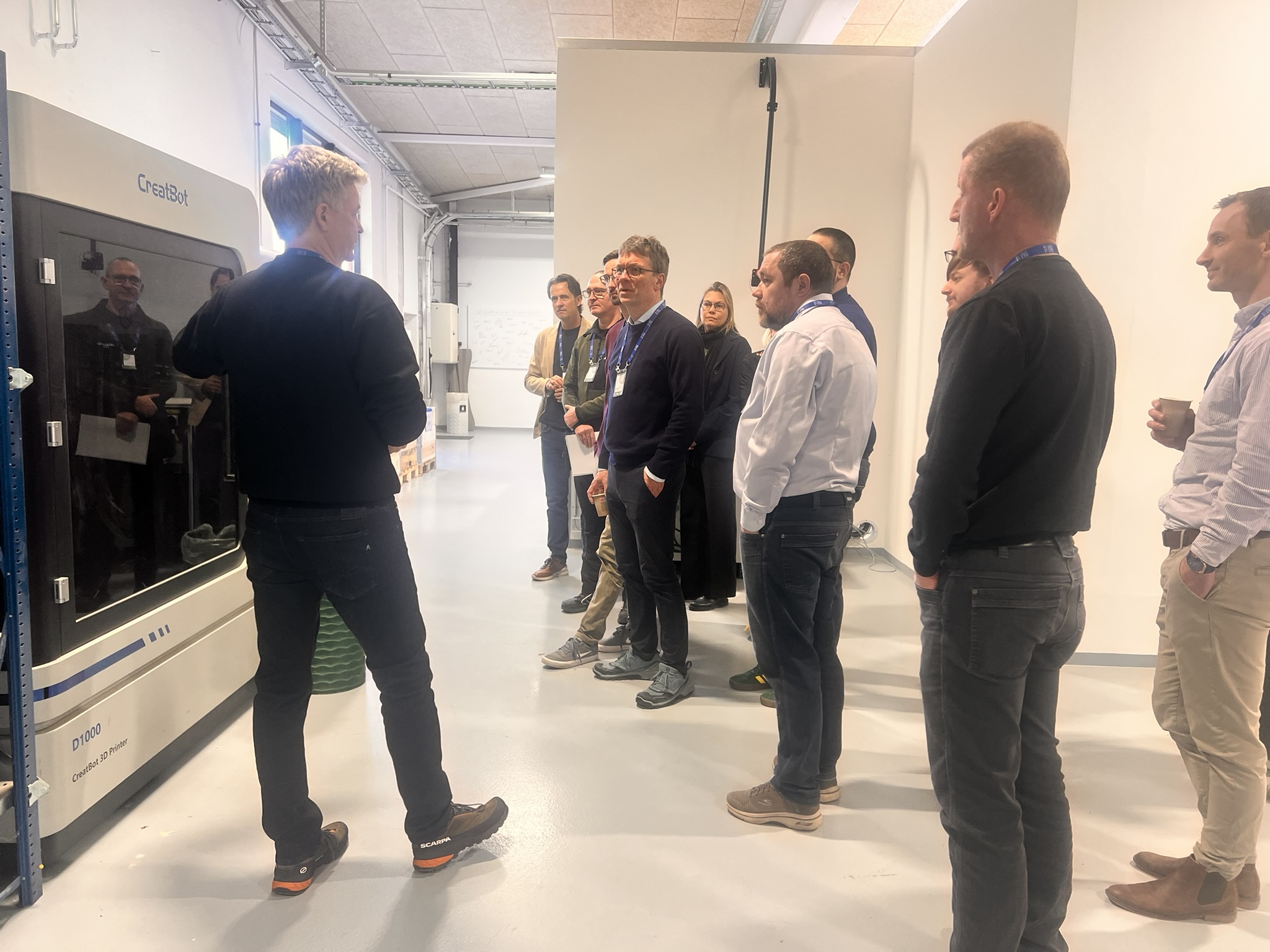
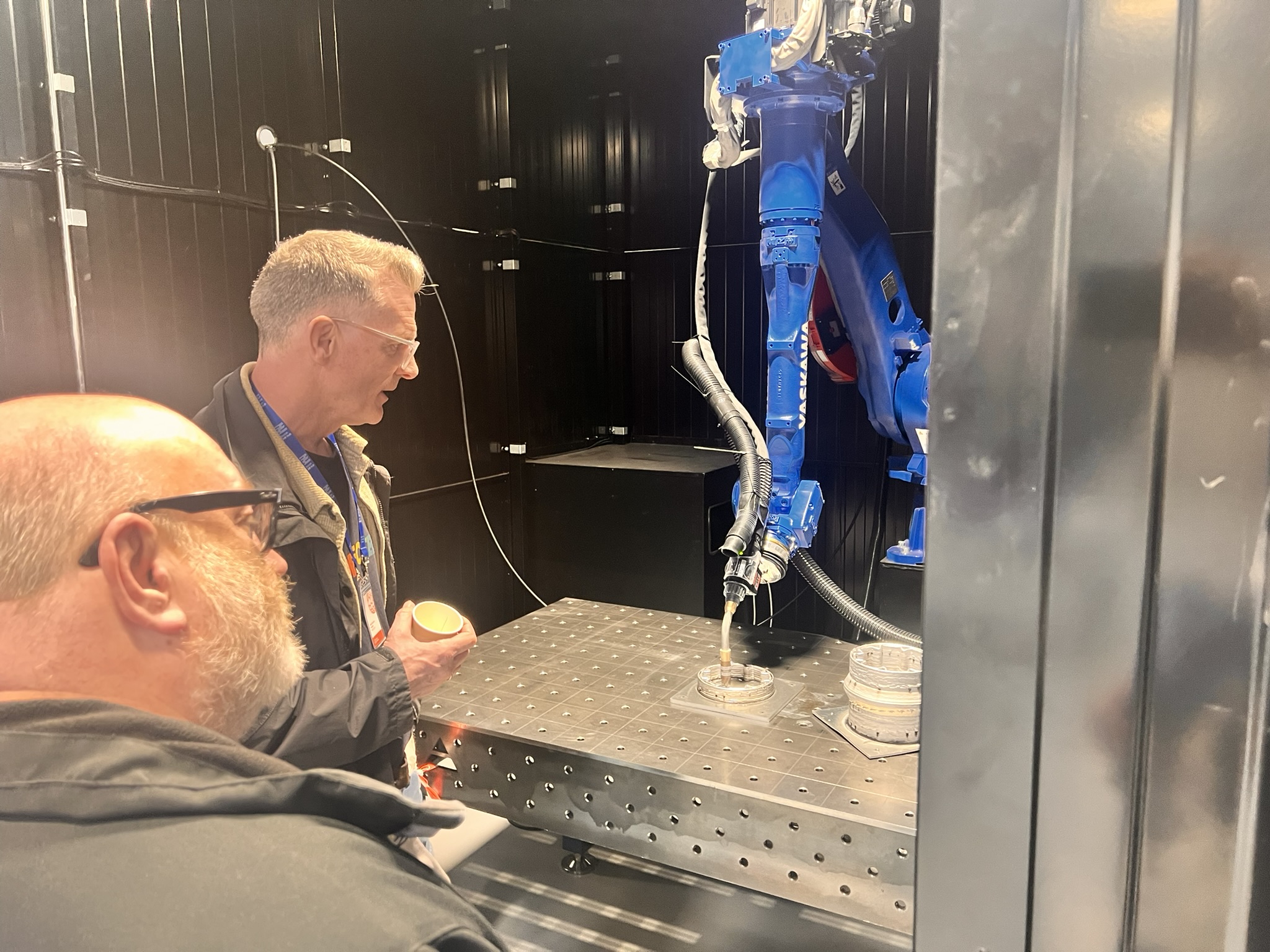
Tech Tour brought companies together around 3D printing
Tech Tour brought companies together around 3D printing: Strong interest and sharp questions across the country
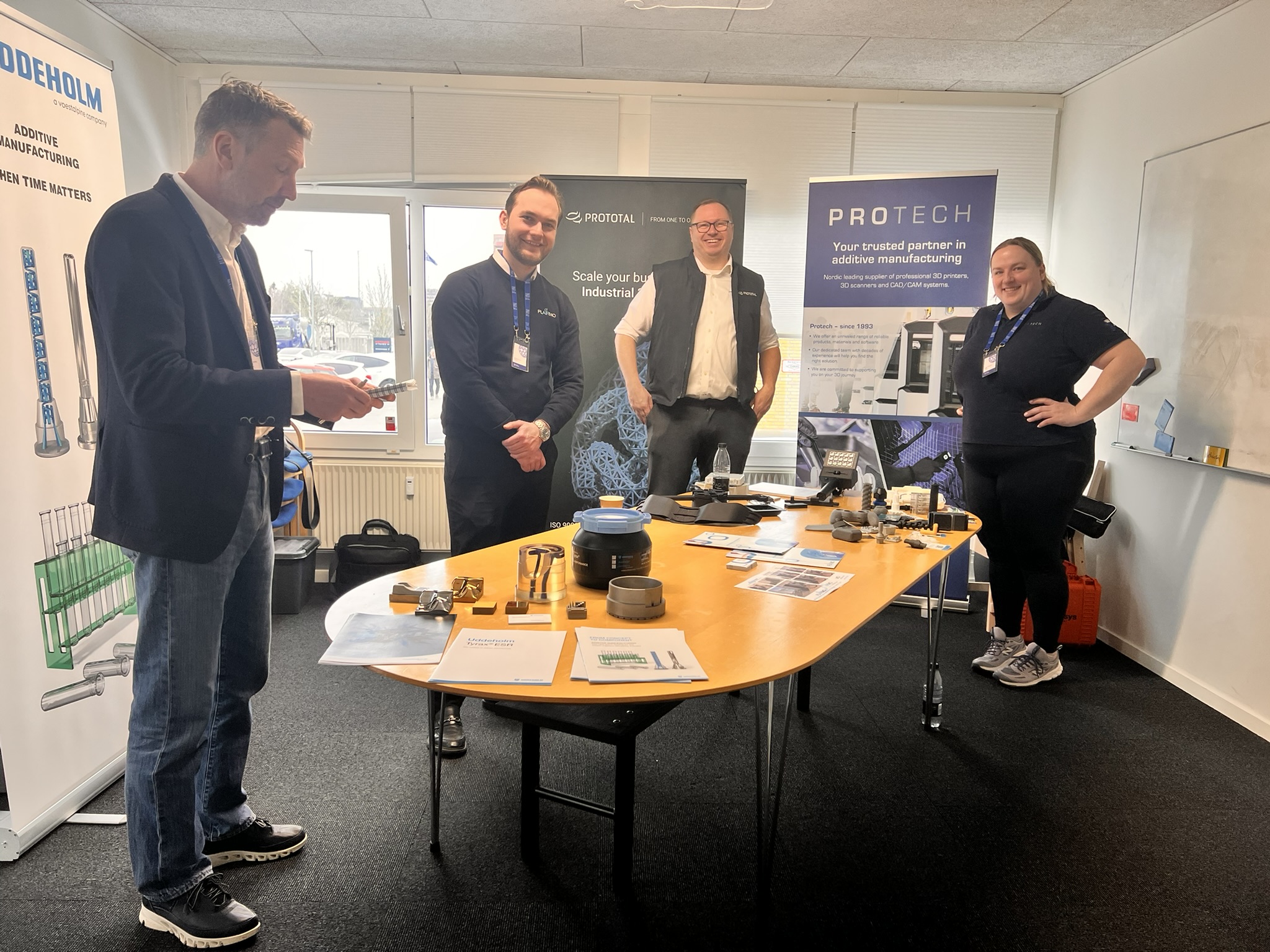
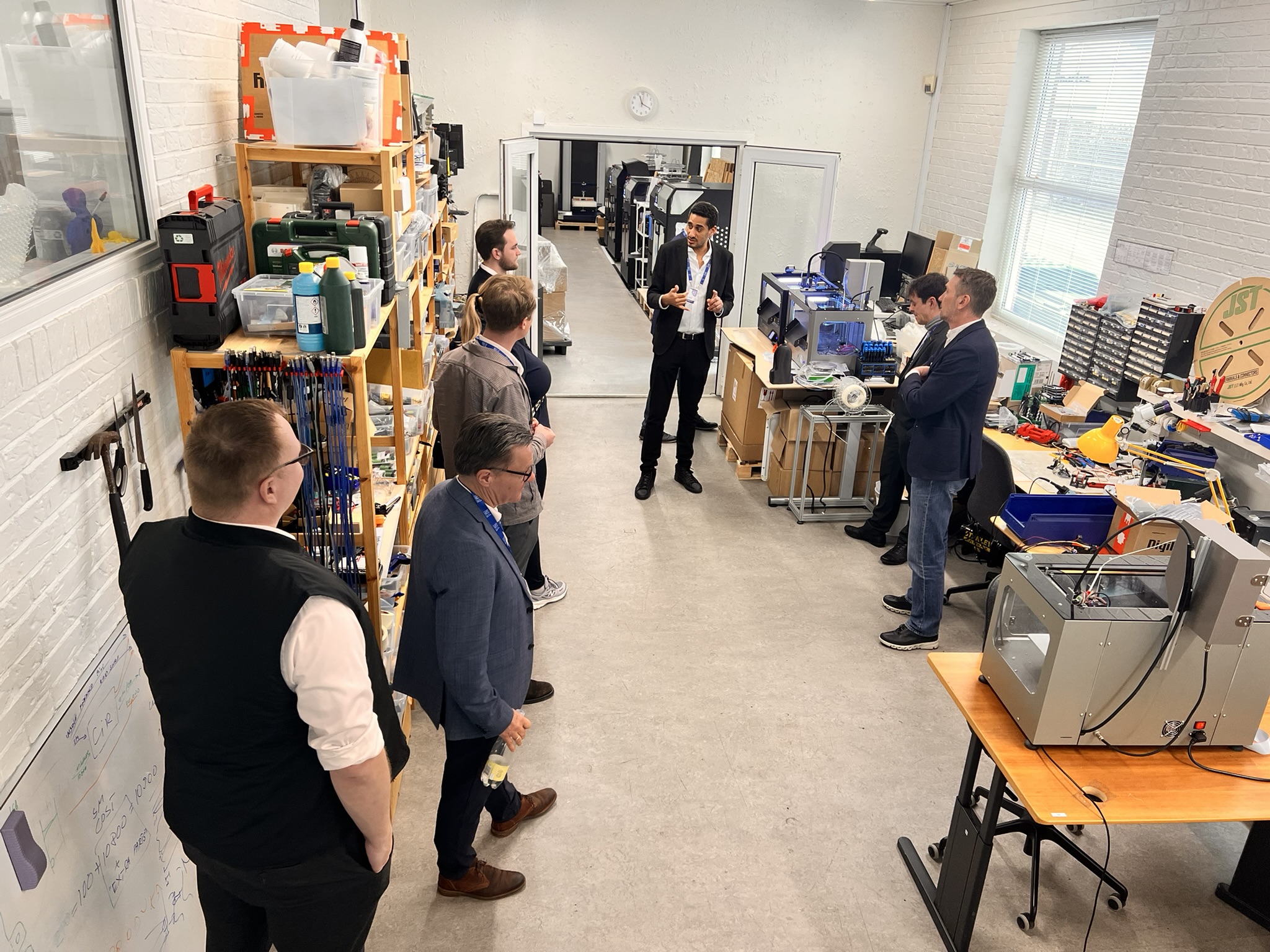
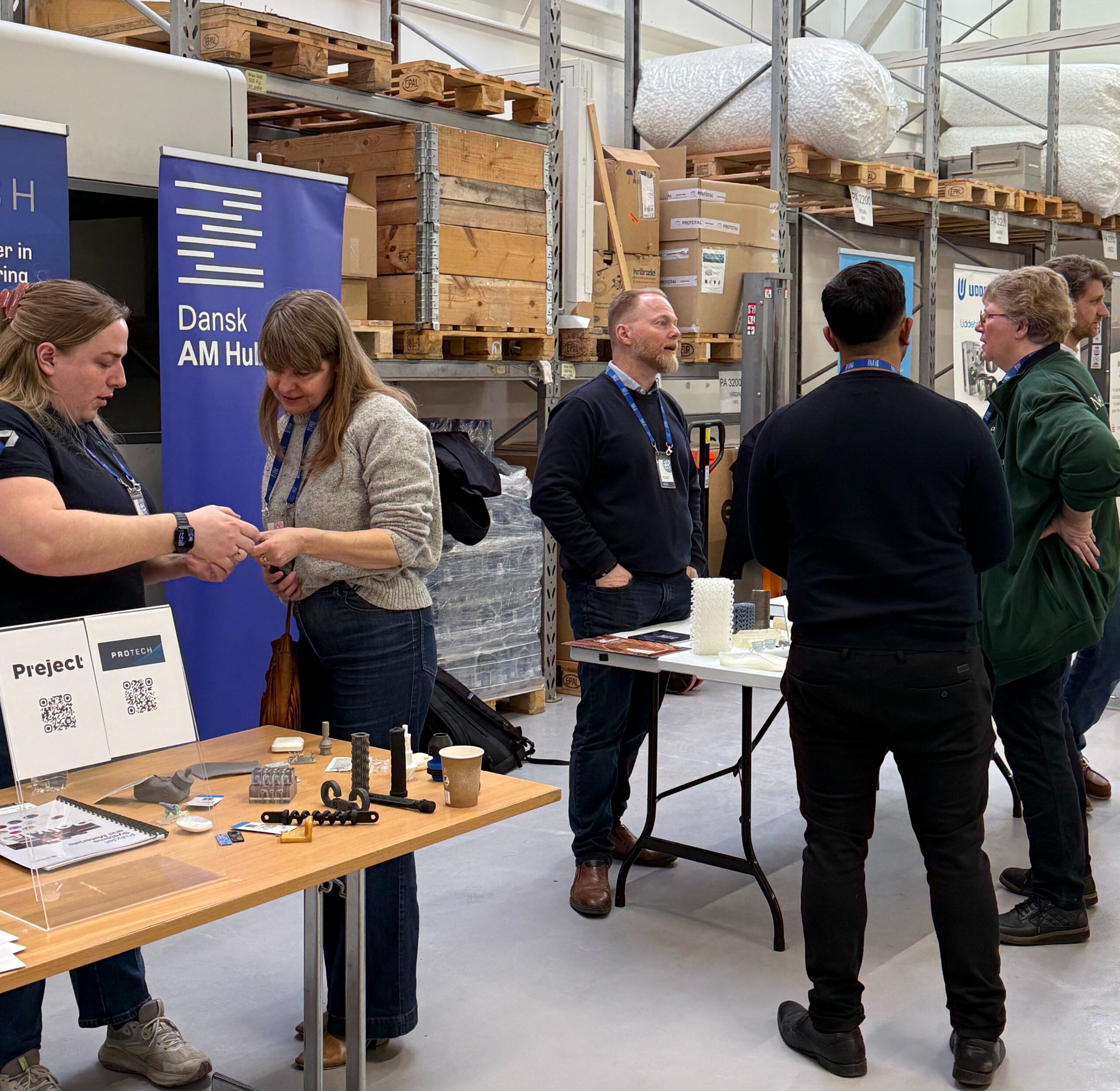
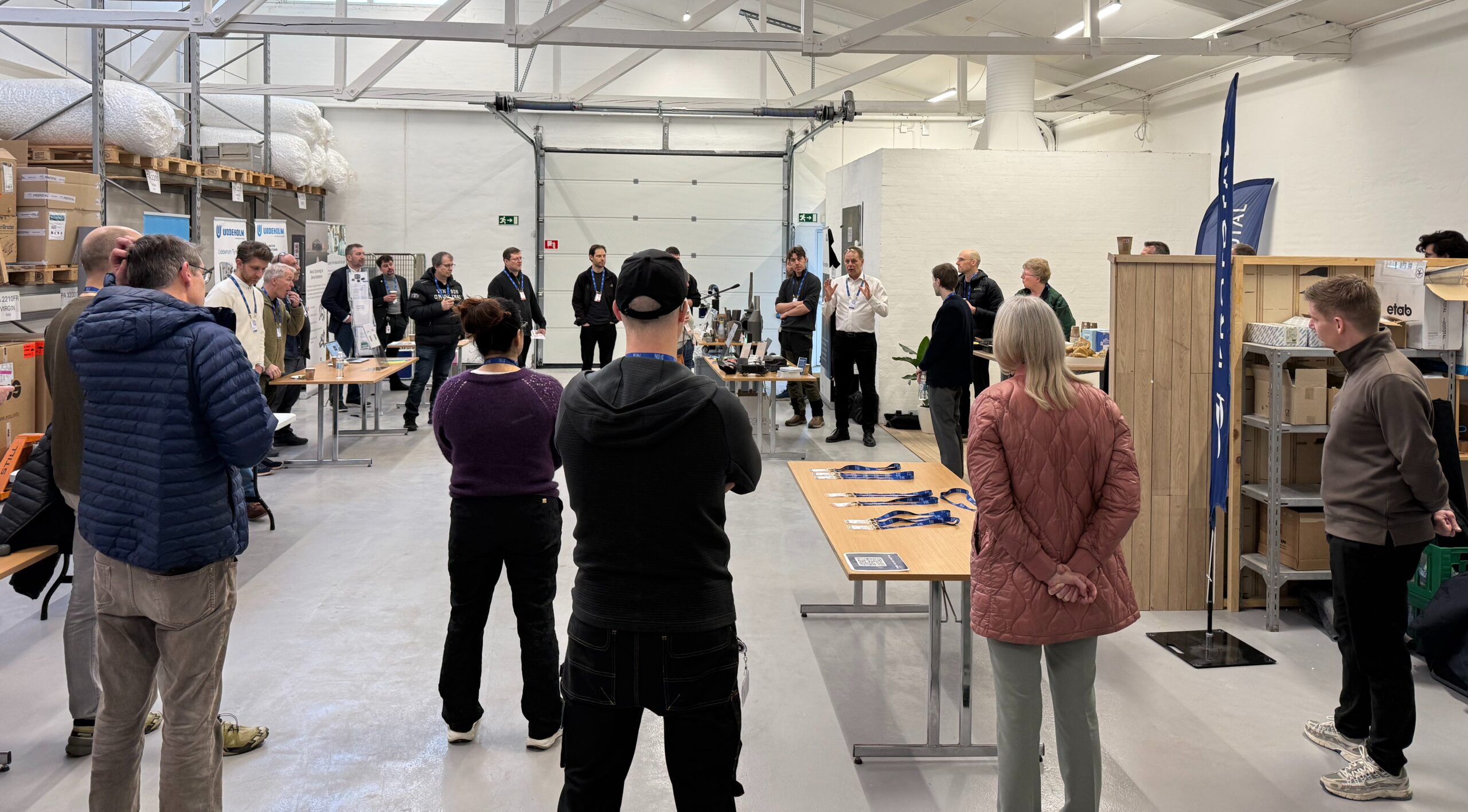
See photos from the Tech Tour at the bottom
Tech Tour brought companies together around 3D printing: Strong interest and sharp questions across the country
How do other companies actually use 3D printing in practice? And when does it make sense—and when does it not?
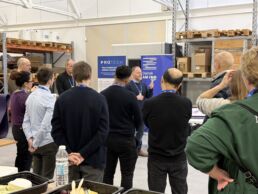
These were some of the recurring questions when Dansk AM Hub went on a Tech Tour in March, with stops in Taastrup, Odense, Aalborg and Kolding.
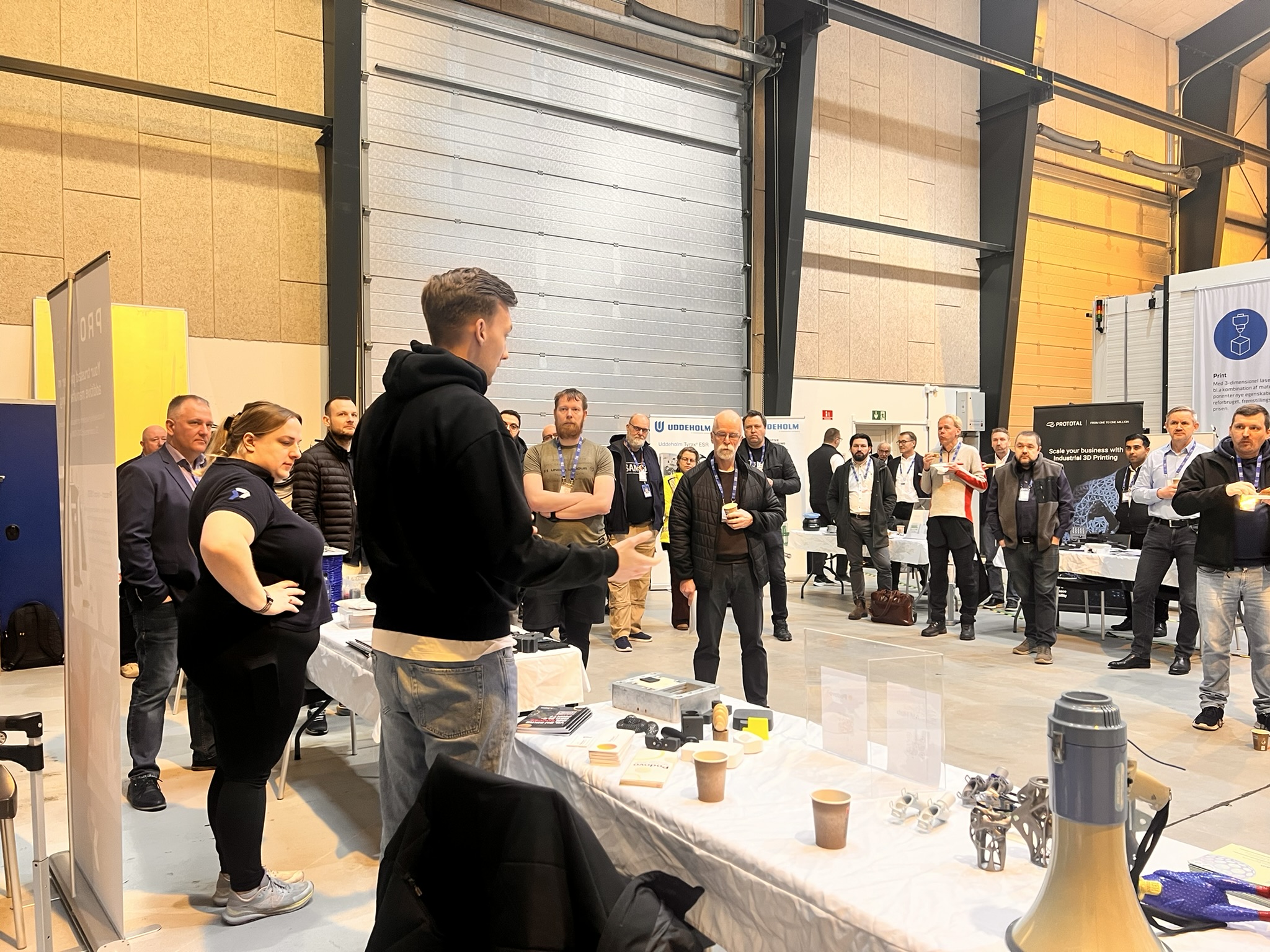
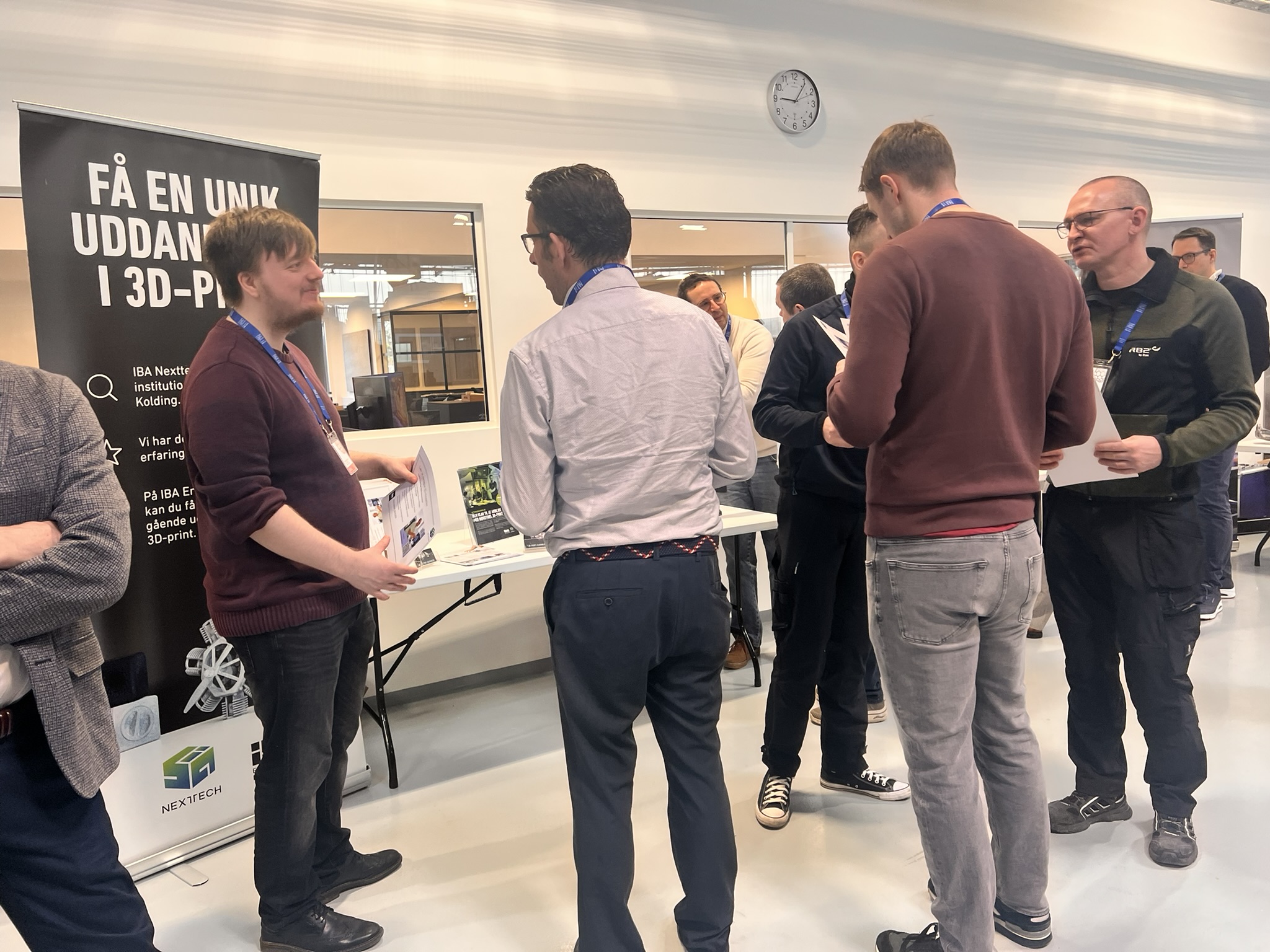
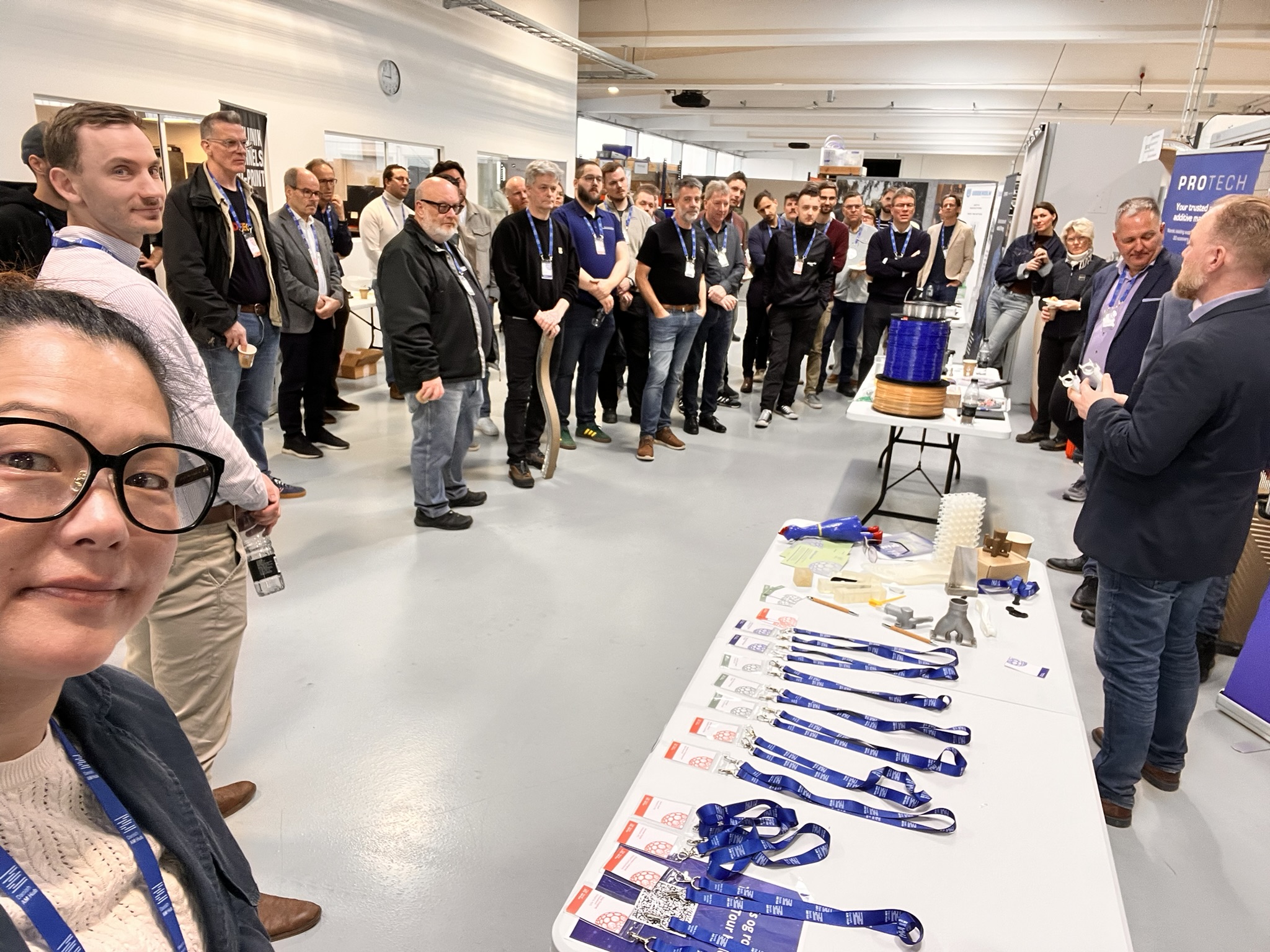
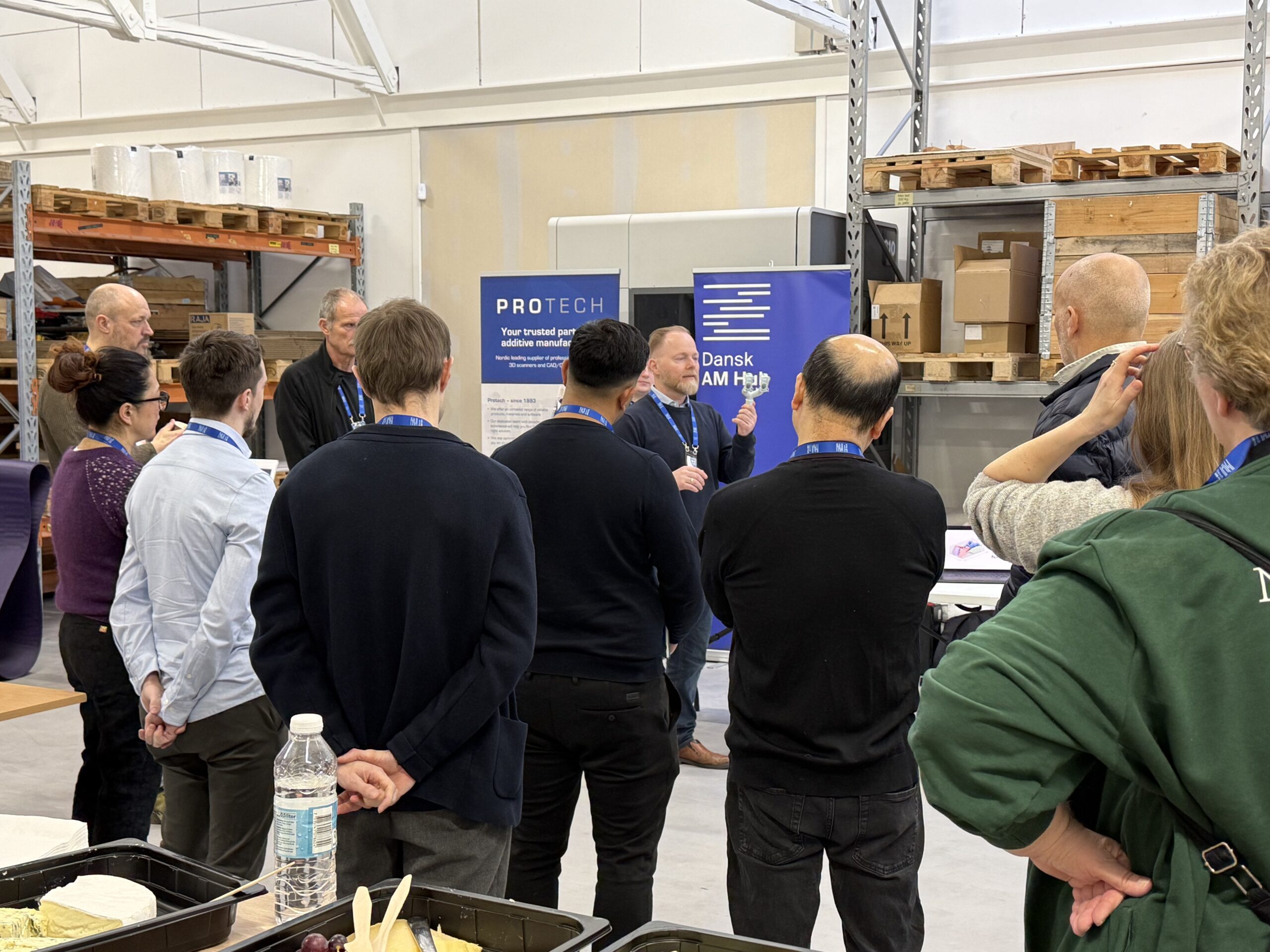
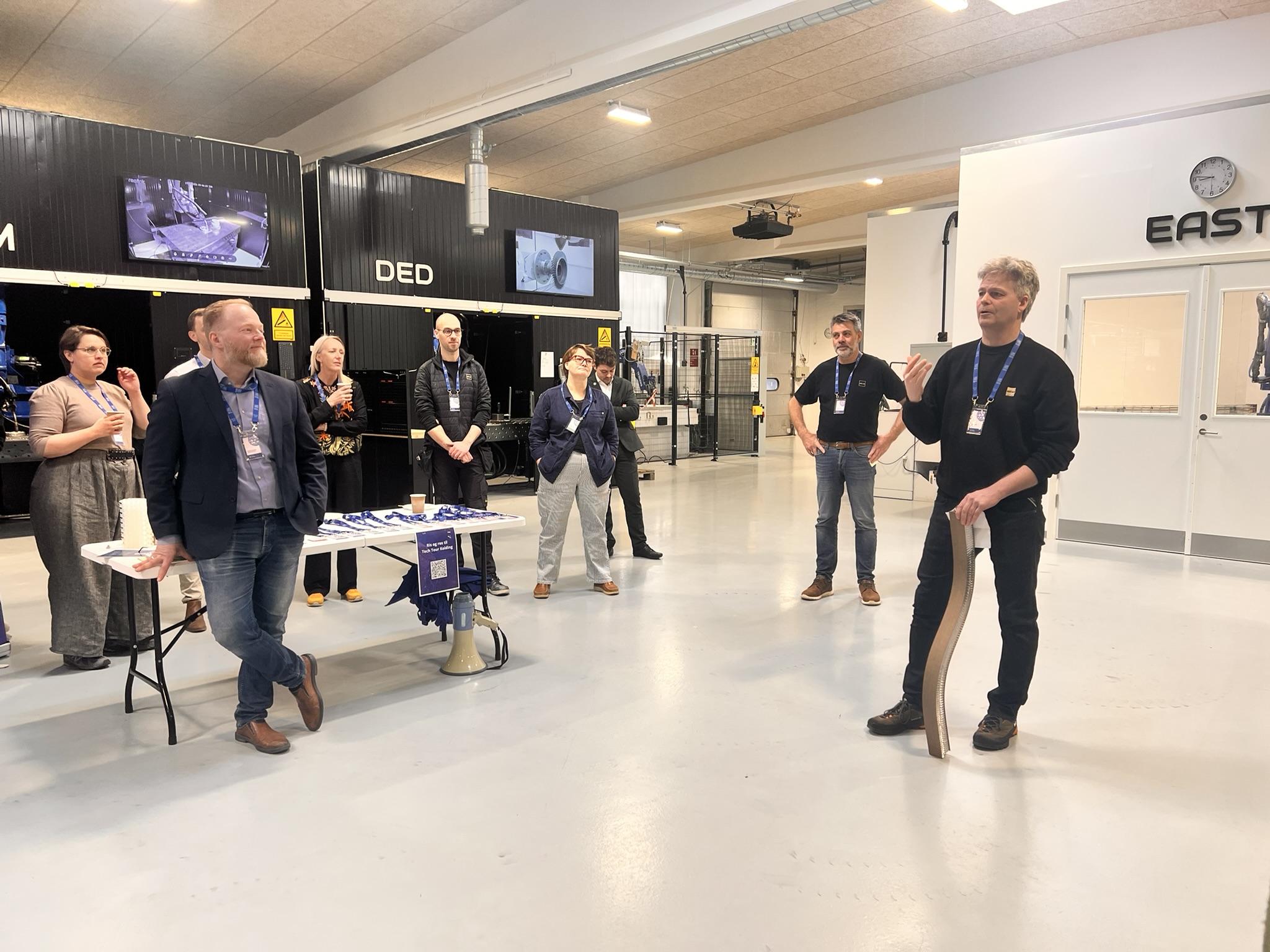
Across all four events, there was strong interest in getting closer to the technology. Companies, professionals and curious participants met to gain a more concrete and honest insight into Additive Manufacturing (AM)—not through slides, but through dialogue, cases and physical examples.
3D printing at eye level
Instead of presentations and PowerPoints, the focus was on concrete cases, physical parts and direct dialogue. Participants could see, touch and ask questions of the companies and specialists who work with 3D printing on a daily basis.
The conversations ranged widely—from materials and design to production, business cases and skills needs. What can the technology do? When does it create value? And when does it not?
Those very questions were the focal point of the dialogue across all stops.
Local ecosystems in play
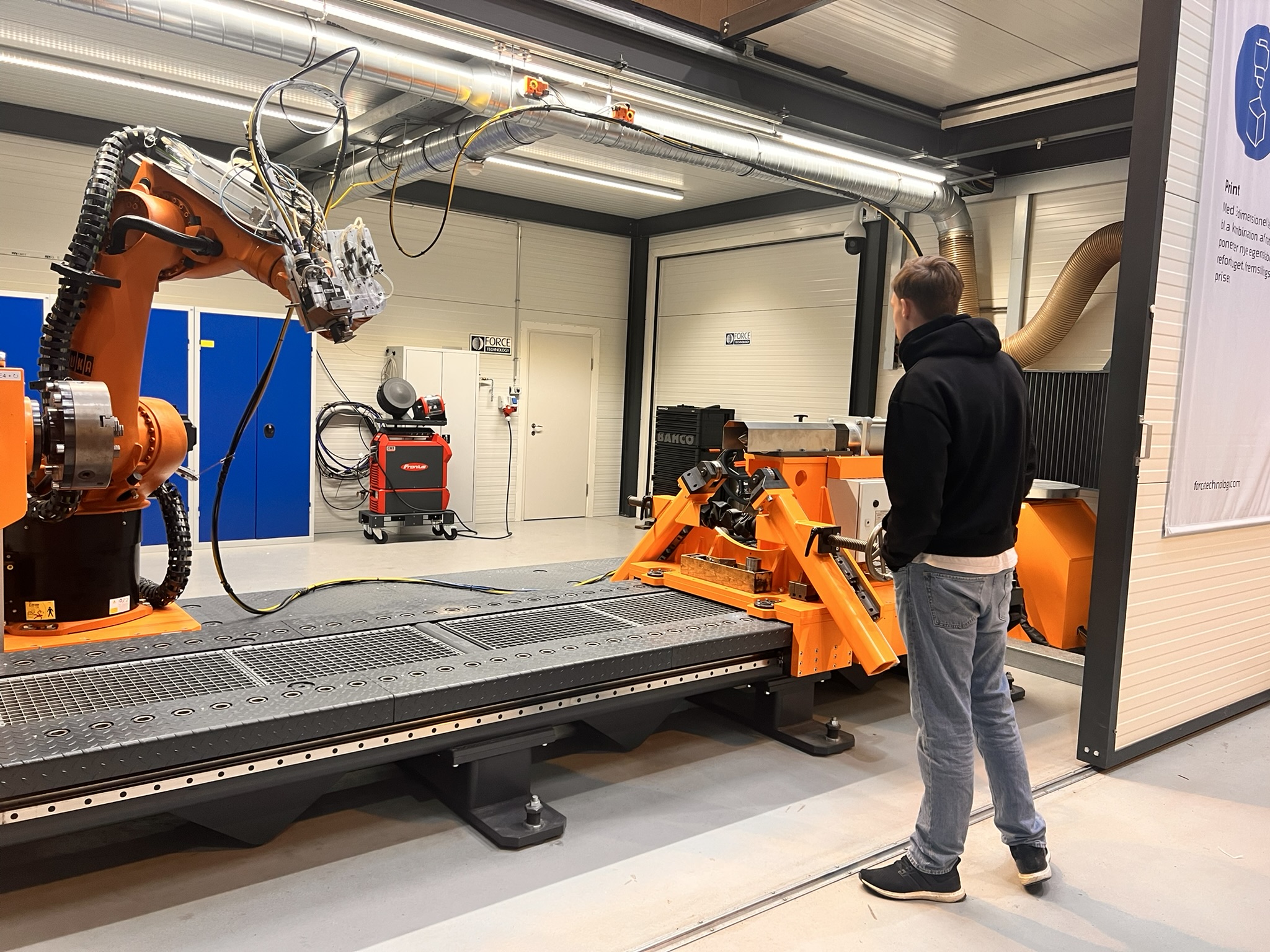
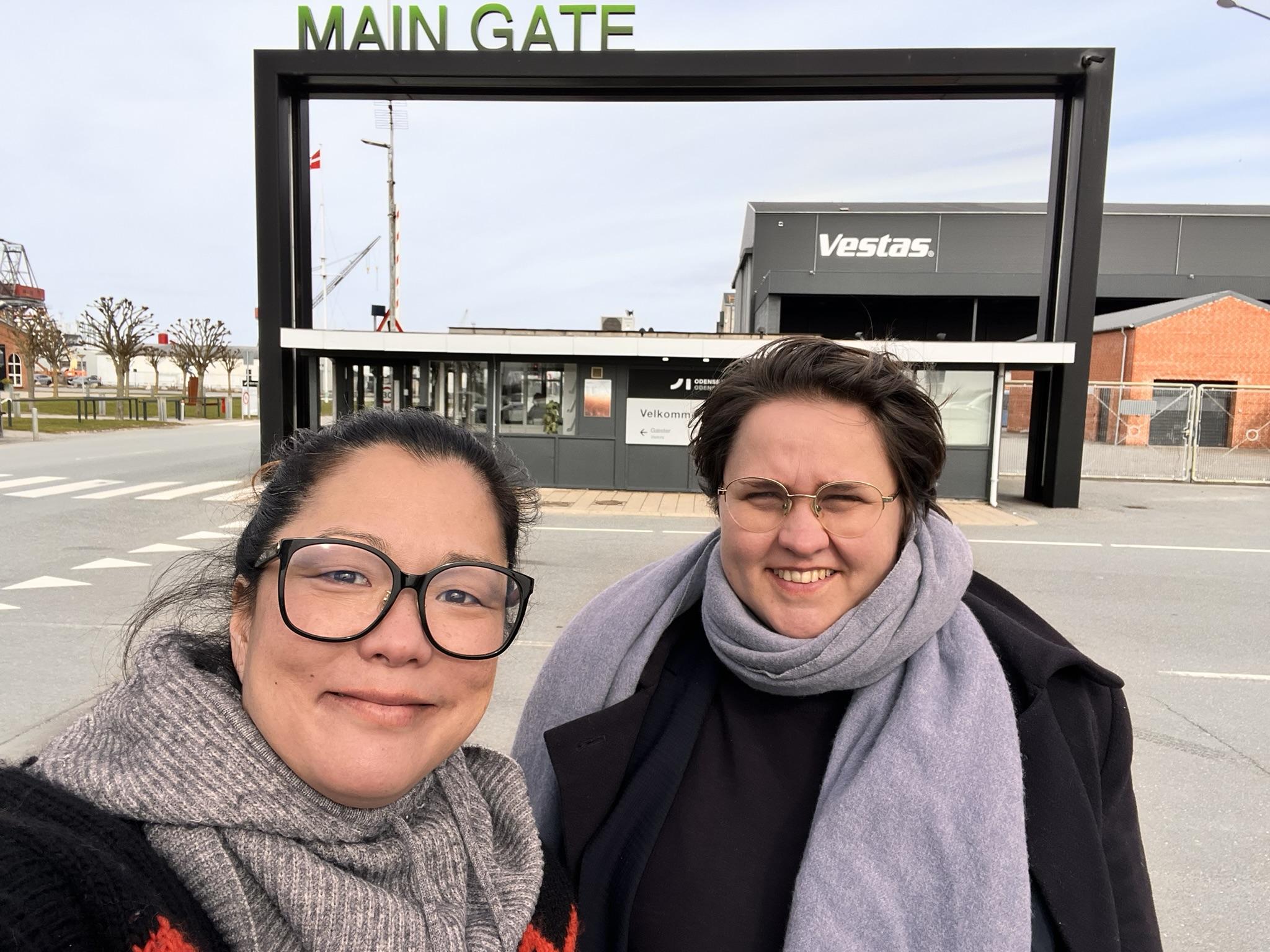
The Tech Tour took participants to a number of strong local hosts and production environments—from Prototal in Taastrup to FORCE Technology at Lindø Shipyard, Create it REAL in Aalborg and MDT in Kolding.
Each stop had its own character, but common to them all were open dialogue, cross-networking and the opportunity to meet companies, technology suppliers and education stakeholders.
Networking, knowledge and new perspectives
In addition to insight into the technology, the days offered ample opportunity to network, exchange ideas and share experiences with other companies that are either already working with 3D printing or are curious about it.
For many participants, it was not about finding one solution, but about gaining a better understanding of the possibilities and a stronger basis for future decisions.
Thank you for this time
A big thank you to hosts, companies, partners and participants for contributing knowledge, experience and great questions.
The Tech Tour is over for this round—but the work to bring 3D printing closer to Danish industry continues.
See photos from the days below.
Would you like to be among the first to hear about new Tech Tour dates and events?
LEGO does not play around with production – they build it smarter
The LEGO Group
LEGO does not play around with production – they build it smarter
When play becomes an innovation strategy

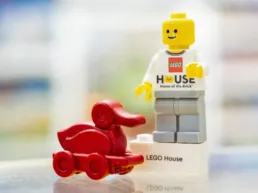
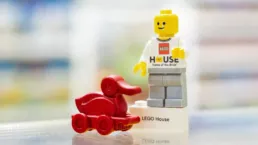
The LEGO Group uses 3D printing technology to experiment with new product forms and engage users in the innovation process. A 3D-printed duck sets the scene for greater flexibility, faster development, and a closer connection with fans of all ages, integrating technological innovation into LEGO’s long-term product strategy. This is not about toys – but about maintaining speed and quality in an extremely complex production setup.
The case – overview and context
Innovation rarely starts with ready-made answers. It starts with questions and curiosity. Just like play. For a brand like The LEGO Group, where creativity, imagination, and play have always been at the core, technological innovation is not just a tool – it is a strategic component of future product development.
Last year, they launched their first 3D-printed element, a replica of their iconic wooden duck. It was sold for a limited period and formed part of a larger pilot project at The LEGO Group, aimed at collecting feedback from fans that can inspire future creations.
In a global market where consumer expectations are rising and flexibility is a competitive parameter, LEGO’s use of AM shows how technology can be integrated into a long-term innovation strategy – not only to optimise production, but to strengthen customer relationships, test new concepts, and increase the value of play as both product and experience. The case shows how additive manufacturing can be a strategic tool – long before production begins.
Results of the programme with Dansk AM Hub
- Greater design possibilities
- Co-creation as a strategic growth driver
- Flexibility in innovation and production
Value and impact for the company
Dansk AM Hub has collaborated with The LEGO Group for many years, contributing inspiration and knowledge on exploring additive manufacturing as an innovation tool – long before the technology was to be scaled in production. The role has been to qualify the dialogue on where and how additive manufacturing creates the most value in an extremely complex and mature manufacturing company.
Through insight into both the technology’s opportunities and limitations, we helped frame experiments that not only tested new product forms, but also new ways of engaging users and collecting feedback. The focus was not on volume, but on learning, speed, and flexibility – and on using 3D printing as a strategic tool in the early innovation phase.
Dansk AM Hub’s role was therefore to support LEGO in using additive manufacturing as part of a long-term innovation strategy, where technology is used to reduce uncertainty, strengthen customer insight, and create a better basis for decision-making before investments become substantial.
Is your production setup a limitation – or a strength?
And are there new opportunities?
From challenge to advantage
At The LEGO Group, 3D printing technology has been used since the 1990s, but this is the first time they have launched a consumer product produced exclusively using Additive Manufacturing. The replica has particularly helped The LEGO Group experiment with moving functions, as the 3D-printed duck has a movable beak.
“We are very excited about the opportunities that additive manufacturing gives us, and we look forward to hearing what our fans say. We will use their feedback to help shape future innovation as we continue to push the boundaries of 3D printing technology,” says Ronen Hadar, Head of The LEGO Group’s Additive Design & Manufacturing team.
In combination with 3D printing, they use injection moulding technology at their factories to produce bricks. This combination means that the bricks can be produced faster, there is greater flexibility, and they can produce more varied units in smaller quantities, giving The LEGO Group the opportunity for increased product development and innovation.
About the company
The LEGO Group
Billund, Southern Jutland
Number of employees: 31,000+ globally
The LEGO Group is a world-leading, family-owned toy company known for the iconic LEGO bricks.
Learning and insights
The case demonstrates how innovation can start long before production, and how technology can be used as a strategic tool for learning, experimentation, and customer involvement. Here, additive manufacturing is not about volume, but about speed, flexibility, and insight.
The key learning is that innovation should not always be measured by short-term ROI. By using new technologies to test ideas, involve customers, and explore new forms of value, companies can reduce risk in later decisions. The case underlines that competitive advantage is often created where you dare to play, experiment, and learn – before the market demands it.
“We are very excited about the opportunities that additive manufacturing gives us, and we look forward to hearing what our fans say. We will use their feedback to help shape future innovation as we continue to push the boundaries of 3D printing technology”
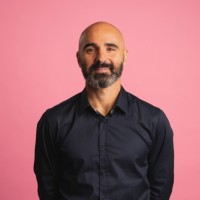
Ronen Hadar
Vice President, Element & Additive Engineering, The LEGO Group
Is your production setup a limitation – or a strength? And are there new opportunities?
Get input on how hybrid production can support your business strategy.
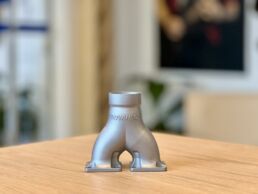
Advansor: From overlooked component to competitive advantage
Advansor
From overlooked component to competitive advantage
A small redesign with a major impact on operations and CO₂

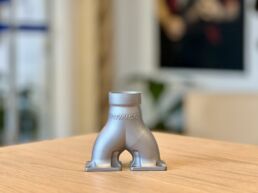
A small redesign of an overlooked component created major gains. With additive manufacturing, Dansk AM Hub and Advansor rethought the design from the inside out, reduced complexity and energy loss, and strengthened the business, the climate impact, and supply security. The case shows how new technology can strengthen both product and business, and that small changes can have a significant impact at scale globally.
The case – overview and context
Small components rarely draw much attention. They work. They last. And precisely for that reason, they are rarely challenged. Yet in industry, significant business and climate gains are often hidden in what has been allowed to be “good enough” for too long.
At Advansor, a key component in a CO₂ refrigeration system was taken up for review. Not because it failed—but because over time it had been allowed to be “good enough”. Together with Dansk AM Hub, the component was rethought from the ground up with a clear business objective: less complexity, better flow, and a more robust supply. The case is interesting because it shows how a narrowly focused technical intervention can improve performance, operations, and sustainability—without changing the entire system.
Results from programmes with Dansk AM Hub
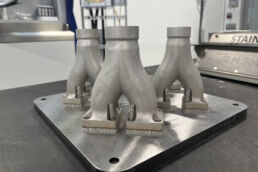
- Material reduction: From 17 to 3 parts
- Less material saves money
- Better performance and flow
- More robust supply
Value and impact for the company
Dansk AM Hub played a decisive role in the process by asking the critical questions from both a technological and commercial perspective. Early on, we shifted the focus from “how do we optimise what already exists?” to “should it even look like this?”
As a catalyst and sparring partner, we helped translate the possibilities of 3D printing into concrete business value for Advansor, which today has a stronger product that wastes less energy and therefore reduces a hidden operational loss. The result is therefore a business gain, a climate benefit, and a supply advantage.
Is your production setup a limitation—or a strength?
And are there new opportunities?
From challenge to advantage
The starting point was not an acute problem, but a realisation: Small losses in flow and efficiency recurred—and cost energy, money, and performance over time. During CO₂ cooling, Advansor’s developers experienced pressure drops in the systems due to sharp bends in the pipes. A pressure drop that led to less efficient cooling and thus wasted energy.
With additive manufacturing, it became possible to rethink and redesign the component from the inside out and reduce complexity, so that 17 separate parts are now consolidated into just three—something traditional manufacturing methods simply do not allow. This is not about technology for technology’s sake, but about getting more out of the same system, and it changed the premise for what the component could deliver.
“We had the opportunity to optimise where it really matters—inside the component. With 3D printing, it has been possible to produce pipes that are both compact, more aerodynamically shaped internally, and easier to integrate into Advansor’s machines. I honestly did not think it was an option until we took part in a programme with Dansk AM Hub,” says Kenneth B. Madsen, CTO at Advansor.
In practice, the redesign meant that Advansor reduced energy loss in their refrigeration systems by one percent. As the component is small, that figure may seem easy to overlook, but it actually represents savings of 70,000 kWh per year—just under 20,000 kg of CO₂ per year. Or the emissions from driving a car almost four times around the world.
About the company
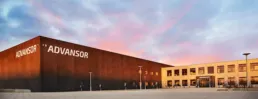
Advansor
Brabrand, Central Jutland
Number of employees: 51–250
Advansor operates primarily within the refrigeration industry and is a leading manufacturer of sustainable, CO2-based refrigeration and heating systems. They specialise in energy-efficient climate refrigeration solutions for, among others, supermarkets and industry, with a strong focus on the green transition by using natural refrigerants.
Learning and insights
The case shows how additive manufacturing—when applied effectively—can eliminate hidden energy drains and make “well-functioning” solutions noticeably better. Less material saves money, fewer parts make supply more robust, and optimised flow and functionality deliver better performance.
“We had the opportunity to optimise where it really matters—inside the component. With 3D printing, it has been possible to produce pipes that are both compact, more aerodynamically shaped internally, and easier to integrate into Advansor’s machines. I honestly did not think it was an option until we took part in a programme with Dansk AM Hub”
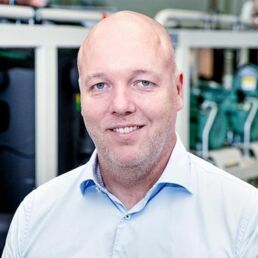
Kenneth B. Madsen
CTO, Advansor
Is your production setup a limitation—or a strength? And are there new opportunities?
Get input on how hybrid production can support your business strategy.
The future of construction with 3D printing and fungi
I AM MSHRM
The future of construction with 3D printing and fungi
A pioneering development project rethinking the construction industry through circular materials and additive manufacturing
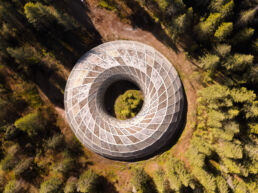
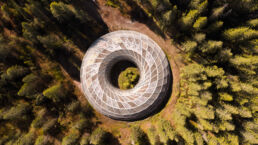
I AM MSHRM is an ambitious research and development project created in collaboration between Dansk AM Hub, BIG – Bjarke Ingels Group and a range of specialised partners. The project demonstrates how 3D printing and bio-based materials such as mycelium can reduce waste, CO2, and resource consumption in construction.
The result is a modular, demountable building system consisting of 3D-printed frames made from recycled plastic, filled with cultivated fungal mycelium. The system can be assembled, disassembled, reused, or composted—and represents a new approach to circular and flexible construction.
The challenge
The construction industry accounts for a significant share of global CO2 emissions and is also characterised by substantial material waste and a low level of innovation. At the same time, cities are growing, and unused urban spaces and temporary needs for flexible buildings are emerging.
The challenge is to create new building solutions that reduce both waste and CO2—while also being economically and practically viable.
The solution
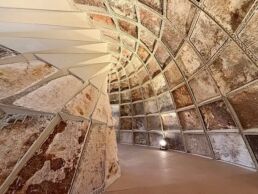
I AM MSHRM introduces a new building system based on additive manufacturing (3D printing) and biogenic materials.
The system consists of:
- 3D-printed frames made from recycled plastic
- Mycelium infill (fungal roots) that functions as an insulating and structural material
- Modular elements that can be assembled into arches and complete structures
The building can easily be dismantled, moved, and reassembled—or enter a biological cycle after use.
Key points
- Up to 80% lower CO2 emissions than traditional construction methods
- Modular and scalable building system
- Designed for reuse, disassembly, and composting
- Produced using local and recycled materials
- Combines digital production with biological processes
The technology
Additive manufacturing enables the production of complex geometries that cannot be realised efficiently using traditional methods.
Advantages of the technology in the project:
- Production without the need for moulds and with minimal material waste
- Rapid iteration and adaptation of design
- Integration of functions directly into the print (e.g., joints and identification)
- Local production with reduced transport
The technology serves as a link between digital design and physical construction.
Are you curious about how we drive innovation through partnerships and technology?
Materials and circularity
The project combines recycled plastic (rPLA) with mycelium—a biological material with unique properties:
- Mycelium is grown within the structure and “baked” into a solid material
- The material is biodegradable and can be composted
- Production can take place using local resources and waste streams
- The entire system is designed to be part of a circular cycle
This means the building both reduces waste and creates value from existing resources.
About the project
- 3-year research and development collaboration
- Developed by Dansk AM Hub and BIG
- Realised in collaboration with MDT, Naturpladen, and BIG Engineering
- Consists of 11 unique panel types assembled into arch structures
- Demonstrated as a physical pavilion
Perspective and potential
I AM MSHRM showcases new possibilities for the construction of the future:
- Temporary housing and emergency relief solutions
- Flexible urban spaces and pavilions
- Locally produced building systems
- Community-based construction without heavy equipment
The project has also inspired increased use of biogenic materials and 3D printing in the construction industry and points towards a more sustainable and adaptive construction logic.
Read more about the project
I AM MSHRM is the result of an ambitious idea turned into reality. In the brochure, you can explore the entire journey—from the first thoughts on circular construction to the development of a complete, modular system based on 3D printing and mycelium.

Is your production setup a limitation—or a strength? And are there new opportunities?
Get input on how hybrid production can support your business strategy.