

3D printing design programme accelerated development at CeramicSpeed
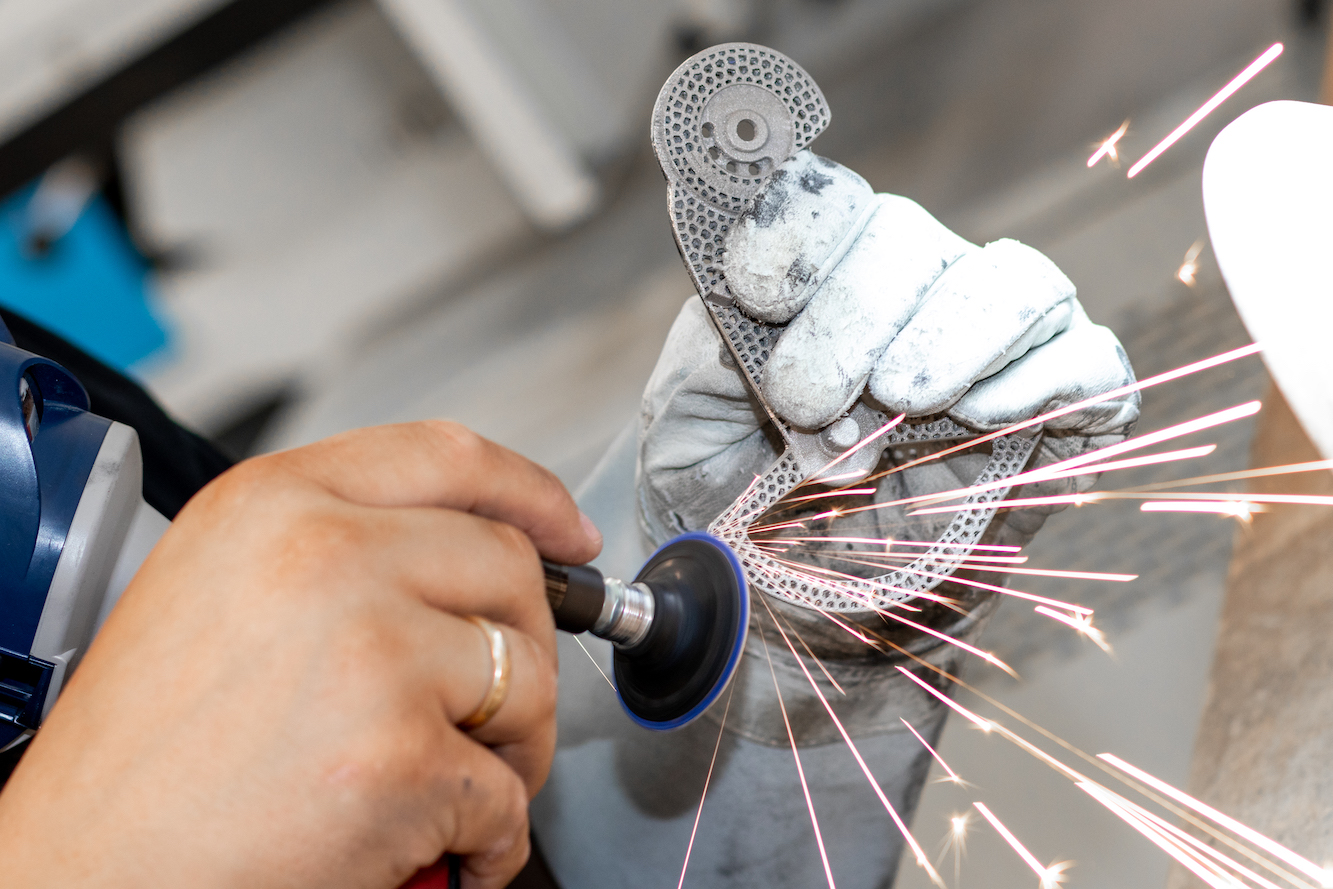
In cycling, every gram on the bike counts. CeramicSpeed knows this well, having specialised in bearings for bicycles. That is why the company chose to take part in the innovation programme Design for Additive Manufacturing (DfAM), where they explored whether one of their components could be optimised with 3D printing.
With the bikes firmly parked in Holstebro, CeramicSpeed has been ensuring fast rotations since 2004, specialising in ceramic ball bearings for cycling. The company already had good experience with 3D printing technology-for example, they use 3D printing for their titanium sprockets, the so-called pulley wheels, which are the world’s lightest. With this experience in their cycling bag, it was therefore an easy decision for CeramicSpeed to say yes to taking part in the DfAM 3D printing design optimisation programme.
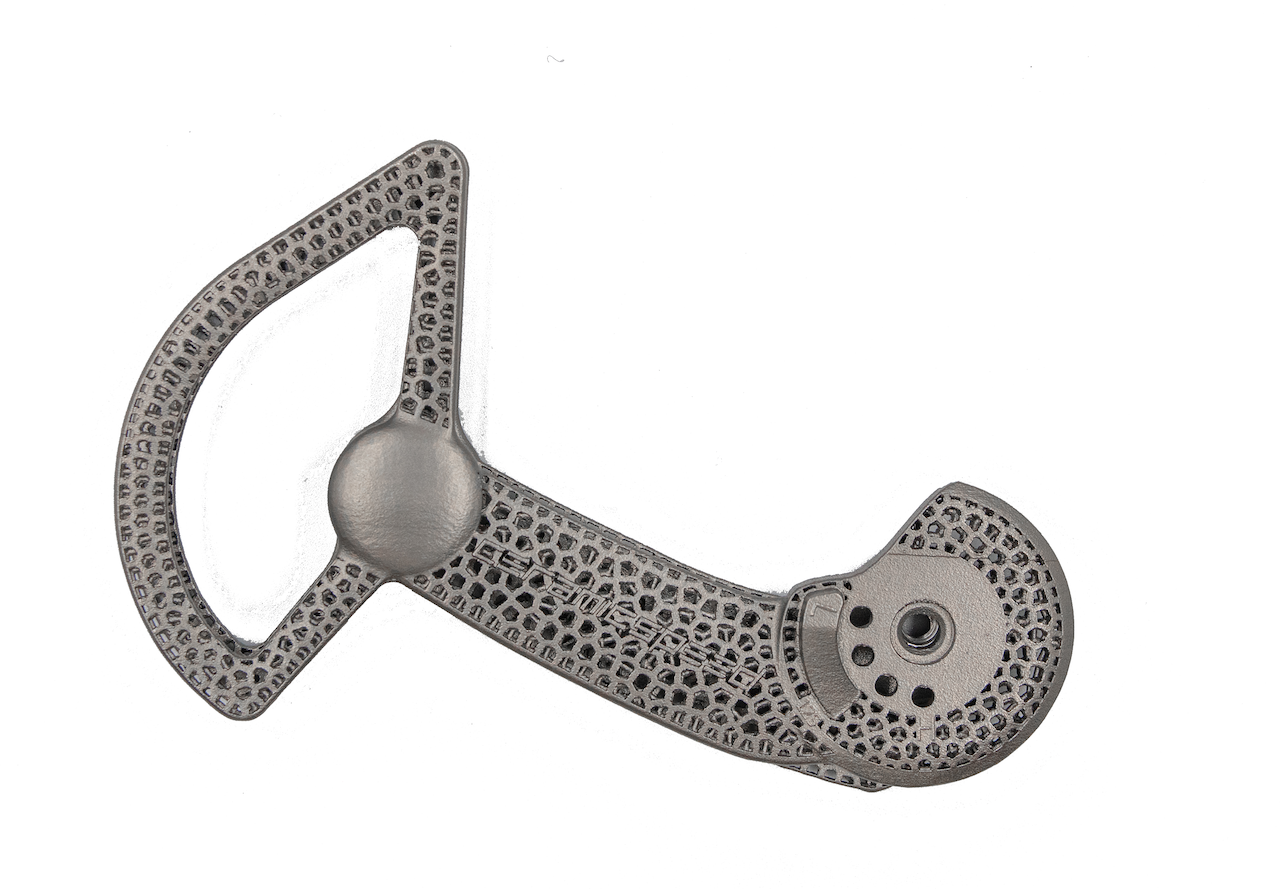
CeramicSpeed was interested in working with a component-specifically, a bracket on the bike’s rear derailleur, which is used during gear changes to hold the two aforementioned pulley wheels in place.
“Today, our bracket is die-cast in carbon fibre-reinforced polymer, while our pulley wheels are 3D printed when they need to be extravagant and look really good. That is precisely why the idea of also 3D printing the bracket arose-timed with the fact that the opportunity also arose,” says Carsten Ebbesen, R&D Manager at CeramicSpeed.
Use of a new material
In connection with 3D printing the bracket, it was also investigated whether it would be possible to change material. The bracket is cast in carbon fibre-reinforced polymer because it is a lightweight and strong material, but in the DfAM programme they attempted to replace carbon fibre with titanium.
“The two main reasons for 3D printing the bracket were that we wanted to see whether we could print it in titanium to investigate whether we could make it even stronger and smarter with a lattice structure-and at the same time make it lighter,” says Carsten Ebbesen.
Potential for further development
In the DfAM programme, they succeeded in printing a strong bracket with a lattice structure that also reduced the amount of material. However, to fully complete a new bracket, the weight will also need to be adjusted.
“During the project, we have found that the weight is problematic when we 3D print the bracket in titanium. Therefore, the next step will be to investigate whether we can reduce the weight with titanium by making various design changes,” explains Carsten Ebbesen.
3D printing can make the development process more tangible
Although there is still development work to be done on the 3D-printed titanium bracket, Carsten Ebbesen has no doubt that 3D printing has many advantages.
"3D printing has given us the opportunity to physically hold the bracket in our hands, and it has been completely different from sitting and making drawings. In addition, we have been able to create lattice structures on the bracket, which are only possible with 3D printing," says Carsten Ebbesen.
“It has also been of great value that I have been able to show my colleagues, in concrete terms, what we have produced along the way. This has meant that we have been able to sense where the opportunities were more quickly.”
Results from programmes with Dansk AM Hub
- Material and technology: Titanium printed with Laser Powder Bed Fusion
- Weight increase: 188%
- Reduction in volume: 43%
- Design freedom: High
No limitations on design
Carsten Ebbesen highlights design freedom in particular as one of the major advantages in CeramicSpeed’s experience with 3D printing in the DfAM programme.
“Our view and experience of 3D printing is that it is a fantastic technology because there are no limitations when it comes to design possibilities. At the same time, our products are very design-driven, and appearance matters a great deal to both us and our customers, so the products are welcome to have a ‘bling’ effect-and we can achieve that with 3D printing,” says Carsten Ebbesen.
About the company
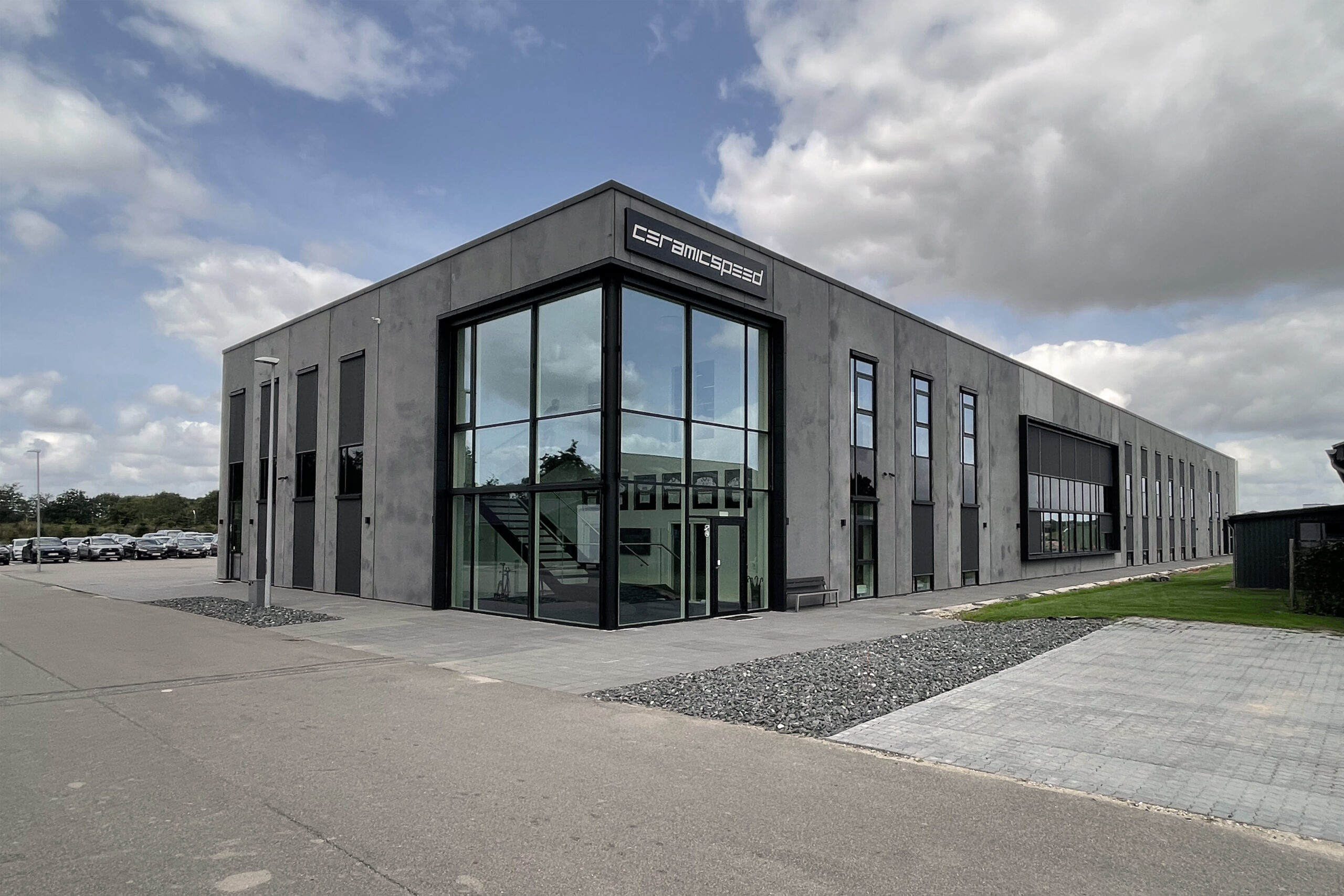
CeramicSpeed
Location
Holstebro, Central Jutland
Number of employees
75–100
Info
CeramicSpeed is a Danish company that is an inventor and specialist in the manufacture of ceramic ball bearings for cycling and industrial machinery. These hybrid bearings combine a steel bearing race with silicon nitride balls
Optimise your opportunities
Is your production setup a limitation-or a strength?
And are there new opportunities?
Related cases
Get inspired
 Advansor A/S
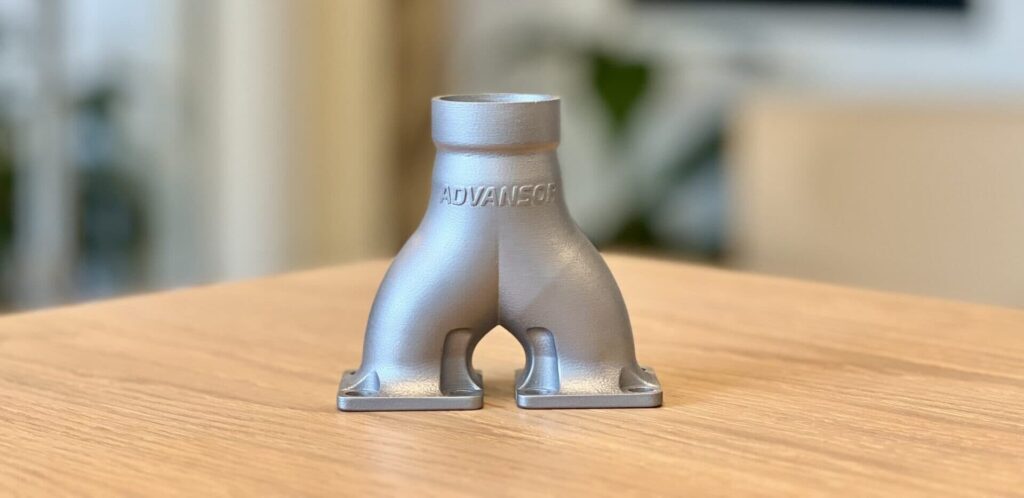
Advansor: Redesign saves customers 20,000 kg of CO2 annually
 High Precisions Systems ApS
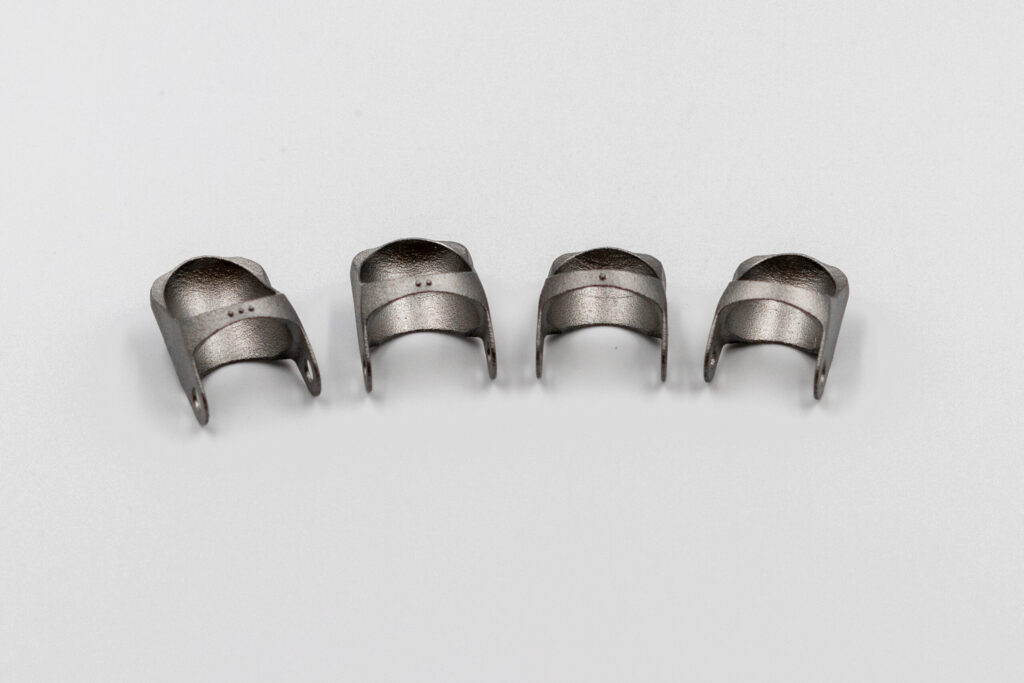
3D printing design programme optimises work gloves for super strength
 Heatflow
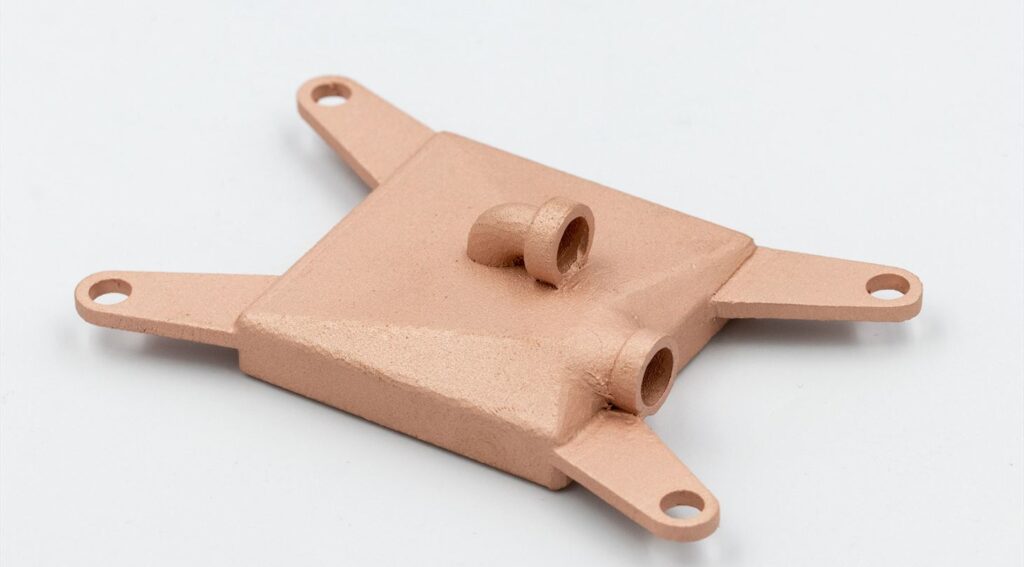
Heatflow: How energy efficiency became a competitive advantage
 Out-sider A/S