

FUJIFILM Biotechnologies: Reduced lead time and greater agility in production with 3D printing
A springboard for scaling additive solutions more broadly across the organisation
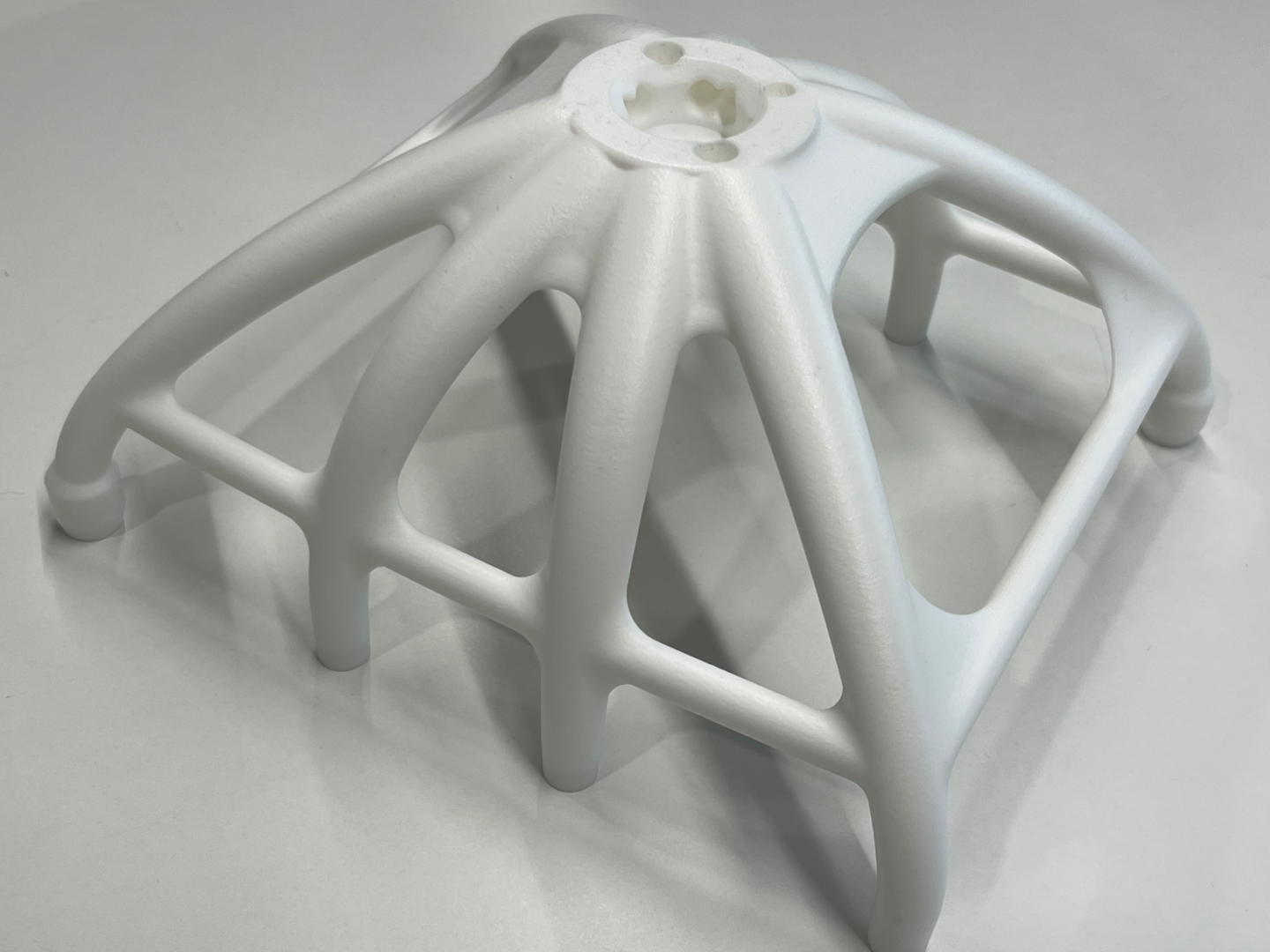
FUJIFILM Biotechnologies reduces lead time and increases production agility with 3D printing. By rethinking a key component as an additive solution, they achieve significantly faster delivery, less complexity, and lower inventory tied up in stock-while also taking the first step towards a more scalable and flexible production model.
The case: Overview and context
FUJIFILM Biotechnologies is an international CDMO player, where high-speed production and frequent changeovers are a natural part of the business. With capacity expansions and new facilities, efficiency and flexible solutions are crucial to keeping processes scalable. Therefore, technologies that can reduce bottlenecks and strengthen equipment robustness are particularly relevant to them.
They were familiar with 3D printing, but primarily for small, non-critical prototype applications, and were looking for a way to work more systematically with additive solutions using already approved materials. The ambition was to test whether 3D printing could create operational agility and reduce time, complexity, and tied-up inventory.
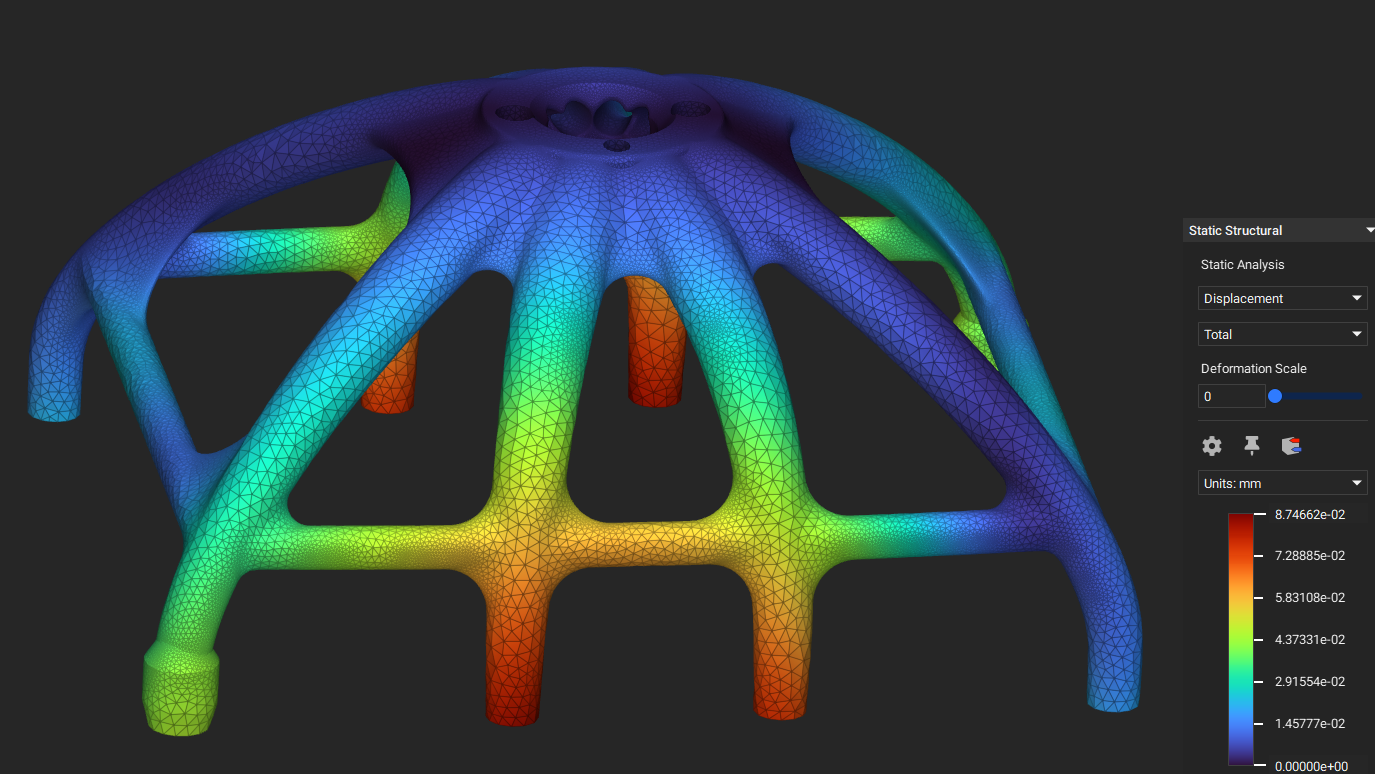

The development process was designed for rapid iterations and to identify the most valuable place to start, so that FUJIFILM could obtain a reliable proof of concept without committing additional resources or time.
As part of the programme, key employees were trained, enabling them to translate the technological possibilities-such as metal and (plastic) powder technologies-into a significantly greater potential than previously.
Results and potential
The results clearly demonstrate the potential: the 3D-printed gripper can be delivered in one-sixth of the time, at no higher cost, and enables a significant reduction in tied-up inventory and air freight. AM enables local production close to the site, avoiding air freight when time is critical-or having too many parts produced and sitting in stock. Increased digitalisation with print-optimised parts enables much faster changes and optimisation of sub-components, making it realistic to expand the share of 3D-printed parts without major investments in in-house design capabilities.
This provides a springboard for scaling additive solutions more broadly across the organisation, also across sites and national borders-from fast internal parts to more flexible process equipment, as capabilities and practices mature.
Results from programmes with Dansk AM Hub
- Up to 6x shorter delivery time for components
- Significantly reduced tied-up inventory and less need for air freight
- Consolidation of approx. 20 parts into one single component
- Increased flexibility and faster adaptation of production equipment
Value and impact for the company
Through the AM Sustain programme we worked in collaboration with the Danish Technological Institute to convert a classic (milled metal) vacuum gripper into an additively optimised solution: significantly lower weight, improved vacuum distribution, and design consolidation from around 20 parts to a single integrated component. As the component must operate in pharmaceutical production, the design was based on already approved material, with a focus on ease of cleaning and surfaces that meet FUJIFILM’s requirements.
About the company
FUJIFILM Biotechnologies
Location
Hillerød, North Zealand
Number of employees
>2,000
Info
FUJIFILM Biotechnologies is a global CDMO player that develops and manufactures biologic medicines with a focus on scalable and flexible production
Få optimeret jeres muligheder
Er jeres produktionssetup en begrænsning – eller en styrke?
Og er der nye muligheder?
Relaterede cases
Bliv inspireret
 Advansor A/S
Advansor: Redesign saves customers 20,000 kg of CO2 annually
 KC Denmark
3D printing opens the door to new customer dialogues and more efficient production for KC Denmark
 BEWI
BEWIBEWI significantly reduces tool weight and achieves greater flexibility
 Heatflow