

Serman & Tipsmark optimises a key for hydraulic equipment: Saves time, material and money
A targeted redesign reduced the weight by up to 79% and cut lead time from six weeks to two
Measurable results
How much Serman & Tipsmark has saved

%
economy

%
time
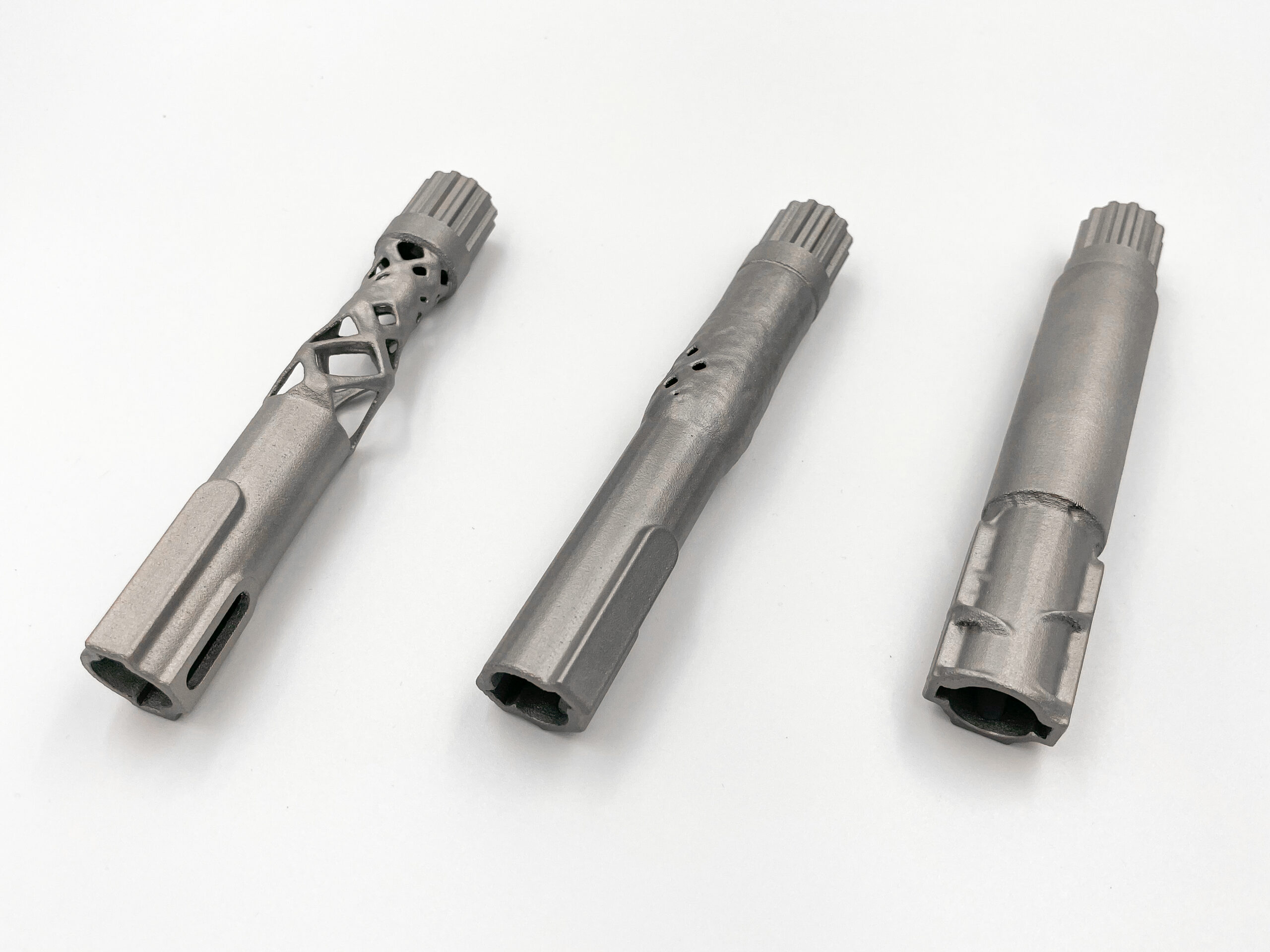
From time-consuming machining to faster custom production
Can 3D printing pay off when a complex component only needs to be produced in a few units? For Serman & Tipsmark, the answer became clear while working on a custom wrench for hydraulic equipment.
Through targeted part selection and design optimisation, the company demonstrated how additive manufacturing can reduce weight, lead time and-depending on the material choice-cost.
The case: Overview and context
Serman & Tipsmark develops, among other things, test rigs for hydraulic components. The company has many projects where only a few units of each part are required, and therefore saw potential in investigating whether 3D printing could make selected components lighter and more efficient to produce.
In a Design for Additive Manufacturing (DfAM) programme, two potential parts were examined: a pallet and a custom wrench. The analysis quickly showed that the pallet would be too expensive to 3D print. It was therefore deselected, and the work continued with the wrench, where the technology had clearer potential.
The wrench has a spline at one end and a hole with a keyway at the other. The complex geometry requires a relatively large amount of time with conventional machining, especially when the component only needs to be produced in small quantities.
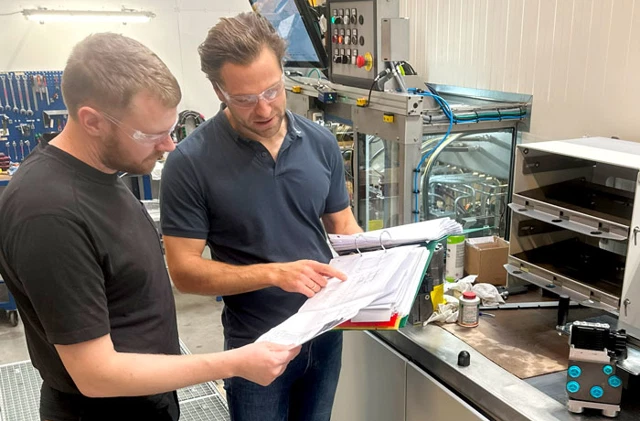
“We chose to take part in the programme because we have many projects where there are only a few pieces of each item. The potential is to identify where we can optimise weight-so if it is a hydraulic block, we might be able to do some flow optimisation and make smaller parts than we usually do.”

Results from programmes with Dansk AM Hub
- 79% weight reduction compared to the original
- Shorter lead time: From 6 weeks to 2 weeks
- 32% price reduction with 3D printing in aluminium
- The choice fell on titanium, where the price is comparable to traditional manufacturing
Value and impact for the company
For Serman & Tipsmark, the value lies both in the component itself and in the method the company has gained for assessing new parts. The programme showed that 3D printing can be competitive for complex components in small series-but also that the technology must be used selectively.
Material choice changes the business case. In titanium, the price of the optimised wrench was comparable to conventional manufacturing, while the weight could be reduced significantly. In aluminium, the calculations showed the potential for a lower price than with traditional production.
The shorter lead time also provides greater flexibility in projects where custom components need to be available quickly, and where a six-week wait can affect the rest of the delivery.
About the company
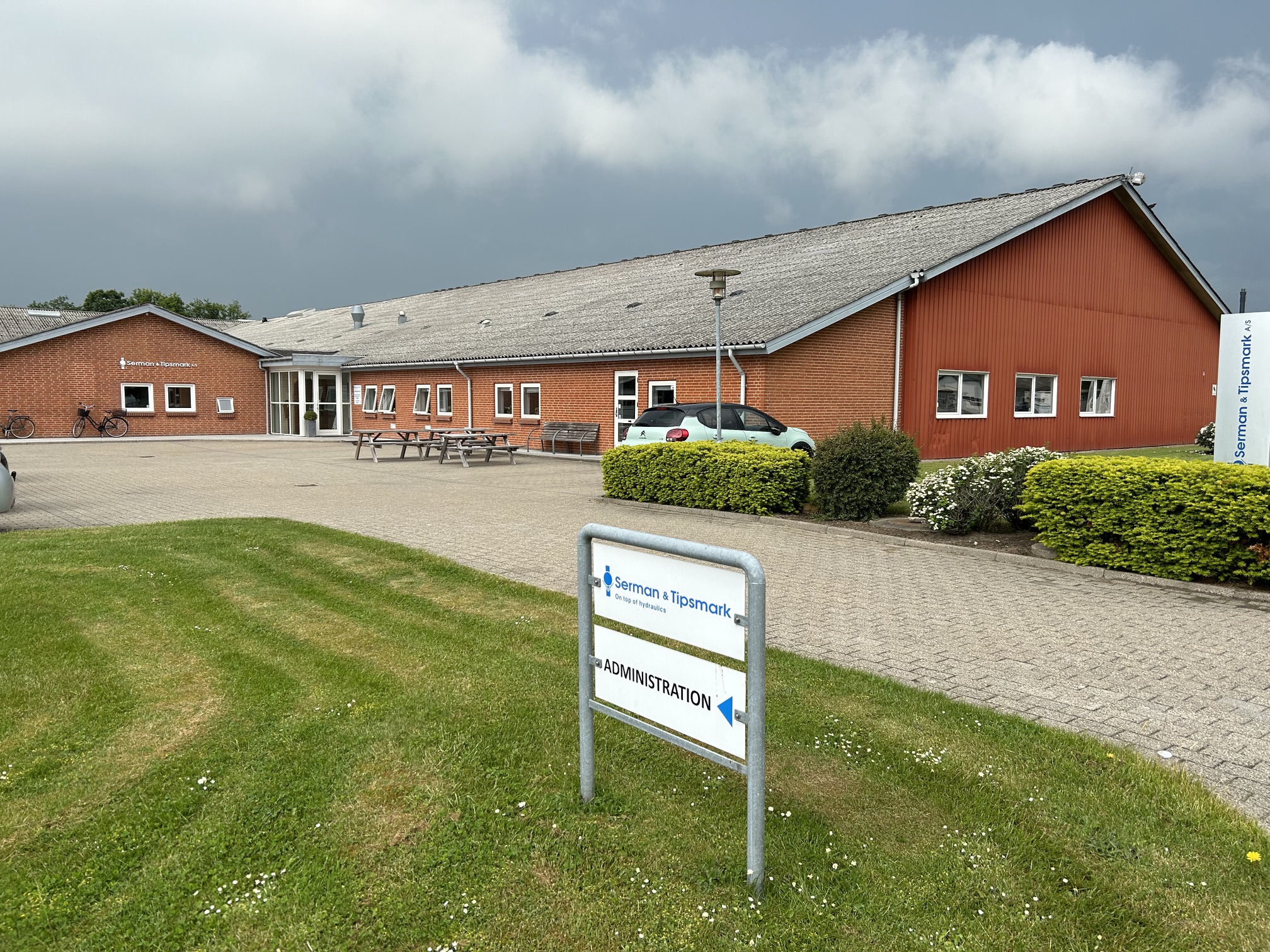
Serman & Tipsmark
Location
Brønderslev, North Jutland
Number of employees
57
Info
Since 1994, Serman & Tipsmark has designed, developed and produced custom-engineered hydraulic systems for a broad, global customer base.
Optimise your opportunities
Is your production setup a limitation-or a strength?
And are there new opportunities?
Related cases
Get inspired
 KC Denmark
3D printing opens the door to new customer dialogues and more efficient production for KC Denmark
 BEWI
BEWIBEWI significantly reduces tool weight and achieves greater flexibility
 Create it REAL
Create it REAL: Local circular 3D production creates global business potential
 Carmo
Carmo