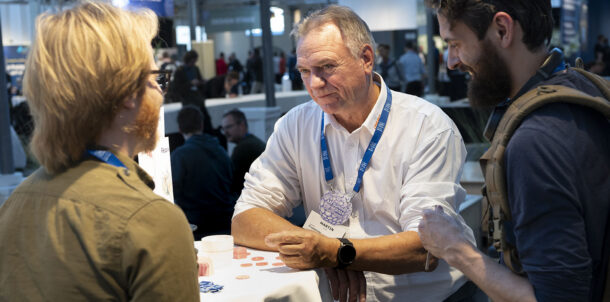

Students and companies are already lining up for a new 3D printing programme
Students and companies are already lining up for a new 3D printing programme
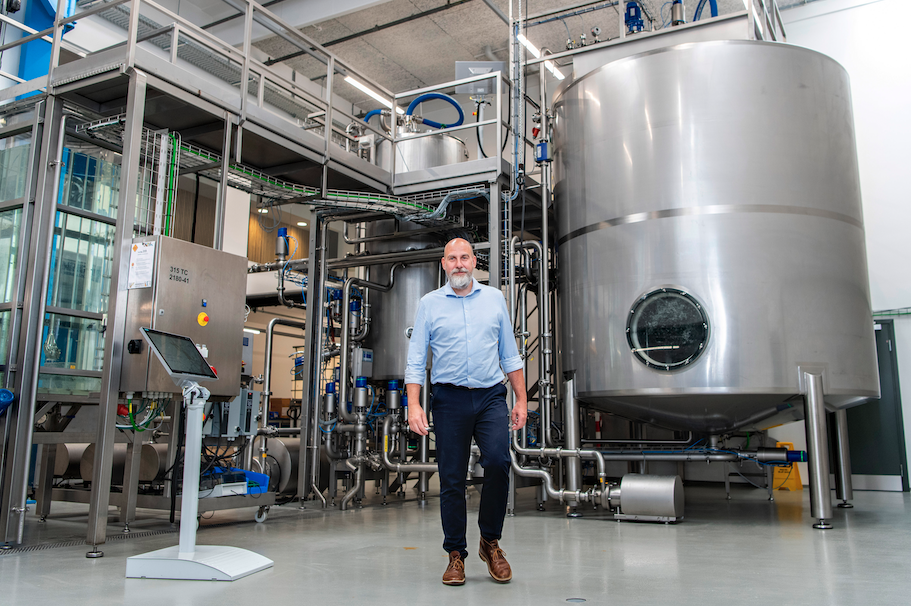
The bell has barely rung for the first lesson of the country’s first higher education programme in industrial 3D printing before interested companies and students are ready to explore and learn more about the technology’s opportunities and potential.
After the summer break, the first cohort of students will begin Industrial 3D Printing at IBA Nexttech, which, as part of IBA Erhvervsakademi Kolding, will provide both equipment and expertise for the new programme. And this is welcomed by several companies – including Alfa Laval, which has used 3D printing in its product development for several years.
“With the new programme, IBA has taken a step into the future. There is no doubt that 3D printing – additive manufacturing – is becoming increasingly important in the development of new products and in production. We view the opportunities very positively for our employees to benefit from the new programme,” says Ole Petersen, Managing Director at Alfa Laval:
The professional bachelor’s programme lasts one and a half years and is the first and only higher education programme of its kind in Denmark. Teaching on the new programme will take place over two consecutive weekdays, so students have the opportunity to work alongside their studies.
“The programme is a relevant and fast route to upskilling existing employees. The programme is an important part of enabling us to create the Danish manufacturers of the future, which will be the foundation for ensuring that the sustainable products of the future are designed, developed and produced on Danish soil,” says Frank Rosengreen Lorenzen, Director of Dansk AM Hub, which works to promote the adoption of additive manufacturing (AM) / industrial 3D printing.
Better products are developed significantly faster
At Alfa Laval, 3D printing has been an important part of everyday work for several years. This is especially true when people in the development department work on new components – or further develop existing products. At Alfa Laval, 3D printing is used primarily in development work – including for prototypes. For larger – or more complex tasks – the company gets help from IBA Nexttech, which has specialist knowledge and a much wider range of 3D printers.
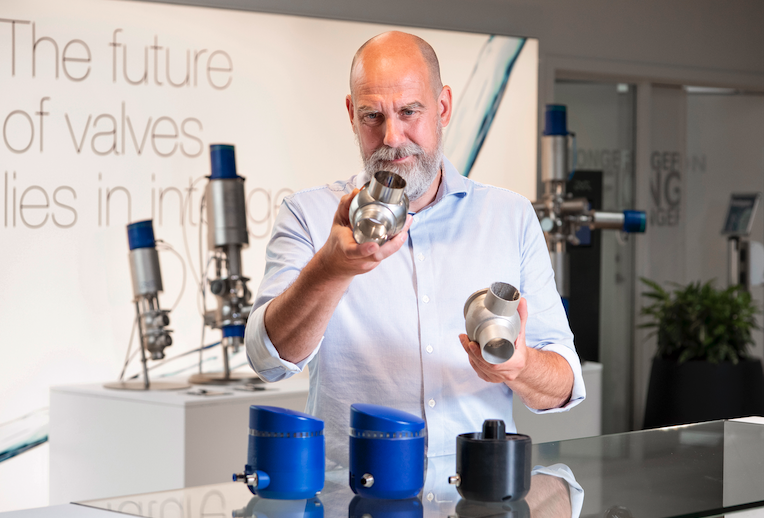
“You can imagine many things when you are drawing, but if you have a 3D print made that you can hold in your hands and test in the laboratory, it makes a huge difference,” states Development Manager Casper Huhnke.
On his desk, Casper Huhnke has, for example, three versions of the intelligent Think Top valve, which Alfa Laval produces in large quantities. All three versions are 3D printed, and the models have gradually become more and more refined during the process as the development department has worked with them.
Work that, with 3D printing, has progressed significantly faster than before.
“Without 3D printing, it can take up to three months to produce a prototype mould. With 3D printing, we can have a prototype in our hands the next day, so it makes a huge difference in moving our work forward,” says Casper Huhnke.
The boundary is shifting
Here and now, 3D printing does not solve all of industry’s challenges, Casper Huhnke emphasises. But he believes the technology will play an increasingly large role in everyday work – also at Alfa Laval. Over time, the technology will become cheaper, and it will then also move from the development department into production itself. 3D printing can help secure the supply of components when you can print them yourself.
“The boundary for when 3D printing is an advantage in industry is constantly shifting. Among other things, we see how the automotive and aerospace industries use 3D printing today. That means there will be rapid acceleration, because these are industries with very high volumes and that set the agenda,” Casper Huhnke assesses.
Read more about the programme at www.iba.dk
Questions
Anja Sinding Morgen, IBA Erhvervsakademi Kolding, +45 61 93 95 71 / asmo@iba.dk

Green Tech supplement: How 3D printing can help keep Danish manufacturing in the green lead
Green Tech supplement:
How 3D printing can help keep Danish manufacturing in the green lead
Soon, the Tour de France will roll through our green landscapes, and of course we are all hoping for a yellow leader’s jersey—but we are also focused on how we can help Danish manufacturing into a green leader’s jersey. We have shared our perspective on how Additive Manufacturing, as a new and emerging technology, can contribute to the green transition and more sustainable manufacturing.
You can read more about this in the Green Tech supplement, published on 14 June in Berlingske and Børsen.
The article itself can also be found online here.
Dansk AM Hub speaks on sustainable Danish manufacturing at the AMGTA Summit
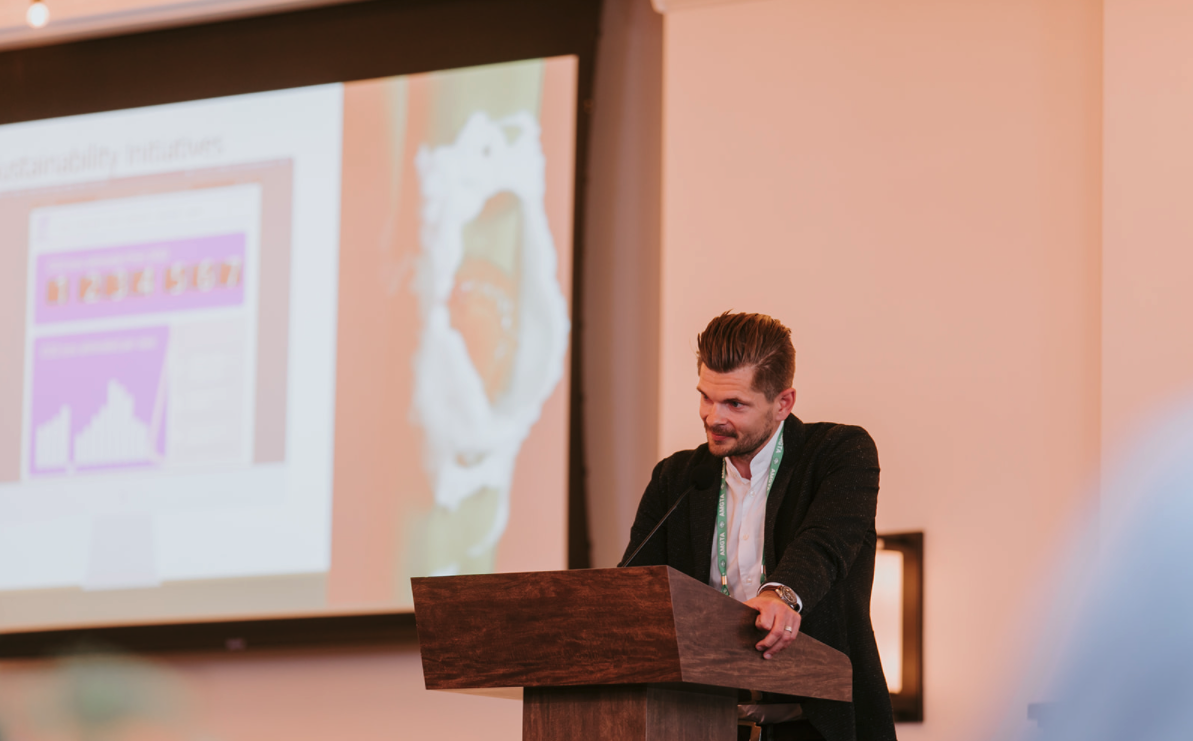
Dansk AM Hub speaks on sustainable Danish manufacturing at the AMGTA Summit
How do we use Additive Manufacturing to develop, design, and produce the green products of the future?
This was the question posed by the CEO of Dansk AM Hub, Frank Rosengreen Lorenzen, at the Additive Manufacturing Green Trade Association Summit 2022, where several members took the stage to present their answers on sustainable initiatives within Additive Manufacturing and manufacturing.
In this context, Frank Lorenzen spoke about how Dansk AM Hub, through concrete initiatives, will demonstrate the sustainable potential of AM technology. With the introduction of a new Danish CO2 tax and an ambitious political climate target to reduce greenhouse gas emissions by 70% by 2030, there is a clear need for new initiatives that can move Danish manufacturing in a greener direction. Here, it can make a major and important difference if our Danish SMEs focus on more sustainable manufacturing, including by looking to future production technologies such as Additive Manufacturing. Therefore, it is also essential for Dansk AM Hub to ensure that Danish SMEs can work with the world’s largest and best 3D printing technology providers.
“It is not sufficient that, over the past 2–3 years, we have merely emphasised the importance of this agenda and expressed a desire to do something actively. We must also drive development forward and create positive momentum through concrete and ambitious initiatives. That is our goal for Dansk AM Hub,” said Frank Rosengreen Lorenzen from the podium.
One of these initiatives is, for example, an upcoming CO2 calculator, which will make it possible to compare CO2 emissions from production using AM versus conventional manufacturing methods. The plan is for all Dansk AM Hub projects to carry out a CO2 calculation that can clearly demonstrate how we can create more sustainable manufacturing with Additive Manufacturing.
At the AMGTA Summit 2022, 20 member companies were recognised as part of the 2022 Sustainability Awards, held on 16 May at the Shinola Hotel in Detroit and attended by more than 70 conference delegates. Launched in connection with this first-ever annual summit, the AMGTA Sustainability Awards will continue to recognise achievements by member companies each year.
AM Summit marked the start of a new, strong collaboration
AM Summit marked the start of a new, strong collaboration
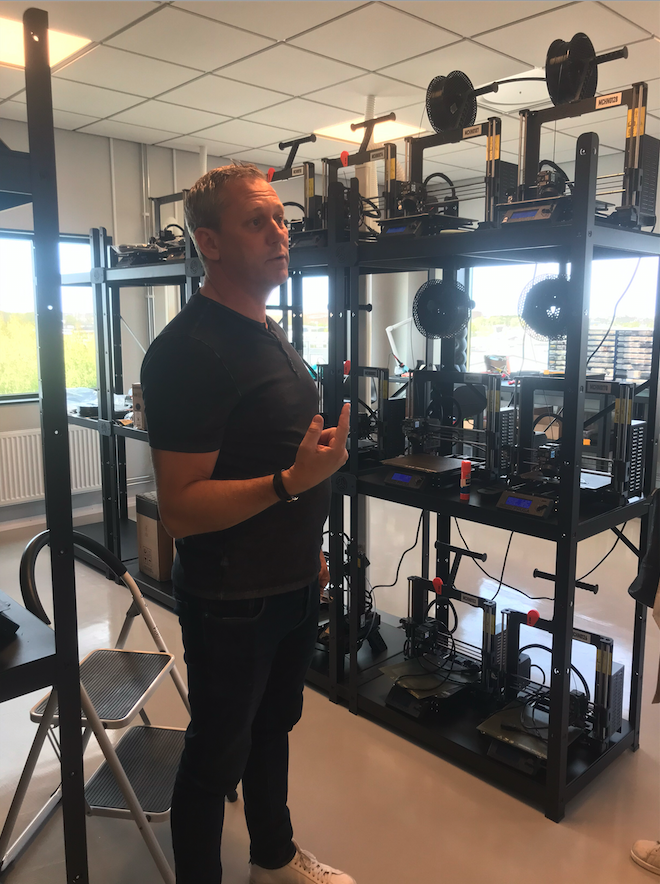
At AM Summit 2021, the more than 350 participants interested in 3D printing had ample opportunity to network and inspire one another—and this was particularly seized upon by two of Dansk AM Hub’s members, SimplyPrint and LostBoysLab. At Scandinavia’s largest 3D printing conference, the two AM players met, and from there things moved quickly into a collaboration that has already benefited greatly from the many possibilities of the technology and has many plans for the future.
“It was during the AM Summit 2021 that we met the coolest, young and dynamic SimplyPrint guys, and thanks to this meeting we have started several projects together where we share knowledge, machines, technology and experiences. It is a really great partnership, and we look forward to many interesting projects together with our new Danish friends,” says Stefan Larsson, CEO of LostBoysLab.
In LostBoysLab’s brand-new facilities in Malmö, Stefan Larsson has more than 100 3D printers at his disposal. And in collaboration with their new colleagues at LostBoysLab, the team from SimplyPrint is developing new 3D-printed products and innovative projects—while expanding each other’s understanding of the technology’s endless possibilities. Here, SimplyPrint contributes expertise in software and the development of new features, while LostBoysLab brings both printers and many years of experience with the technology to the new collaboration. Two strong players, each with their own unique AM expertise and know-how, who—thanks to their meeting at AM Summit 2021—can help advance and further develop the technology.
Prototal Damvig introduces new 3D printing technology to Denmark
Prototal Damvig introduces new 3D printing technology to Denmark
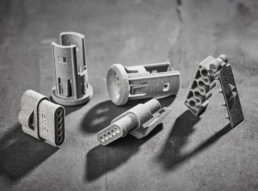
As the first in Denmark—and with the first machine in Europe—Prototal Damvig is expanding its production technology with SAF technology. It is a new 3D printing technology that enables faster prototype development and the production of even more complex and demanding parts, along with new post-processing surface-finishing options. SAF is a robust technology for complex geometric parts with tight tolerances and high surface requirements.
Text: Prototal Damvig A/S
Medical devices, eyeglass frames, packaging, bicycle helmets, and vital components that streamline food production. These are just some of the concrete 3D printing solutions that Prototal Damvig’s industrial customers have had produced over the years at the factory in Taastrup. Prototal Damvig is now adding yet another advanced technology to the existing range of advanced 3D printing technologies the company offers. Close collaboration with the American company Stratasys is the reason Damvig can now present customers with a new offering, as they are the first in Denmark to introduce SAF technology (Selective Absorption Fusion Technology).
Complex solutions and tight tolerances
SAF is a sintering process using PA11 powder. With SAF technology, parts are produced in Nylon 11. This is done layer by layer by applying heat-absorbing ink. The geometry is then fused via infrared-sensitive HAF (High Absorption Fluid). The HAF process causes plastic powder particles to fuse together layer by layer. The cycle is repeated until the parts—layer by layer—are fully built. SAF is ideal for manufacturing parts with complex geometries, including, for example, parts with internal cavities and where tolerances are tight. Because production time is also reduced, SAF is an attractive option for many companies.
Better surface finish
At the same time, SAF offers strong technical properties, among other reasons because the part produced with SAF is encapsulated in self-supporting powdered material. This eliminates the need for additional support structures, both on and inside the components. This reduces production time and therefore helps minimise costs. A further advantage of the new technology is that the parts can subsequently be both sanded and painted. This significantly expands the range of post-processing surface-finishing options.
Facts:
- The robust, high-performance polymer consists of a 100% bio-based material derived from sustainably produced castor oil.
- Prototal Damvig states that, on the Stratasys equipment, SAF-technology parts can be produced with maximum dimensions of 315 mm x 208 mm x 293 mm.
McKinsey: The medical device industry is highly successful with AM technology
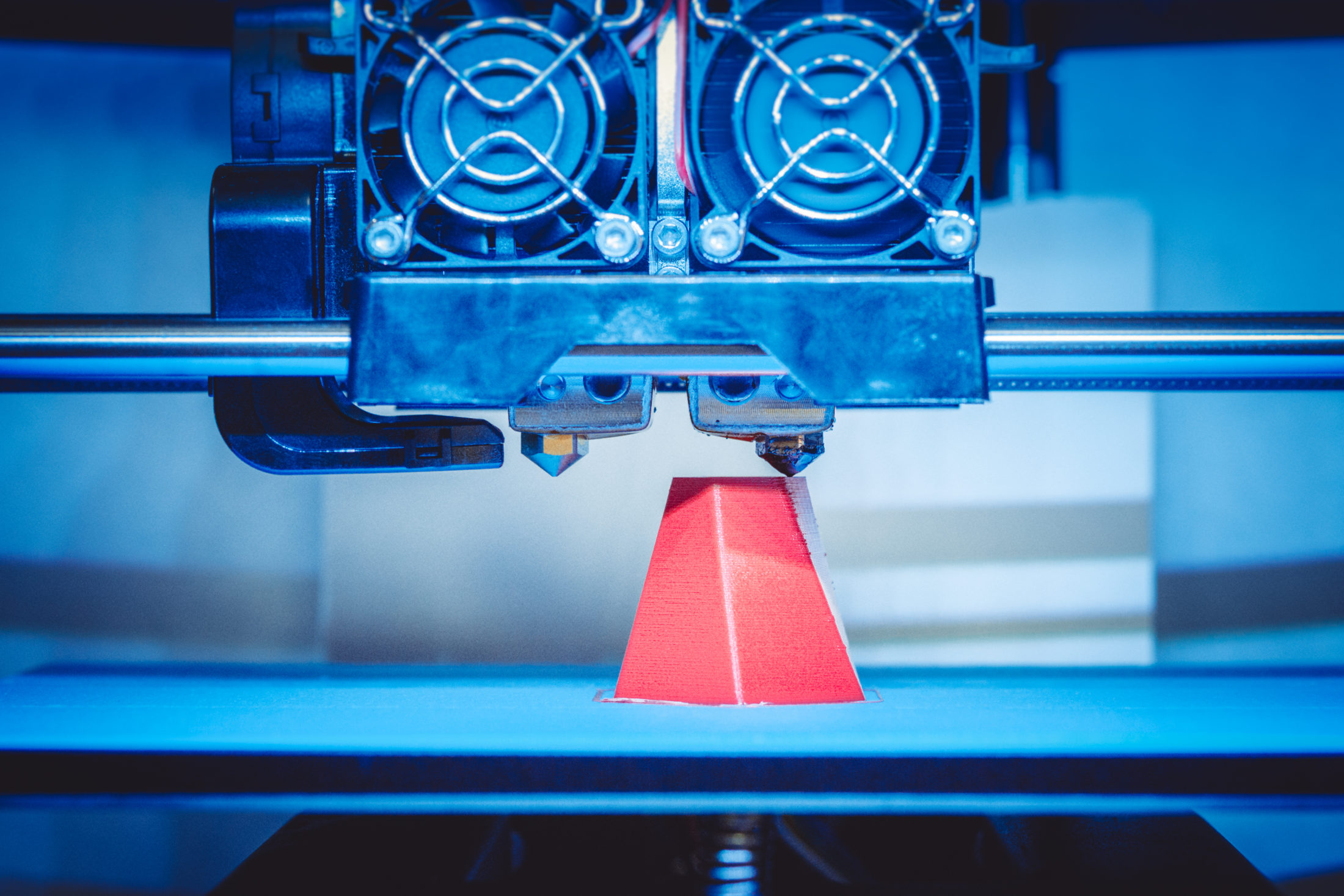
McKinsey: The AM sector has grown into a €13.4 billion industry with an annual growth rate of 22%, with the medical device industry leading the way
An article from McKinsey & Company states that an analysis of the AM sector showed that in 2020 it had grown into a €13.4 billion industry with an annual growth rate of 22%. However, despite its great potential, the use of 3D printing technology has still not achieved a major breakthrough due to a perception among manufacturers that the benefits of the technology are limited. One particularly notable sector, the medical device industry, has nevertheless managed to move beyond these perceived limitations of the technology. Here, AM technologies are routinely used at scale to produce a wide range of products, including prostheses and implants, surgical guides, and anatomical models for preoperative planning or patient education.
Although manufacturers find it difficult to determine how AM will benefit them, and design engineers typically have limited knowledge of the capabilities of AM systems or how to design for AM, some industrial users have nevertheless made significant progress in direct production using AM, including the medical device industry. This industry has been particularly successful because it focuses on personalised products that offer benefits for patients and clinicians that conventional manufacturing technologies cannot match.
Instead of spending time adapting bones or shaping a standard orthopaedic implant, a surgeon can simply print a customised device made to match the individual patient’s morphology. In addition, AM is also being explored in the pharmaceutical sector by using 3D printing techniques to produce pills with customised drug dosages.
After decades as a relevant manufacturing technology, additive manufacturing is therefore on the verge of stardom. Faster machines, better materials, and smarter software are helping to make AM a realistic solution for many real-world manufacturing applications. As the technical barriers fall, manufacturers will need to develop a deeper understanding of these rapidly evolving technologies and also consider building the skills, processes, and business models required for additive manufacturing to make an even greater impact on the industrial world.
The full article from McKinsey & Company can be read here.

Dansk AM Hub appoints a new Chair of the Board
Dansk AM Hub appoints a new Chair of the Board
Dansk AM Hub appoints a new Chair of the Board as 56-year-old Poul Skadhede takes up the position on 1 April 2022. Dansk AM Hub works to strengthen the competitiveness of Danish industry by promoting the use of Additive Manufacturing (AM) / industrial 3D printing, based on a vision of making Denmark a global leader in using AM for more sustainable production.
Poul Skadhede has been appointed to the Board by the Industriens Fond, which has initiated, developed, and continues to support Dansk AM Hub. He takes over the position from Tue Mantoni.
“From the outset, we have seen how Dansk AM Hub has successfully helped Danish manufacturing companies become more competitive through the use of additive manufacturing. We must build on that position further, and we are therefore pleased that Poul Skadhede has now come on board for the next stage of the journey. With Poul, we have gained an entrepreneurial driving force who is passionate about helping Danish companies combine business with sustainability and new technologies, and we are convinced that with Poul’s expertise we will, to an even greater extent, ensure that Dansk AM Hub becomes a key player in creating a sustainable manufacturing sector in Denmark,” says CEO Thomas Hofman-Bang:
“At the same time, we would also like to extend a big thank you to Tue Mantoni, who, in collaboration with the team behind it, has made an impressive effort to make Dansk AM Hub the powerhouse it already is today.”
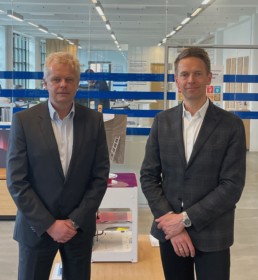
Poul Skadhede (left) & Tue Mantoni (right)
Poul Skadhede is the founder of the consulting company Valcon, where until January 2021 he served as CEO and Chair of the Board. However, he is still active in the company, which, like Dansk AM Hub, also focuses on industrial companies as well as technology and development.
In addition to being the new Chair of the Board at Dansk AM Hub, Poul Skadhede is also Chair of the Government’s Climate Partnership for the defence sector, of Odense Maritime Technology, and a board member of DI Defence and Security and Ærø Whisky. Finally, he is active on advisory boards at VækstPartner Kapital, Navigate Public Affairs, and the Centre for Military Studies at the University of Copenhagen.
“Common to my board work is a fundamental desire to leave a mark and to be curious, especially about climate-friendly solutions. It is of great importance to me to create good things for Denmark, and I am passionate about our strong small and medium-sized industrial companies. I look forward to working with Dansk AM Hub and contributing to ensuring that together we can spread the opportunities and potential of an exciting production technology such as AM,” says Poul Skadhede.
Poul Skadhede takes over the position from Tue Mantoni, who has chosen to step down as Chair. Tue Mantoni has been Chair of the Board at Dansk AM Hub since the Foundation was established in 2018.
About Poul Skadhede (b. 1965):
- Executive, founder and board member, Valcon
- Chair of the Board at OMT Naval, IHAB, Navigate, the Government’s Climate Partnership for the defence sector.
- Board member of DI Defence and Security, Ærø Whisky.
- Advisory Board member at VækstPartner Kapital, Navigate Public Affairs, the Centre for Military Studies at the University of Copenhagen.
- Trained reserve officer (Royal Danish Army Officers’ School 1990), MSc in Economics and Business Administration (Aarhus School of Business 1991)
More and more Danish manufacturing companies are using AM technology
More and more Danish manufacturing companies are using AM technology
3D printing has never been used as extensively as in 2021, when several Danish manufacturing companies combined printing technology with the use of green power and, in particular, experienced the technology’s sustainable potential.
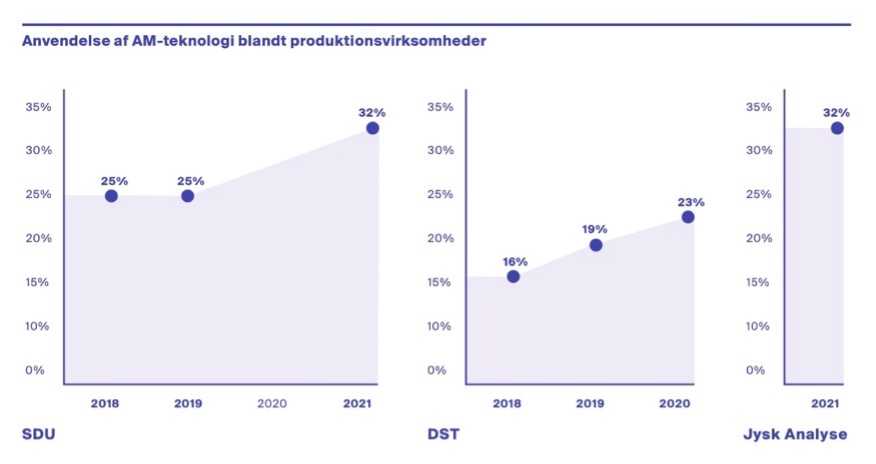
According to the latest AM Report 2022, the use of additive manufacturing (AM) / industrial 3D printing increased steadily from 2018 to 2021. New studies from the University of Southern Denmark (SDU) and Jysk Analyse show that one third of manufacturing companies used AM technology in 2021, a significant increase since 2018, when SDU found that only a quarter of companies used the technology. The same positive trend is also seen in surveys from Statistics Denmark, which likewise showed an increase from 2018 to 2020.
Frank Rosengreen Lorenzen, CEO of Danish AM Hub, says: “It is very positive that more Danish companies are embracing the technology and are therefore able to create production that reduces material use, reduces waste and transport, and results in more customised, circular, and simply better products and components. Overall, we achieve smarter production.”
The AM Report is published annually by Danish AM Hub, which works to strengthen the competitiveness of the Danish business community by promoting the use of AM and 3D printing, and in particular helps companies take the first steps towards more sustainable production, with AM offering the opportunity for local on-demand production with less transport and lower CO2 emissions.
“And this year’s survey clearly shows that we are succeeding in our efforts to spread AM technology in Denmark,” says the satisfied CEO.
Greater focus on sustainable potential
Among the decisive factors in the decision to use the technology are speed and time-to-market, but the results also indicate a greater focus on sustainable potential among the manufacturing companies that use the technology.
According to SDU, 20% of companies have used AM solely to create more sustainable production with reduced material consumption and waste, together with the development of products that are easier to recycle. And according to Jysk Analyse, 69% of companies use AM technology to produce more customised products, which can reduce material consumption and thus contribute to more sustainable production.

“Denmark can become the country that produces the green products the world will demand if we learn to master new production technologies such as 3D printing. We have known traditional production with casting and milling since the Bronze Age, but there is great untapped potential in 3D printing,” says Frank Rosengreen Lorenzen. He particularly noted that, according to the 2021 study, several companies experienced a greater sustainability impact in their production than they had expected from using the technology.
The same message came from the Danish Industry Foundation, which initiated and developed—and continues to support—Danish AM Hub.
Thomas Hofman-Bang, CEO of Industriens Fond, says: “Danish companies must become more sustainable than they are today, because it is crucial that our industry plays an active role and helps drive progress if we, as a society, are to succeed in sustainable change. The results of the analysis show a positive development, because the Danish business community must prioritise sustainable production and look at new technological solutions such as additive manufacturing, which has very special sustainable potential.”
Barriers remain
Although it is positive that more companies are adopting AM technology, there is still a need to spread knowledge about how AM technology can be used in practice in manufacturing companies and how the technology has the potential to enable more sustainable production.
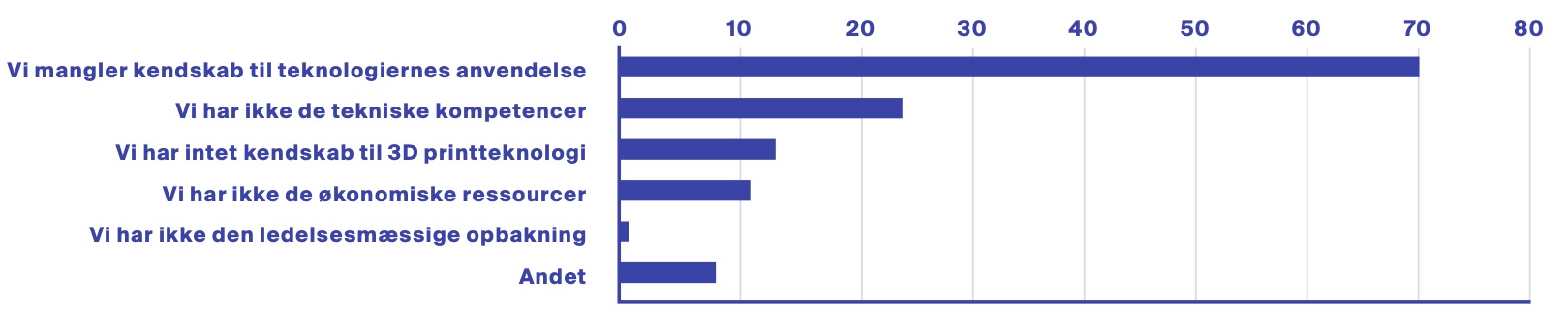
According to the Danish AM Report 2022, the most common barrier to implementing AM technology is that companies cannot see its relevance to their business.
Frank Rosengreen Lorenzen says: “The technology is no longer the challenge. There is now a vast range of printers and software, and it is possible to print in materials such as concrete, titanium, glass, plastic, chocolate, composites, etc. The major challenge today is that industry lacks knowledge of how manufacturers can build a business model around 3D printing, how they can design and develop an AM component or product, and how they can document the environmental benefits. In the coming years, we must demand that our manufacturers dare to break free from the—I am tempted to say old-fashioned—production processes on which we have built industrialisation, and instead explore the opportunities and benefits that exist in additive manufacturing.”
The Danish AM Report 2022 and the SDU screening can be found at www.am-hub.dk
More manufacturing companies are using AM technology
More manufacturing companies are using AM technology
3D printing reached unprecedented levels in 2021, as more Danish manufacturing companies powered their printing technology with green electricity and, in particular, experienced the technology’s sustainable potential.
According to the latest AM Report 2022, the use of Additive Manufacturing (AM) / industrial 3D printing increased steadily from 2018 to 2021. New studies from the University of Southern Denmark and Jysk Analyse show that one third of companies used AM technology in 2021, a significant increase since 2018, when SDU found that only one quarter of companies used the technology. The same positive trend is also seen in studies by Statistics Denmark, which likewise show an increase from 2018 to 2020.
“It is absolutely positive that more Danish companies are adopting the technology and are thereby able to create production that reduces material use, waste and transport, and increases more customised, circular and simply better products and components. Overall, we are achieving smarter production,” says Frank Rosengreen Lorenzen, CEO of Dansk AM Hub.
The AM Report is published annually by Dansk AM Hub, which works to strengthen the competitiveness of Danish industry by promoting the use of AM and 3D printing—particularly to help companies take the first steps towards more sustainable production, where AM enables local on-demand production with less transport and lower CO2 emissions.
“And this year’s mapping clearly shows that our efforts to spread AM technology in Denmark are succeeding,” says a satisfied CEO.
Greater focus on the sustainable potential
Among the decisive factors in the decision to use the technology are speed and ‘time-to-market’, but the results also indicate a greater focus on the sustainable potential among the manufacturing companies that use the technology.
According to SDU, one in five of these companies has used AM specifically to create more sustainable production with reduced material consumption and waste, as well as developing products that are easier to recycle. And according to Jysk Analyse, 69% of companies use AM technology to produce more customised products, which can reduce material consumption and thereby contribute to more sustainable production.
“Denmark can become the country that produces the green products the world will demand if we learn to master new production technologies such as 3D printing. We have known traditional production with casting and milling since the Bronze Age, but there is great untapped potential in 3D printing,” says Frank Rosengreen Lorenzen, who notes in particular that, according to the study, more companies in 2021 experienced a greater sustainability impact from producing with the technology than they had expected.
The same message comes from the Danish Industry Foundation, which initiated and developed—and continues to support—Dansk AM Hub:
“Danish companies must be more sustainable than they are today, because it is crucial that industry plays an active role and helps drive progress if we as a society are to succeed in the green transition. The results of the analysis show a positive development, because Danish industry must prioritise sustainable production and look at new technological solutions such as Additive Manufacturing, which holds a very special sustainability potential,” says Thomas Hofman-Bang, CEO of the Danish Industry Foundation.
Ongoing barrier
Although it is positive that more companies are adopting AM technology, there is still a need to raise awareness of how AM technology is applied in practice in manufacturing companies, and how the technology has the potential to enable more sustainable production.
According to Dansk AM Report 2022, the most widespread barrier to implementing AM technology is that companies cannot see that the technology is relevant to their business area.
“The technology is no longer the challenge. There is now a multitude of printers and software, and you can print in materials such as concrete, titanium, glass, plastic, chocolate, composites, etc. The major challenge today is that industry lacks knowledge of how, as manufacturers, they can build a business model around 3D printing, how they can design and develop an AM component or product, and how they document the environmental benefits,” says Frank Rosengreen Lorenzen:
“In the coming years, we must demand of our production that it dares to break free from the—dare I say old-fashioned—production processes on which we have built industrialisation, and instead explore the opportunities and advantages that exist in additive manufacturing.”
Read Dansk AM Report 2022 as well as the studies from SDU and Jysk Analyse
3D printing gives Riemann control, flexibility, and faster delivery
Riemann A/S
With additive technologies, Riemann has reduced lead time from 150 days to under two weeks and strengthened their security of supply and sustainability.
The challenge: Long lead times and limited influence
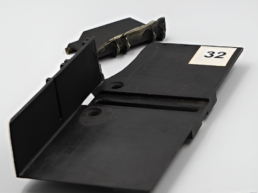
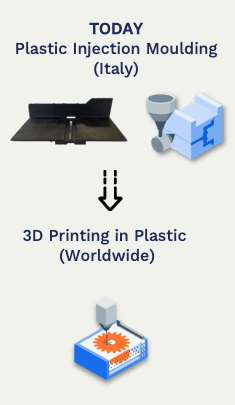
As a smaller player, Riemann A/S experienced low priority with their suppliers of plastic parts produced via traditional injection moulding in Italy. They were seen as a “small fish” and therefore faced lead times of up to 150 days. This created significant production bottlenecks and hindered the company’s ability to adapt quickly to market needs. In addition, the traditional manufacturing method made it both expensive and cumbersome to change the design of the components.
The solution: Additive manufacturing in plastic
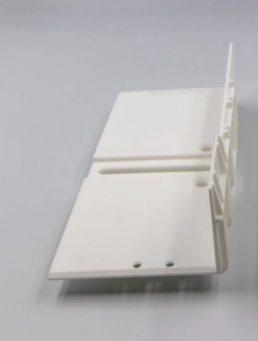
By switching from injection moulding to 3D printing in PA12 (via SLS technology), Riemann achieved:
- Significantly shorter lead time – from 150 days to just 10 days.
- Greater design freedom, enabling rapid optimisations and adjustments without the need for tooling changes.
- Global security of supply, as they now have access to a network of more than 100 potential suppliers across Europe and worldwide.
- Localised production, reducing transport distances and CO₂ emissions.
The result: Faster, greener, and more robust supply
The transition to 3D printing means that Riemann is no longer dependent on a single supplier in one country. By collaborating with, among others, Teknologisk Institut and SelectAM, they can produce parts on demand closer to their home market. At the same time, the unit price has been reduced by 3.2%—without compromising on quality.
Results from programmes with Dansk AM Hub
- Localised production
- Global security of supply
- Greater design freedom
- Significantly shorter lead time – from 150 days to just 10 days.
- Unit price reduced by 3.2%
Documented impact on CO₂e
According to a CO2e assessment of the case carried out using AM Hub’s own CO2e calculator, the CO₂e emissions for the 3D-printed component are close to the level of the conventionally manufactured one. In the specific comparison, additive manufacturing resulted in only 4 % higher CO₂e emissions—equivalent to just 70 grams per part. As the new solution also reduces transport and material waste, the overall climate footprint is trending downward as the energy in the production network becomes greener.
Is your production setup a limitation—or a strength?
And are there new opportunities?
About the company
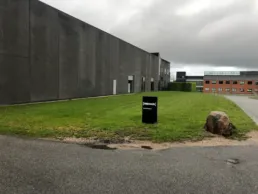
Riemann A/S
Krakasvej 8, 3400 Hillerød
Number of employees: 65
Riemann A/S is a Danish manufacturer of specialised skincare products.
Future perspectives: From product to platform
With digital storage and on-demand printing, Riemann can eliminate the need for large inventories and instead produce spare parts and customised solutions as needed. Further optimisation of components through topology optimisation and lightweighting paves the way for both lower material consumption and higher performance.
3D printing has given Riemann ownership of their production and made them faster, greener, and more resilient.
Is your production setup a limitation—or a strength? And are there new opportunities?
Get input on how hybrid production can support your business strategy.