
BenBen hand-builds better bicycles with 3D-printed components
BenBen

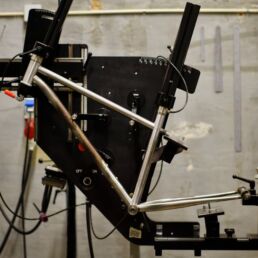
In professional cycling, it is important—indeed, almost crucial—to achieve exactly the right balance between strength and weight. No one knows this better than BenBen Cykler, which manufactures hand-built bicycle frames, and this is why the company chose to take part in the 3D print design optimisation programme, Design for Additive Manufacturing (DfAM), where they explored the possibility of optimising several different custom components using 3D printing.
In the video, you can hear co-owner Ari Rosenzweig explain how 3D printing helps BenBen push the bike to the limit.
BenBen Cykler is a small company with a bicycle workshop and shop on Amager, from where they, among other things, produce hand-built bicycle frames in steel and titanium—frames that are built entirely from scratch. BenBen wanted to explore some of the possibilities of metal 3D printing and therefore took part in the design optimisation programme Design for Additive Manufacturing (DfAM).
Results from programmes with Dansk AM Hub
- Enormous design freedom and the ability to make more complex parts
- Lower weight than before
- Higher strength—and a better strength-to-weight ratio
- Financial advantage with smaller order sizes, avoiding large inventories
In the project, BenBen optimised various parts—both entirely new parts and existing parts that have been redesigned. Specifically, this involved a small part for a seatpost and some parts for the frame itself. Here, they succeeded in reducing the weight while maintaining strength, resulting in an optimised strength-to-weight ratio.
Is your production setup a limitation—or a strength?
And are there new opportunities?
About the company
BenBen
Annasvej 2, 2900 Hellerup
Number of employees: 4
BenBen Cykler is a small company with a bicycle workshop and a shop on Amager. Here, they produce, among other things, handmade bicycle frames in steel and titanium.
At the same time, BenBen highlights the enormous design freedom as well as short lead times for custom components in small quantities as major advantages—not to mention the financial benefits, as BenBen could manage with smaller production runs instead of previously having to order thousands of parts for it to make economic sense.
“3D printing is exactly the right method to use for this new part we have made. It is a very, very small part, and if it were to be made using traditional machining on a CNC machine, it would require an extremely large amount of machining—and very detailed, very fine, and very small. And I think it would become quite complicated to make.”
Ari Rosenzweig
Co-owner, BenBen
Is your production setup a limitation—or a strength? And are there new opportunities?
Get input on how hybrid production can support your business strategy.

Danes 3D-print tourniquets for the wounded in Ukraine
Danes 3D-print tourniquets for the wounded in Ukraine
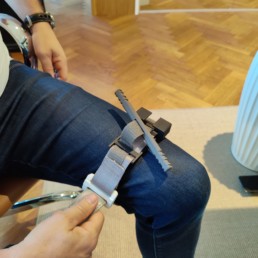
The Ukrainian military has an urgent need for help in the form of tourniquets for both wounded soldiers and civilians – and therefore the Danish 3D-printing community is now coming together to produce and send 3D-printed tourniquets to Ukraine.
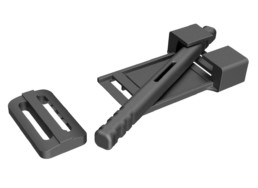
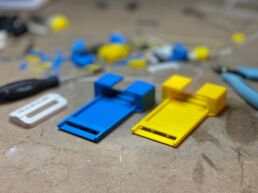
Specifically, it is the handle and buckles that are 3D-printed, and those parts will already be sent to Ukraine next week, where they will be assembled and fitted with fabric so that, for example, they can be used as first-aid equipment.
“The technology offers a flexibility and speed that make it well suited to the situation Ukraine is in, where they lack basic equipment and have difficulty obtaining it. In Denmark, we have an invisible factory with thousands of 3D printers – both private and professional – and we are now putting that factory to work,” says Frank Rosengreen Lorenzen, CEO of Dansk AM Hub, which works to promote the adoption of Additive Manufacturing – also known as industrial 3D printing.
Dansk AM Hub supports the initiative by, among other things, donating material – the filament – for the 3D-printed parts, which is recycled PLA produced in Europe from reprocessed food packaging purchased through Lostboyslab in Malmö, which has tested the design with paramedics in several countries.
The first spools of filament from Dansk AM Hub are already on their way to 3D Verkstan’s Danish office at Herningsholm Erhvervsskole og Gymnasier, from where it will be distributed to Danish volunteer so-called makers – that is, people who gather in groups to make and produce things with a shared desire to solve current challenges.
“The makers community is able to respond extremely quickly to a crisis and redesign things so they fit the specific situation and needs, especially in times of crisis. Through our network of companies and private individuals, we can respond immediately and produce exactly what is needed to save lives,” says Michael Lysgaard, founder of MakersHelp.
Michael Lysgaard expects that as early as next week, thousands of tourniquets can be sent to Ukraine. The association Bevar Ukraine is responsible for logistics and final assembly of the tourniquets, while Center for Industri in Viborg has contributed its knowledge within health and medical 3D printing and assisted with the development and testing of the 3D-printed tourniquets.
This is not the first time the Danish 3D-printing community has come together to help address equipment shortages in crises. When an urgent need for protective equipment arose worldwide during the COVID-19 crisis, they also joined forces to deliver free 3D-printed solutions in the form of masks, visors, and safety equipment.
Read the coverage of the initiative here:
TV 2 News
Danish companies seize the free opportunity to try 3D printing
Danish companies seize the free opportunity to work with 3D printing
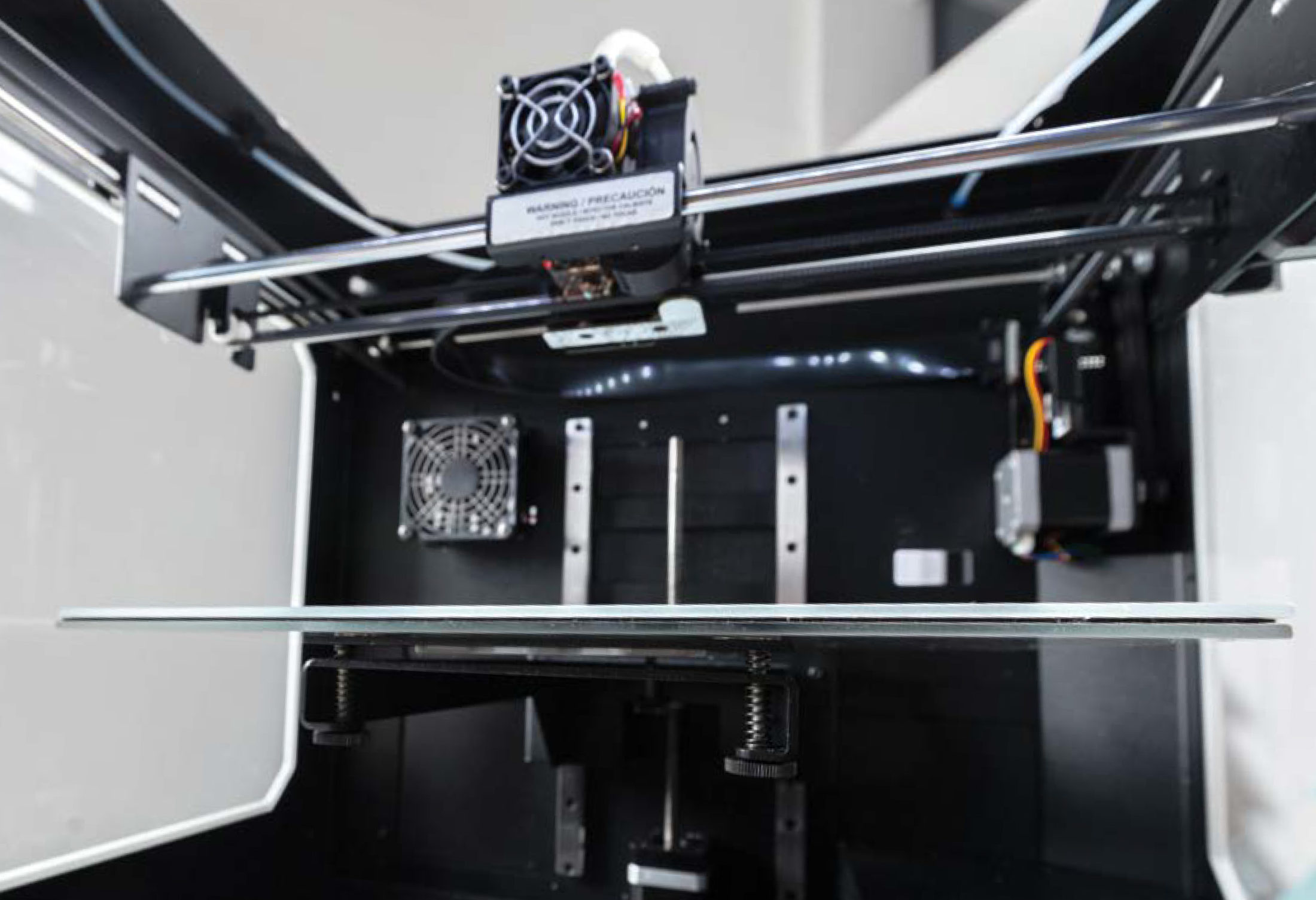
With the 3DP Try-Out programme, Dansk AM Hub and Center for Industri have continued their collaboration to give Danish companies the opportunity to borrow and test a 3D printer for one month, with the aim of gaining concrete knowledge and experience in bringing AM technology into the company.
To date, 83 companies have completed the 3DP Try-Out programme, and during 2021, 23 Danish companies participated. The focus has ranged from new sustainable solutions to time-saving production and development processes.
Among the manufacturing companies in the programme, for example, DANILIFT and ChromaViso succeeded in significantly shortening their development time, and the technology also made it possible to produce more precisely, thereby strengthening their competitiveness. In addition, the companies SIK Teknik and SEJMA Industries found that the timeline from idea to first prototype can be just a few hours, whereas it previously took up to several weeks.
“We have a project within the next few months where the plan is to incorporate 3D printing into the development process. It will be a brilliant tool for us when we develop new components for entirely new products and concepts, and we very much look forward to using the 3D printer in future projects,” says Julie Markussen, Communications Manager at DANILIFT.
“The project has definitely been decisive in our now considering acquiring our own printer, thereby securing the company’s position in a competitive market,” says Michael Maagaard, Design Engineer at SIK Teknik.
For several of the participating companies, taking part in 3DP Try-Out has subsequently resulted in the acquisition of their own 3D printer for further work, which testifies to the programme’s positive impact and great potential.
Read four examples from 3DP Try-Out here:
- ChromaViso saves light-years on prototype production
- With 3D technology, SEJMA Industries tackles climate challenges
- 3D printing boosts production, safety and service for DANILIFT
- From weeks to hours: SIK Teknik optimises product development with 3D technology
Read more about the 3DP Try-Out programme here
3D-printed lamps light up Copenhagen more sustainably
Signify
In recent years, Signify (formerly Philips Lighting) has helped light up several locations in Copenhagen—including the City of Copenhagen—with its 3D-printed luminaires. 3D mass production enables large-scale, customised production as well as more sustainable manufacturing.

Thousands of lamps light up buildings owned by the City of Copenhagen every day. And the light is housed in 3D-printed luminaires from the Dutch company Signify (formerly known as Philips Lighting), which over the past four years has delivered more than 3,000 3D-printed luminaires to the City of Copenhagen. All as part of a desire for more sustainable environments.
“Producing traditionally manufactured luminaires takes longer and is more complex at scale. With 3D printing technology, we have less waste, use less material, we can produce on demand, and we are closer to customers in both the design phase and production, because we can easily set up large-scale production anywhere in the world,” says Signify Business Manager Emma de Looff:
“Sustainability is at the core of our work and business, and 3D printing technology is a game changer for our industry. We only produce what we need, in a fast and efficient way.”
The sustainable aspect of Signify’s luminaires is primarily about the material—polycarbonate filament, which is a strong, high-quality material—and the printed plastic can be recycled through re-granulation at end of life. According to Signify, a 3D-printed polycarbonate lamp has a 47% lower CO2 footprint than a traditionally manufactured metal lamp. In addition, there is no glue and fewer parts, and the lower weight saves 35% CO2 in transport.
“The lamps are more sustainable for three reasons. First, the material is lighter, which reduces the transport CO2 footprint, and we do not powder-coat the material. Second, the design uses as few components as possible and no glue, making the product, components and materials easier to recycle,” says Emma de Looff from the headquarters in the Netherlands, which—like the Nordic headquarters in Ørestaden—is fitted with 3D-printed luminaires:
“And third, AM technology makes it easy to establish factories locally and thus be close to our customers, reducing the number and distance of logistical movements in the supply chain.”
Results from using 3D printing technology
- A 3D-printed polycarbonate lamp has a 47% lower CO2 footprint than a traditionally manufactured metal lamp
- Lower weight saves 35% CO2 in transport
- Less waste
- Less material
- We can produce on demand
- We are closer to customers in both the design phase and production
By introducing 3D printing into production, Signify has experienced the major benefits of additive manufacturing (AM).
“Signify is a well-considered example of how AM can be used in a greener manufacturing process. Both because, in a more distributed production setup, you only produce through a network of smaller, dispersed production centres that are all digitally connected, and because you only produce when necessary—resulting in minimal transport to the end user and robust supply chains,” explains Frank Rosengreen Lorenzen, Managing Director of Dansk AM Hub.
Signify has a vision of becoming even stronger on the sustainability agenda by leveraging the material’s potential for recycling. So far, Signify has turned old CDs into filament and made new lamps from that material, and in the longer term the plan is for products to be taken back, broken down and reused for new products.
Is your production setup a limitation—or a strength?
And are there new opportunities?
Even new products that you can design yourself. In the future, Signify will offer consumers the opportunity to leverage the major design advantages of AM technology by letting them design their own pendant or table lamp online, with countless options for size, colour, texture and pattern. Signify will then 3D-print it in recyclable materials and deliver it to their door within a few weeks. The first lamps are made from 24 old CDs, and everything except the E27 socket and the light source is 3D-printed.
“But we are also exploring the potential of making lamps from old fishing nets pulled from our oceans. We want to push the boundaries when it comes to design, and for us, recycling materials is just one of the ways we can support a sustainable and more circular economy,” says Emma de Looff, echoed by an enthusiastic Managing Director of Dansk AM Hub:
“Signify has discovered how AM and 3D printing create entirely new opportunities to design, develop and produce the products of the future. We hope this can inspire many more companies to challenge traditional manufacturing thinking with new technology such as AM,” says Frank Rosengreen Lorenzen.
About the company
Signify
KLP I, Arne Jacobsens Allé 15, 2300 Copenhagen
Number of employees: 110
Signify is the world’s leading provider of intelligent LED products, systems and services.
The City of Copenhagen says:
The City of Copenhagen wanted to upgrade to LED lighting in its buildings, and the luminaires both met a need for round/customised luminaires in the range and aligned well with the municipality’s ambition to minimise waste and pursue more environmentally friendly solutions, because the products make it possible to recycle the printed plastic through re-granulation at end of life.
“The City of Copenhagen procures sustainably to reduce local and global environmental impact. Through sustainable procurement, we help ensure that every purchase is made with consideration of the footprint it leaves on the world, and that the products and services we procure are of the highest possible standard in terms of climate and environment,” says Thomas Simone Maare, Project Manager at the City of Copenhagen.
About Signify:
- In 2016, Signify became a separate company from Royal Philips.
- Signify is present in more than 70 countries with 37,000 employees worldwide.
- In 2020, Signify had sales of €6.5 billion.
- Large-scale production of Signify’s 3D-printed luminaires currently takes place at factories in the USA, Indonesia, India, Hungary and Belgium.
- Signify became CO2-neutral in 2020 and has ambitious goals for the future.
- In 2022, Signify expects to be able to deliver 3D-printed products directly to Danish homes.
Is your production setup a limitation—or a strength? And are there new opportunities?
Get input on how hybrid production can support your business strategy.
Dansk AM Hub opens AM hotspot in Jutland
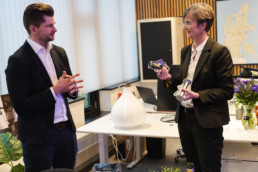
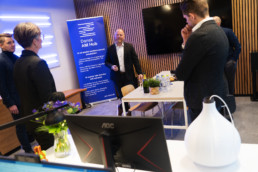
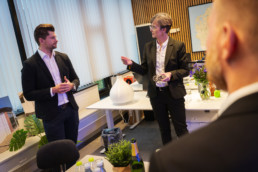
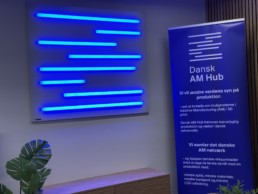
Mayor Dorte West visits the new Dansk AM Hub at Herningsholm Vocational School & Upper Secondary Schools.
Dansk AM Hub opens AM hotspot in Jutland
Ready, set, 3D print.
In January 2022, Dansk AM Hub can finally open its new office in Jutland, from where companies can learn more about Additive Manufacturing (AM) and 3D printing technology. The new office will anchor Dansk AM Hub and AM in Jutland—more specifically in Herning—and make it easier for companies to get started with 3D printing.
“For us, it is important to be where a large part of our target group and members are. With the new office, we are strengthening our presence in Jutland so that our many excellent manufacturing companies experience the support closer to home, and we can assist them with advice and guidance on bringing 3D printing into production and realising its great potential,” says Frank Rosengreen Lorenzen, CEO of Dansk AM Hub.
This technology can make the many small and medium-sized companies in Jutland more competitive—for example by reducing waste and significantly lowering material consumption in production, reducing the need for transport and large inventories, and enabling much more sustainable production.
See, listen to and read more from the opening at P4 Midt & Vest (1:34:42–1:40:13), in the news at TV Midt Vest and again in the late news broadcast, as well as in Herning Folkeblad.
To communicate the potential to companies, Dansk AM Hub’s CTO, Steffen Schmidt, will be based day to day in the new offices at Herningsholm Vocational School & Upper Secondary Schools in Herning—when he is not behind the wheel on his way to visit manufacturing floors across Jutland.
“We must create the optimal conditions to make it easy to get 3D printing technology up and running, and our new office is intended to be a hub for inspiration, advice and guidance,” says Steffen Schmidt, hoping that many will visit the office, which will also serve as a showroom with an exhibition of 3D-printed products.
“But these are only a few examples of the technology’s possibilities, and I am confident that together we can push the boundaries of what Danish companies can do. I look forward to meeting industry both at our office and out in their day-to-day operations, so that together we can explore and demystify 3D printing,” says Steffen Schmidt.
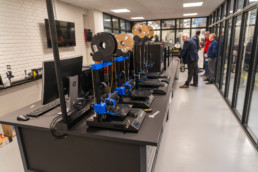
With three 3D metal printers available at educational institutions in Herning and several other printers in the boot of his car, Steffen Schmidt will ensure that manufacturing companies in Jutland become familiar with the possibilities and can easily get started using the new technology—for example by offering to lend them a printer temporarily so they can experience the many benefits before potentially investing in one themselves.
And it is precisely crucial to the competitiveness of our manufacturing companies in Central Jutland that they learn to master the rapidly emerging 3D printing technology—especially 3D metal printing, which has been a major focus in recent years in, for example, the German automotive industry, where hundreds of Danish companies today supply everything from batteries to small components to German car factories.
For this reason, Dansk AM Hub has also entered into a collaboration with Herning Municipality, which has established the Mid- and West Jutland 3D Metal Alliance together with Herningsholm Vocational School & Upper Secondary Schools, AU Mekanik og Produktion Herning, DAMRC and the Business Council Herning & Ikast-Brande, with the specific aim of promoting 3D metal printing and jointly strengthening efforts to increase the use of 3D metal printing.
“In Herning Municipality, we are constantly working to create new opportunities for the municipality’s businesses. 3D printing is one of the new technologies that contributes to innovation and sustainable development in manufacturing companies. Through the 3D Metal Alliance, we are building a centre of excellence here in Herning for education, knowledge, skills and qualified labour within 3D metal printing,” says Dorte West, Mayor of Herning Municipality.
She therefore also welcomes Dansk AM Hub to Herning:
“I am very pleased with the collaboration with Dansk AM Hub on establishing the office in Herning, which makes 3D metal printing accessible to the manufacturing companies in our area. It enhances the interaction between business and educational institutions, and it will support the strong position within the metal industry that we already have. Innovation and sustainable development are absolutely crucial to the competitiveness of our manufacturing companies in Central Jutland.”
3D printing boosts production, safety and service for DANILIFT
DANILIFT A/S

When DANILIFT undertakes to develop bespoke solutions, it most often requires that a standard lift is either given special features or modified. As specialists in custom-built lifts, DANILIFT has taken part in Dansk AM Hub’s and Center for Industri’s 3DP Try Out programme to explore how 3D printing can solve some of the production and development challenges that would otherwise arise in this work.
“DANILIFT has a clear vision to rise above the other players in the Scandinavian market, and we will go a long way to get there. This requires us to always stay ahead of developments. This applies especially to product development, but also within service and safety. Here, 3D printing will come to play a significant role, and the programme with Dansk AM Hub has been of exceptionally great value, as well as a major and important step on the path towards the company’s future strategy,” says the company’s owner, Knud Erik Markussen.
In connection with the production, service and installation of lifts at DANILIFT, many special sub-components are included in a complex lift, and safety is therefore always the top priority—also when it comes to new development. Therefore, “right first time” is essential, and here it proved that prototyping and, not least, test prints were decisive in quickly moving to the next step in the development process. With the help of 3D technology, DANILIFT can therefore develop faster, manufacture more precisely and thereby strengthen the company’s competitiveness.
DANILIFT’s management also sees 3D technology as a necessity to rise above competitors in Scandinavia and to remain a leader in its field in Denmark.
“On the one hand, the company’s management has recognised the need to put this important 3D technology into play, but the company’s development engineers and designers have also seen the advantage of achieving even faster progress towards the final goal through 3D printing,” it says.
Results from programmes with Dansk AM Hub
- Faster in the development process
- Faster progress towards the final goal
DANILIFT has subsequently invested more energy and time in identifying the potential of 3D printing for future projects.
“We have a project within the next few months where the plan is for 3D printing to be incorporated into the development process. It will be a brilliant tool for us when we need to develop new components for entirely new products and concepts, and we very much look forward to using the 3D printer in future projects,” says Communications Manager Julie Markussen:
“3D scanning is also a topic we are very interested in, because it can help us identify the structure of vehicles that we mount our product on. That aspect will be particularly exciting for us when new electric cars arrive, which likely have some special structures compared with classic fuel-driven vehicles, because we would very much like to create more sustainable solutions for our customers.”
Is your production setup a limitation—or a strength?
And are there new opportunities?
About the company
DANILIFT A/S
Thorsvej 6, 4100 Ringsted
Number of employees: 40
Danilift manufactures lifts for installation on panel vans and chassis, and provides service and lift inspections for its own lifts as well as lifts from other manufacturers.
About DANILIFT
DANILIFT from Farsø currently focuses on the production, service and sale of lifts for installation on panel vans and chassis for the European, Danish and Scandinavian markets.
The company’s customers are typically power utilities as well as rental companies, manufacturing companies, service companies, etc., that need to work at height.
The product range includes lifts with working heights from nine to 30 metres. Lifts that can be mounted on vehicles range from 3.2 tonnes up to 28 tonnes. In addition, the company builds bespoke lifts for, among other things, mining. The company’s service programme covers all types of personnel lifts regardless of manufacturer.
Danilift is a member of Liftgruppen, which, in collaboration with, among others, the Danish Technological Institute, has developed Liftkontrol, which is responsible for safety/inspections of lifts and ensuring that the lifts comply with applicable regulations.
“DANILIFT has a clear vision to rise above the other players in the Scandinavian market, and we will go a long way to get there. This requires us to always stay ahead of developments. This applies especially to product development, but also within service and safety. Here, 3D printing will come to play a significant role, and the programme with Dansk AM Hub has been of exceptionally great value, as well as a major and important step on the path towards the company’s future strategy.”
Knud Erik Markussen
Owner, DANILIFT
Is your production setup a limitation—or a strength? And are there new opportunities?
Get input on how hybrid production can support your business strategy.
From weeks to just a few hours: SIK Teknik optimises product development with 3D technology
Sik Teknik ApS
Can you optimise your business with 3D technology?
SIK Teknik has considered that question for a long time as part of the company’s ongoing focus on skills development and innovation.

Through Dansk AM Hub and Center for Industri’s 3DP Try Out programme, SIK Teknik had the opportunity to borrow a 3D printer free of charge and gain insight into the many benefits of AM technology—and here, the time savings in particular have been an important factor.
“We have had a strong focus on the development processes, and here we have experienced very significant time savings throughout the entire development course. The timeline from idea to first prototype can now be just a few hours, whereas previously it was days—perhaps weeks. At the same time, in various test setups we have been able to use 3D-printed components, which in turn has reduced the timeframe considerably,” says design engineer at SIK, Michael Maagaard.
Results from programmes with Dansk AM Hub
- Faster development process
- The timeline from idea to first prototype can now be just a few hours, whereas previously it was days—perhaps weeks.
- Effective in maintaining the company’s competitiveness
SIK Teknik has a strong focus on development processes, and therefore participation in the 3DP Try Out programme came at a good time for the company, as the design department was experiencing increasing challenges with workload and time pressure. Here, 3D technology has proven effective in maintaining the company’s competitiveness, as it has optimised—and thereby strengthened—the company in several areas.
“The project has certainly been decisive in that we are now considering acquiring our own printer in order to secure the company’s position in a competitive market,” says design engineer at SIK, Michael Maagaard.
Is your production setup a limitation—or a strength?
And are there new opportunities?
SIK Teknik, which in its day-to-day work deals with special-purpose machinery for the industrial segment, is a leader in its field and today is a subcontractor to many larger Danish industrial companies, including, among others, the Grundfos Group globally.
About the company
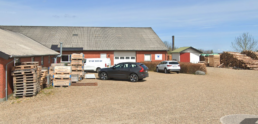
SIK Teknik ApS
Iller Damvej 9, 8643 Silkeborg
Number of employees: 3
SIK Teknik was founded in 2002 with the development, design, manufacture and refurbishment of special-purpose machinery for use in industry.
About SIK TEKNIK
The company SIK TEKNIK from Silkeborg develops, manufactures and refurbishes special-purpose machinery for the industrial segment. Their competencies span a wide range of different, industry-specific solutions, which is the company’s strength today. SIK TEKNIK’s strongest competencies include:
- Many years of design and project management experience
- Development, design and manufacture of new special-purpose machinery, either as standalone machines or as complete or partial production lines for use in industry.
- Carrying out automation tasks and robot solutions
- Manufacture of auxiliary tools and fixtures
- Refurbishment as well as maintenance and repairs according to the customer’s wishes
Is your production setup a limitation—or a strength? And are there new opportunities?
Get input on how hybrid production can support your business strategy.
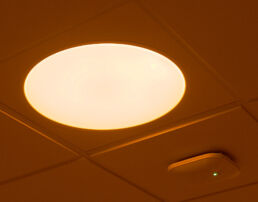
ChromaViso saves light-years on prototype production
ChromaViso A/S

ChromaViso borrowed a 3D printer from Dansk AM Hub for one month to work on the design and development of 3D-printed holders and brackets for their lighting concepts. The loan was part of Dansk AM Hub’s 3DP Try-Out programme, in which ChromaViso borrowed a 3D printer from Dansk AM Hub and Center for Industri, which they used to print prototypes themselves for their various lighting concepts. Where they previously had the part manufactured in metal by an external supplier, ChromaViso has now gained insight into AM technology—and thus discovered a production method that can save them significant amounts of time and make a substantial difference for the company in the long term.
ChromaViso delivers customised and health-promoting lighting solutions to, for example, the healthcare sector to create better environments and conditions for both patients and staff. The ability to design and print in-house has resulted in significant time savings for ChromaViso, which, through its participation in the 3D Print Try-Out programme, has achieved a much shorter development process—and, in addition, greater flexibility in the development department, enabling them to reach prototypes for evaluation and functionality testing more quickly.
Is your production setup a limitation—or a strength?
And are there new opportunities?
“We have truly opened our eyes to 3D printing and the many possibilities of the technology. Participating in the project and borrowing a 3D printer—and experiencing the potential first-hand—has been of great value. It has provided a solid foundation for our considerations about moving forward with 3D technology in the company,” says Finn Pedersen, R&D Mechanical Engineer at ChromaViso.
About the company
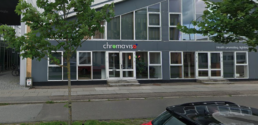
ChromaViso A/S
Finlandsgade 25, 8200 Aarhus
Number of employees: 11
ChromaViso provides lighting solutions for the healthcare sector that improve the working environment, health, quality of life, and financial performance.
About ChromaViso
The company ChromaViso from Aarhus specialises in lighting concepts for the healthcare sector. They produce unique, customised quality solutions based on users’ specific needs and particular requirements. ChromaViso focuses in particular on:
- Ergonomic lighting: The focus is on lighting concepts designed for operating theatres and examination rooms with screen-based work. The patented concept has been developed in close collaboration with leading surgeons, researchers, and specialists to ensure optimal working conditions and thereby reduce headaches and improve safety and quality.
- Circadian lighting: Specially developed for hospitals, psychiatry, and the care sector, with a clinically documented lighting protocol tailored to the diagnosis, the ward’s rhythm, and specific needs.
- Knowledge of light: ChromaViso participates in several international research projects and has best-practice experience from more than 100 hospitals. The company has therefore built extensive expertise and knowledge about the impact of light on people.
Is your production setup a limitation—or a strength? And are there new opportunities?
Get input on how hybrid production can support your business strategy.
Eldon: With 3D printing, we improve the user experience
Eldon Biologicals A/S

Eldon Biologicals A/S produces dry-format cards for blood grouping—the so-called EldonCard—used to quickly determine blood type, but Eldon’s challenge has been that the test is carried out in a more complex way, which has led some customers to make mistakes.
This has previously resulted in several enquiries from dissatisfied customers, particularly in the USA, who have had difficulty completing the home test despite detailed instructions for use.
Following Eldon’s participation in the AM Hybrid project, the challenges have now been resolved.
“It is a simple device, but with 3D printing we have improved it so that taking the sample is easier and more intuitive. The new design significantly enhances usability,” says Henrik Holst from Eldon Biologicals:
“With the new cover, it becomes—thanks to 3D technology—easier to take the blood sample, and this improves the user experience and thus also ensures that we receive fewer complaints and claims. In every respect, it is a better product that strengthens both the user experience and our business.”
Results from programmes with Dansk AM Hub
- Improved design
- Saved significant time in the product development phase
- Print a prototype in a couple of hours, enabling them to develop the cover more quickly and correct minor errors.
- A better product
In the Hybrid programme, Eldon developed a 3D-printed cover for their existing EldonCard, thereby improving an existing product. The new cover ensures that the amount of blood used is distributed correctly and sufficiently across a range of antibodies on the card, which indicate the person’s blood type.
Through AM Hybrid, Eldon has created a product that still protects the card, but now also increases the precision and reliability of the result, as well as usability when performing a test.
Is your production setup a limitation—or a strength?
And are there new opportunities?
“In every respect, I am positive about both our programme and the final product. We were involved throughout the entire product development process, where we experienced a strong commitment to improving our product. We are strong on usability, and that knowledge was actively and agilely applied in the design phase,” says Henrik Holst:
“And not only have we improved the design with 3D technology; we have also saved significant time in the product development phase, at only a fraction of the cost compared with previous programmes.”
As part of the AM Hybrid programme, Eldon participated in various workshops where, during the design phase, a prototype could be printed in a couple of hours, enabling them to develop the cover more quickly and correct minor errors.
About the company
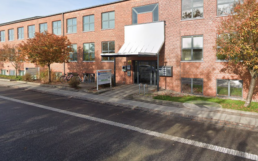
Eldon Biologicals A/S
Sandtoften 10, 2820 Gentofte
Number of employees: 14
ELDON BIOLOGICALS A/S is a Danish manufacturer of dry-format cards for blood type determination.
According to Henrik Holst, the new cover could significantly increase revenue, as they are trying to get onto the shelves at Wal-Mart and also expect to export even more to the US military, which they already supply with EldonCards. In addition, they are considering several opportunities, for example in pilgrimages to Mecca and exports to Africa, where it can be crucial for, for instance, women in labour.
“This could become a true Danish export success story!” says an enthusiastic Henrik Holst.
Facts about Eldon
- Eldon started as an independent company in 1991, but has previously been part of Novo Nordisk.
- The largest market for EldonCards is the USA, where they currently ship 60,000 cards per month.
- Eldon also supplies EldonCards to the US military, where it can be crucial for soldiers to know their blood type in order to begin any necessary treatment more quickly.
- Eldon expects to launch the new component for EldonCard in the first half of 2022.
Is your production setup a limitation—or a strength? And are there new opportunities?
Get input on how hybrid production can support your business strategy.
The winners of the nationwide 3D printing competition have now been announced
The winners of the nationwide 3D printing competition have now been announced
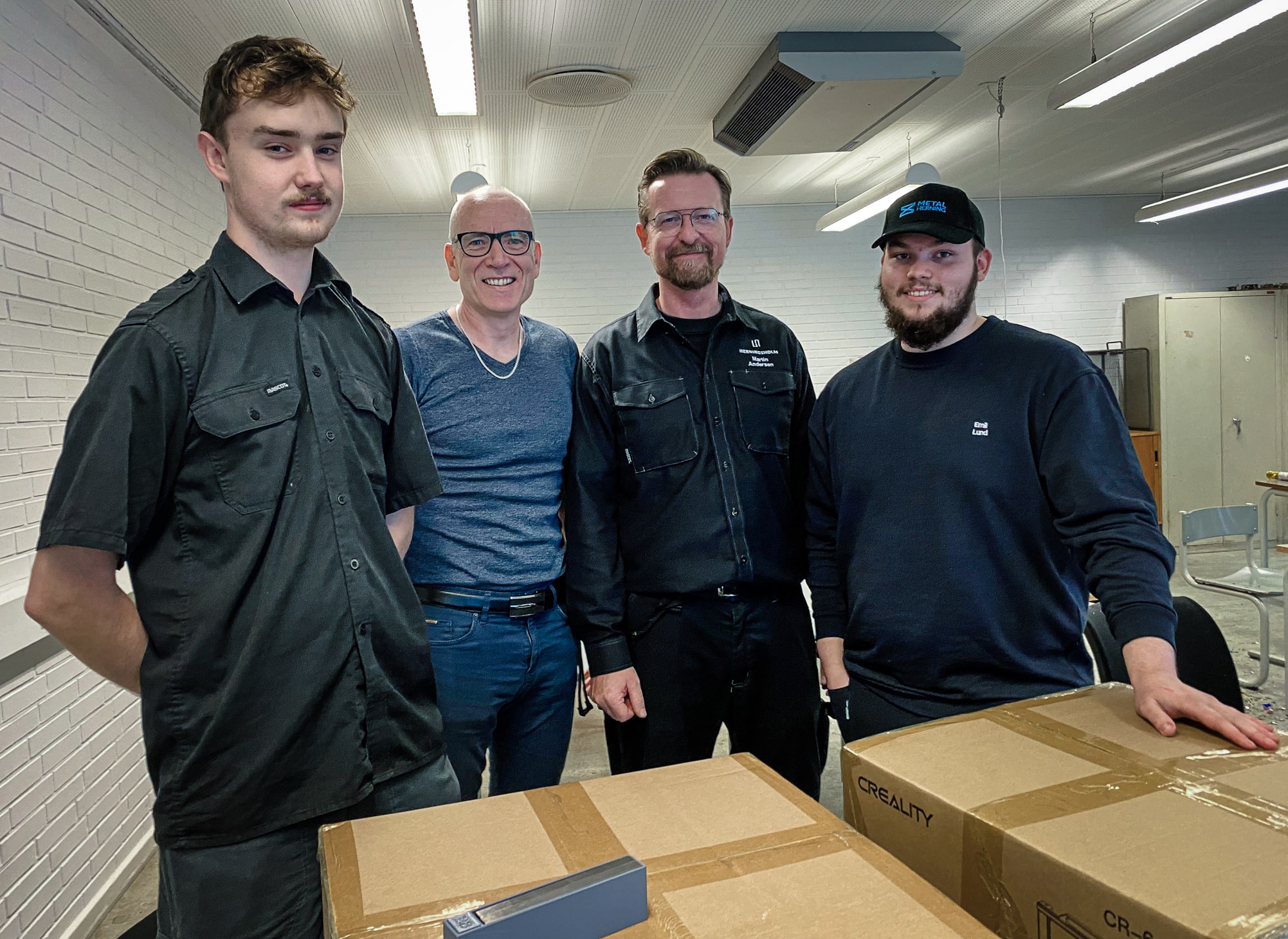
On Wednesday, 17 November, the winners of a nationwide 3D printing competition for vocational school students were announced.
The project was launched by the Knowledge Centre for Crafts, Design & Architecture and the Knowledge Centre for Automation and Robotics Technology to support vocational students’ interest in 3D printing technology and increase the overall motivation to work creatively with technology in vocational education programmes.
The competition aims to spread awareness of—and interest in—working with additive manufacturing and 3D printing technologies. The use of 3D printing technologies is growing explosively worldwide across many different industries, and it is therefore important that Danish companies and educational institutions embrace the technology and its many opportunities, so that we do not fall behind in international competitiveness.
A well-thought-out solution
The competition judges emphasised that the team had clearly gone through a well-considered and solid process, resulting in an adaptive design that solves a specific problem. It was also clear that the solution is tailored to the capabilities of the 3D printer, and the print itself was of high quality.
“It has been a fun challenge, because we had to find a solution to a specific problem, and we immediately knew what we wanted to take on,” says Emil Birkeholm Lund.
Despite a high level among the participants, Simon Møller Jensen and Emil Birkeholm Lund took the win.
“It’s pretty wild that we won! I’m very surprised, because we have seen the others’ solutions, and I think the standard was very high, so I’m just really happy,” says Simon Møller Jensen, who is currently completing his GF2 programme in the industrial technician programme at Herningsholm.
Winning design: A practical holder for the workshop
On Wednesday, Simon Møller Jensen and Emil Birkeholm Lund were named the skilled winners of the 3D competition with their innovative parallel block holder. They 3D-printed a holder for parallel blocks, which otherwise tend to be scattered around in everyday use: “[…] all these parallel blocks usually end up in a haystack in the workshop, and it would be nice if it were easier to quickly find the right one,” says Emil, who—like Simon—is training as an industrial technician at Herningsholm.
3D printer for the lucky winners
“It’s simply a really great prize, because none of us has a 3D printer at home. The competition has truly been an eye-opener for us in terms of what you can use a 3D printer for, and what opportunities there are for exciting new solutions to very specific problems,” says Emil Birkeholm Lund.