
3D printing design programme optimises work gloves for super strength
High Precisions Systems ApS
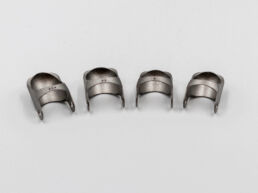
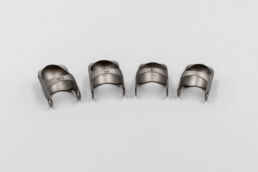
The company High Precisions Systems had high ambitions for its newly developed exoskeleton gloves when it entered the 3D printing design programme Design for Additive Manufacturing (DfAM). Nevertheless, the company was surprised by how significantly the technology was able to improve the 3D-printed titanium gloves by halving the thickness and thereby increasing grip strength while reducing wear on the finger joints.
Most people know the Iron Man films, where the superhero gains superpowers when he puts on his robotic suit. The reference to Iron Man is an obvious one when it comes to the Danish start-up High Procession Systems, which develops and manufactures exoskeleton gloves—gloves that are a necessary and important tool in industry, where daily heavy lifting requires extra grip strength.
“More specifically, you can think of exoskeleton gloves as work gloves you put on to significantly increase your grip strength from the wrist and through the fingers,” explains Niels K. B. Dahl, owner of High Precisions Systems.
Lighter and stronger than current exoskeleton gloves
Prior to the DfAM programme – a 3D printing design optimisation programme – High Precisions Systems had already developed a new technology that enabled them to expand the use of the exoskeleton glove so that it also absorbs compressive forces.
“The fact that our gloves absorb compressive forces sets us apart from our competitors in particular. Since the degree of load on a joint during movement is one of the major factors underlying the development of osteoarthritis, we can—so far as we know, uniquely—help safeguard employees’ future health by removing this load,” says Niels K. B. Dahl.
Participation in the DfAM programme resulted in halving the wall thickness
Although High Precisions Systems’ exoskeleton glove already had great potential prior to the DfAM programme, participation provided several important inputs for further development—especially regarding how far it was possible to push the limits of 3D printing technology in terms of wall thicknesses on the printed components.
“Taking part in the DfAM programme was interesting to me for several reasons, but especially because of the opportunity to investigate how thin a wall thickness it is possible to produce. Wall thicknesses are particularly interesting to us, as they are the difference between picking up a ballpoint pen with big thick winter gloves or thin, fitted surgical gloves,” says Niels K. B. Dahl:
“In addition, it was also important to produce test parts. It is one thing to sit and run simulations on a computer, but another to see what can actually be produced. At the same time, in some cases it can be difficult to quantify the ‘feel’ of an object. In that case, there is nothing to do but test it in real life.”
A natural, thin fit – without issues
The interest in challenging the wall thickness of the parts was the starting point for launching the programme—and it delivered very positive results and renewed knowledge within 3D printing.
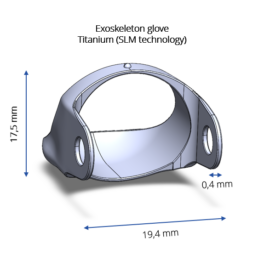
“From the outset, we had settled on 0.8 mm wall thickness at the thinnest points on the part. But during the programme we explored the possibilities and, with great success, brought the wall thickness all the way down to 0.4 mm despite the complex geometries. With 3D printing technology, this caused no problems, even though it is incredibly thin,” says Niels K. B. Dahl. In addition to the halved wall thickness resulting in lower material consumption, it also provides a more natural fit for the glove’s current and future users.
Is your production setup a limitation—or a strength?
And are there new opportunities?
Results from programmes with Dansk AM Hub
- Material and technology: Titanium printed with Laser Powder Bed Fusion
- Wall thickness: Reduced from 0.8 mm to 0.4 mm
- Weight reduction: 44%
- Cost reduction with 3D printing: 6%
“You have to dare to take some chances”
Niels K. B. Dahl points in particular to one thing that has been of great value from the company’s participation in the DfAM programme: the new awareness of the opportunities and potential of 3D printing technology that companies can benefit from in their development process and competitiveness.
“Before the DfAM programme, we were already using 3D printing, but I did not know the limits of metal 3D printing, and that has been the main thing to find out—namely that there is a lot that can actually be done,” says Niels K. B. Dahl, elaborating on the importance of daring to take chances when it comes to new technologies:
“What I would say to others considering taking part in a similar programme is that you have to dare to take some chances and make use of the technology available if you want to remain competitive—and here 3D printing is a solution you cannot ignore.”
Is your production setup a limitation—or a strength? And are there new opportunities?
Get input on how hybrid production can support your business strategy.

3D printing opens the door to new customer dialogues and more efficient production for KC Denmark
KC Denmark
3D printing opens the door to new customer dialogues and more efficient production
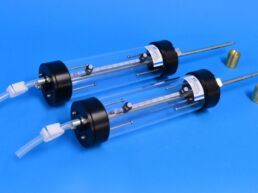
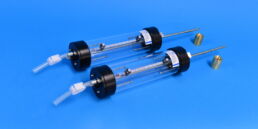
KC Denmark, which manufactures specialised sampling equipment for, among other things, seabed samples, has over the past two years invested in both equipment and skills to produce finished components through 3D printing.
They have already achieved significant savings by printing components that are expensive to manufacture using traditional machining, while also reducing inventory to what is necessary. In addition, working with 3D printing has made it possible to rethink the design of existing products and significantly reduce complexity.
The case – overview and context
Through the AM Sustain programme, KC Denmark set out to address the question: what are the next business opportunities if we invest even more in 3D printing? Dansk AM Hub and KC Denmark evaluated the product portfolio and identified two key opportunities:
- Simpler products and lower assembly costs
- Faster ability to offer specialised products to new customers
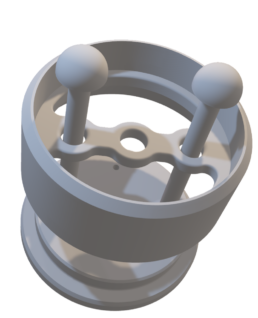
Through training and sparring in product design, KC Denmark now has the opportunity to consolidate several individual parts into one of its key products. A product that previously consisted of many components and required manual assembly can now be assembled from far fewer parts.
This means not only lower assembly costs, but also fewer errors, shorter production time, and a more robust design.
At the same time, the company now has a stronger basis for assessing which 3D printing technologies suit which products—and when it makes sense to produce in-house or via external partners.
Results of the programme with Dansk AM Hub
- Simpler products
- Faster time-to-market
- Increased flexibility
- Stronger supply chain
- Lower capital tied up
Value and impact for the company
The results clearly show the potential:
- Opportunities to develop and test new, specialised products faster with new customer segments
- Greater flexibility and less dependence on external suppliers
- Significant reduction in the number of components and the need for manual assembly
- Shorter lead times and lower assembly costs
- Cost savings on complex products or small series
At the same time, 3D printing enables on-demand production of components, reducing the need for physical inventory and increasing security of supply.
Is your production setup a limitation—or a strength?
And are there new opportunities?
About the company

Carmo A/S
Holmbladsvej 19, 8600 Silkeborg
Number of employees: 20
KC Denmark A/S is a company with more than 35 years of experience, specialising in the development of various types of sampling equipment for oceanographic, environmental, and pollution studies.
Perspective: From complex constructions to intelligent design
Working with 3D printing has not only changed production—it has also opened up new ways of thinking about product development.
By integrating multiple functions into fewer components, KC Denmark can reduce both material consumption and waste. At the same time, the technology enables continuous design improvements and customer adaptations without additional tooling costs.
This makes the company better prepared for the future, where flexibility, speed, and adaptability are decisive competitive parameters.
“Once you start designing with 3D printing in mind, it changes the way you think about products. Suddenly, it is not about how you assemble something, but about how you avoid having to assemble it at all”
Tonny Stenberg
CPO, KC Denmark
Is your production setup a limitation—or a strength? And are there new opportunities?
Get input on how hybrid production can support your business strategy.
BEWI significantly reduces tool weight and achieves greater flexibility
BEWI
25% shorter lead time through 3D print design optimisation
Greater design freedom that creates value for the business

In the 3D print design programme Design for Additive Manufacturing (DfAM), the polystyrene manufacturer BEWI succeeded in reducing both the weight, cost, and lead time of some of the tools used in the process—and they also appear to be more efficient.
In the video, Development Manager Ole Krebs from BEWI talks about the design programme and the potential of 3D printing technology.
The case – overview and context
BEWI is a plastics company that produces polystyrene—also known as Styrofoam—in customised solutions. In our 3D print design optimisationprogramme DfAM, the company looked at optimising one of the tools used in the moulding process. The goal was to achieve a printed solution that could provide flexibility—and it succeeded. During the programme, BEWI optimised the tool design and thereby primarily reduced the weight by 74% compared to traditional tooling, while also improving time-to-market by, among other things, cutting lead time by 25%.
Results of the programme with Dansk AM Hub
- Enormous design freedom and flexibility
- 25% shorter lead time
- 53% price reduction compared to traditional tooling
- 74% weight reduction compared to traditional tooling
“It provides enormous flexibility and represents a potential where, by optimising the tool, we can offer more complex and better solutions in terms of both quality and cost, and thereby address the challenges that our machine settings cannot help us with. In addition, we are seeing signs that the optimised component can increase our production capacity and reduce energy consumption in production if we implement it broadly—simply because it is more efficient,” says Ole Krebs, Development Manager at BEWI.
Is your production setup a limitation—or a strength?
And are there new opportunities?
About the company
BEWI A/S
Østerled 30, 4300 Holbæk
Number of employees: 52
BEWI is a leading European supplier of packaging, component, and insulation solutions. Through a circular business model, the Group produces raw materials and goods, while used materials are collected and recycled into new products.
Overall, BEWI sees great potential in 3D printing. Today, the company faces production challenges that machine settings cannot solve—but by optimising the tool with 3D printing, BEWI achieves greater design freedom, meaning it can offer a more complex solution.
“It provides enormous flexibility and represents a potential where, by optimising the tool, we can offer more complex and better solutions in terms of both quality and cost, and thereby address the challenges that our machine settings cannot help us with. In addition, we are seeing signs that the optimised component can increase our production capacity and reduce energy consumption in production if we implement it broadly—simply because it is more efficient.”
Ole Krebs
Development Manager, BEWI
Is your production setup a limitation—or a strength? And are there new opportunities?
Get input on how hybrid production can support your business strategy.
Heatflow: How energy efficiency became a competitive advantage
Heatflow
How Heatflow turned energy efficiency into a competitive advantage
A redesign in the engine room generated new revenue

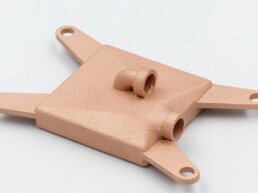
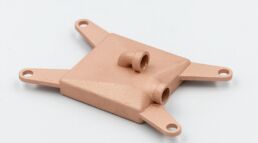
What if a necessary cost could become a new source of revenue? Through a strategic redesign of a cooling system, it was possible to convert excess heat into district heating—while also improving efficiency, security of supply, and climate footprint. The case shows how additive manufacturing can be used as a lever for business development in existing facilities.
The case—overview and context
At Heatflow, we looked where few people look: in the engine room. Where systems run reliably, year after year, without anyone really questioning whether they also create maximum value. The systems did their job—but they did not work strategically.
The starting point for our collaboration was a classic design consisting of several assembled parts. It did its job, but left clear potential for improvement. The question was whether it was even possible to design our way out of the problem—and whether energy efficiency could be seen as something other than a necessary cost. The case is interesting because Heatflow succeeded in turning a technical constraint into a strategic asset.
As in many companies, the departments had different success criteria that did not necessarily point in the same direction. This can easily slow the implementation of new technology. By clarifying the departments’ goals and aligning them with the company’s overall vision, it became possible to identify where 3D printing could genuinely create value.
The case shows how relatively simple strategic tools can create a shared direction and ensure that new technology is implemented as part of the business, rather than as an isolated project.
Results from programmes with Dansk AM Hub
- Improved design
- New customers
- Reduced CO2 footprint
Value and impact for the company
Dansk AM Hub helped mature the idea and ensured that the solution did not remain an experiment. Through sparring, access to knowledge, and a relevant network, the technology was placed within a business framework.
In this case, a cooling system was not viewed as a technical constraint, but as a strategic asset. This changed the premise for the investment. Where the focus is traditionally on operational stability and energy consumption, the system now became part of the company’s value creation and sustainability strategy.
Is your production setup a limitation—or a strength?
And are there new opportunities?
From challenge to advantage
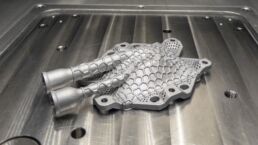
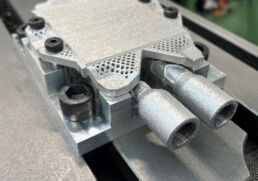
By thinking of the component as a single integrated unit, internal structures in the cooling system could be shaped so that what used to be joints and transitions were printed as one coherent solution.
The result was not only better performance, but also a simpler design with lower material consumption and more efficient heat transfer. Better heat utilisation means lower costs, less energy waste, and a stronger competitive position with customers who demand performance and sustainability.
“We wanted to optimise our systems so we could cool the electronics even better and transfer the excess energy with as little loss as possible. This enables our customers to use more of the excess heat themselves or transfer it to the district heating network. We got a solution where the design works for us—not against us,” says Dennis Naldal Jensen, VP of Technology at Heatflow.
About the company

Heatflow
Hobro, North Jutland
Number of employees: 1–10
Heatflow primarily operates within the manufacture of air-conditioning systems. The company specialises in advanced thermal solutions, cooling, and cooling/ventilation systems for industries such as automotive, EV, telecommunications, and aerospace.
Learning and insights
The case shows how 3D printing can push the boundaries of what is possible—and how innovation in existing infrastructure can open up new business models, so that the technology’s potential was translated into a product that can be scaled.
What does the company say 2 years later?
What has been the greatest value in relation to the process with Dansk AM Hub?
“We have, in a way, got started with the technology and demonstrated something that works. Going from an idea to something that actually works has been important. It has been defining for the 3–4 projects that have followed” – VP of Technology, Dennis Naldal Jensen.
When would it make the most sense to get help from Dansk AM Hub?
“Early in the idea phase, when you need to understand your options in relation to an idea. You may not know all your options, so having a strong strategic partner involved from the start is a help” – VP of Technology, Dennis Naldal Jensen.
“We wanted to optimise our systems so we could cool the electronics even better and transfer the excess energy with as little loss as possible. This enables our customers to use more of the excess heat themselves or transfer it to the district heating network. We got a solution where the design works for us—not against us”
Dennis Naldal Jensen
VP of Technology, Heatflow
Is your production setup a limitation—or a strength? And are there new opportunities?
Get input on how hybrid production can support your business strategy.
Create it REAL: Local circular 3D production creates global business potential
Create it REAL
Local circular 3D production creates global business potential
A business model that turns the supply chain on its head
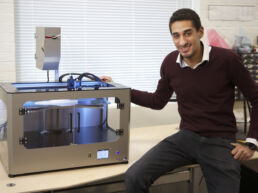
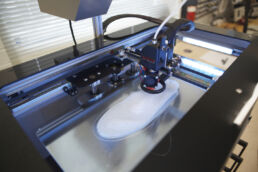
Create it REAL has developed a circular business model for individually customised orthopaedic insoles, where used insoles can be returned, broken down and recycled into new ones. This enables local, scalable production with less waste and a strongly differentiated, sustainable product globally. The case shows how additive manufacturing enables local, flexible and circular production with both economic and environmental gains.
The case – overview and context
‘These shoes are made for walking’ is very much true when Create it REAL rethinks the production of orthopaedic insoles using additive manufacturing. Instead of continuing with traditional, centralised manufacturing, the company has created a model in which insoles are designed, printed and fitted locally—often within a few hours—and form part of a deposit-scheme-driven circular supply chain.
The business model is a strategic asset in itself: Customers pay a deposit that is refunded upon return, encouraging circular behaviour and creating a loyalty-driven market. At the same time, decentralised production supports local businesses, reduces transport and inventory costs, and differentiates the company in a market characterised by standardised products.
This approach shows how advanced manufacturing technology can serve as the foundation for new business models that are strong in sustainability, customer experience, differentiation and long-term competitiveness.
Results from programmes with Dansk AM Hub
- Local production closer to the customer
- Low inventory tie-up
- Deposit scheme creates loyal customers
- 80% recycling across the life cycle
Value and impact for the company
Dansk AM Hub played a central role in maturing both the technology, the business model and the market perspective in Create it REAL’s circular solution. Our contribution was primarily to ensure that the entire value chain—from design and production to recycling and customer incentives—was commercially coherent.
Through sparring and strategic clarification, we helped translate circular principles into a scalable business model, where local production, a deposit scheme and a decentralised supply chain became competitive parameters rather than complexity. The focus was always on how the solution could differentiate the company in the market, build customer loyalty, and reduce both waste and capital tie-up.
Dansk AM Hub thus served as the link between technology, sustainability and business—and as a catalyst for taking an ambitious idea from concept to a commercially viable model.
Is your production setup a limitation—or a strength?
And are there new opportunities?
From challenge to advantage
Mass production and individual customisation have long been opposites. At the core of the concept is a 3D printer and printer management software, optimised to produce customised, functional insoles with minimal resource use. The customer’s foot is scanned, and the insole is printed precisely to their needs, meaning no excess waste and more accurate function. After use, the insole is returned for recycling, where up to 80% of the material is used in the production of the next generation of insoles.
This changes the business logic from mass production to on-demand production—with lower inventory tie-up, faster delivery and better fit for the individual. Dansk AM Hub helped mature the solution and ensure that both the technology and the business model were aligned.
“Sustainability is an important argument in our business model,” explains Jeremie Pierre Gay, Founding Director at Create it REAL, who is behind both the technology, the material and the circular business model:
“First, we use only exactly the material needed for production, whereas previously there was considerably more waste. Second, we have focused on recycling the materials and motivate customers to do so through our recyclable business model. And third, we can avoid long supply chains because our solution is decentralised.”
About the company
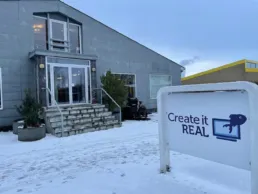
Create it REAL
Aalborg, North Jutland
Number of employees: 11–50
Create it REAL develops advanced 3D printer solutions, including software (REALvision), electronics and controllers. The company focuses on making 3D printing accessible, especially within orthopaedics (insoles, braces).
Learning and insights
The case shows how the business model itself can be the strongest competitive parameter. By combining local production, circularity and individual customisation, Create it REAL challenges a fundamental assumption that scale requires centralisation and mass production.
The case shows that circular principles do not have to be a cost, but can create loyalty, differentiation and a more resilient business in a market characterised by standardisation. Sustainability only becomes business-critical when it is embedded throughout the entire value chain—from design to delivery and recycling.
“First, we use only exactly the material needed for production, whereas previously there was considerably more waste. Second, we have focused on recycling the materials and motivate customers to do so through our recyclable business model. And third, we can avoid long supply chains because our solution is decentralised.”
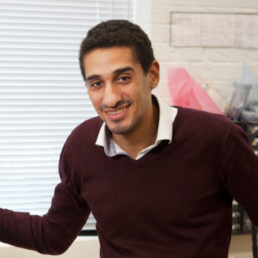
Jeremie Pierre Gay
Founding Director, Create it REAL
Is your production setup a limitation—or a strength? And are there new opportunities?
Get input on how hybrid production can support your business strategy.
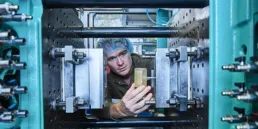
Carmo: From six weeks to two days – hybrid production shortens the path from idea to market
Carmo A/S
From six weeks to two days – hybrid production shortens the path from idea to market
A production set-up that expands the business

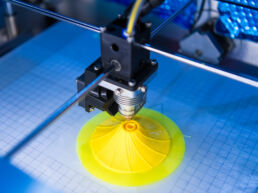
Carmo is setting a new production standard with 3D printing in a hybrid set-up. By integrating additive manufacturing (3D printing) with the traditional injection moulding machine, rapid prototyping and production have been reduced from several weeks to just days. This strategic investment delivers significantly greater flexibility, faster time-to-market, and new growth pathways in both the business model and product portfolio.
The case – overview and context
At a time when innovation is crucial to competitiveness, Carmo A/S has made a strategic technological shift. The company, which for more than 60 years has specialised in injection moulding, has built a modern hybrid production model by introducing additive manufacturing (AM) alongside its traditional production.
This means that instead of spending up to six weeks producing prototypes, Carmo can now deliver functional prototypes in materials that resemble the final products in just 1–2 days. This not only enables more efficient production, but also supports business development for both Carmo and its customers. It opens up new markets and a more both proactive and secure innovation strategy. It has fundamentally changed the company’s development opportunities—in terms of time, costs, and strategic options.
Results from programmes with Dansk AM Hub
- Faster iteration
- Lower development costs
- Lower risk
- New opportunities to expand the market
Value and impact for the company
This transformation is the result of a focused effort in which Carmo, together with Dansk AM Hub, explored how AM and injection moulding can best be integrated into the production strategy. The project has given Carmo new insight into how the technology not only streamlines production, but also builds strategic capabilities—for example by making the company more agile in meeting customer needs and faster at testing new design variants.
Is your production setup a limitation—or a strength?
And are there new opportunities?
From challenge to advantage
The result is a more flexible and robust production platform, where AM has become a permanent part of the company’s DNA.
“The method is a gamechanger. It makes it possible to produce prototypes much faster and at the same time makes it easier to adjust the design along the way, as it is possible to create multiple iterations. This shortens the overall manufacturing process and reduces costs,” says Anders Johnsen, VP R&D and Technology at Carmo.
The operational benefit is clear: lower costs for iterations, fewer tools to manufacture, faster decisions, and less risk when testing new products.
For many traditionally oriented manufacturing companies, this is an example of how a technological investment can be used as a genuine strategic tool—not just as a new machine on the shop floor, but as a catalyst for organisational renewal and market expansion.
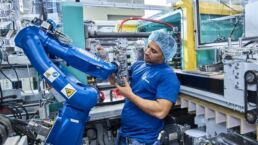
About the company
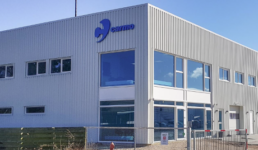
Carmo A/S
Espergærde, North Zealand
Number of employees: 51–250
Carmo develops, designs, and manufactures high-quality injection-moulded plastic components, primarily for the global medical and industrial sectors.
Learning and insights
The case illustrates how production can be more than a necessary function: it can be a strategic engine for innovation and growth. By combining existing strengths with new production methods, Carmo has achieved significantly greater agility and drastically reduced the time from idea to market.
Investments in production should not be assessed solely on efficiency, but on their ability to support business development. When the production set-up becomes more flexible, the risk of testing new products decreases, and decisions can be made faster. This opens up new markets—and a more proactive innovation strategy.
“The method is a gamechanger. It makes it possible to produce prototypes much faster and at the same time makes it easier to adjust the design along the way, as it is possible to create multiple iterations. This shortens the overall manufacturing process and reduces costs”
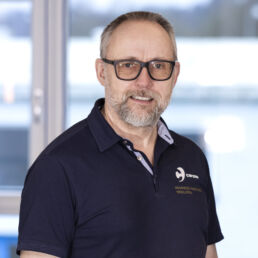
Anders Johnsen
VP, R&D and Technology, Carmo A/S
Is your production setup a limitation—or a strength? And are there new opportunities?
Get input on how hybrid production can support your business strategy.
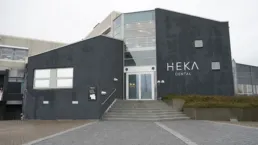
Heka Dental: Value in 3D printing—not only as a prototyping tool, but for finished products
Heka Dental A/S
Heka Dental now sees the value in 3D printing—not only as a prototyping tool, but for finished products
One small optimised part delivers savings of up to DKK 200,000.

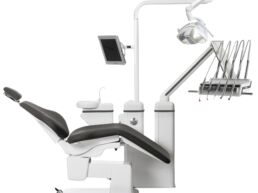
Heka Dental had used 3D printing for several years for prototypes and smaller finished-part components for their treatment units for dentists worldwide. They therefore knew the technology, but also sensed that the potential was greater.
With a shared understanding within the management team of how 3D printing can reduce production time and purchasing costs while improving product performance, Heka Dental can now make more targeted decisions about where and when the technology makes business sense as a production tool.
The case – overview and context
Part consolidation was not a concept that had previously been a focus at Heka Dental. However, the company was already relatively advanced in its use of 3D printing, with several in-house produced components.
The next step, however, was unclear. Not all departments were convinced that 3D printing could be reconciled with the company’s high quality requirements and long product lifetime.
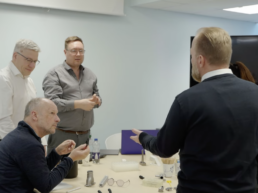
As in many companies, departments had different success criteria that did not necessarily point in the same direction. This can easily slow the implementation of new technology. By clarifying the departments’ objectives and aligning them with the company’s overall vision, it became possible to identify where 3D printing could genuinely create value.
The case shows how relatively simple strategic tools can create a shared direction and ensure that new technology is implemented as part of the business—not as an isolated project.
Value and impact for the company
Based on the company’s vision, total assembly time on the production line, and unit costs for selected components, the management team chose to focus on one specific part: a manifold.
The original solution arrived unassembled from the supplier in a bag. A production employee spent approximately 15 minutes assembling the 19 individual parts, including sealing rings, before the unit could be installed.
By redesigning the component and consolidating the parts into a single 3D-printed unit, the company went from 19 parts to one assembled component. The result was both a significant reduction in assembly time and a COGS saving of more than 50%, equivalent to up to DKK 200,000 annually.
This made the value of design for additive manufacturing very tangible for the organisation.
Is your production setup a limitation—or a strength?
And are there new opportunities?
About the company
Heka Dental A/S
Taastrup, East Zealand
Number of employees: 70
Development and production of dental chairs
Learning and insights
Before the programme with Dansk AM Hub, the key question across procurement, development, and production was whether 3D printing would make things cheaper and faster—or simply more complex.
Following the work, the departments now have a shared basis for decision-making. They can now systematically assess which components make sense to analyse further, and they have a clear direction for how 3D printing should support the company’s development.
At the same time, they have established a stronger link between technology and customer value: how optimising products can both reduce production costs and create greater opportunities for customer customisation.
The case illustrates that implementing new production technology is not only about machines, but about shared understanding, prioritisation, and strategic choices.
“We realised that 3D printing is something other and more than a low-cost solution—but an alternative that opens up entirely new possibilities and can solve previously Gordian knots. We now view 3D printing from a fully commercial and practical perspective.”
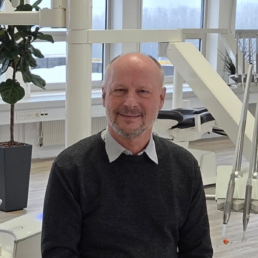
Andrei Porotnikoff
Strategic Buyer, Heka Dental A/S
Optimised part consolidation – from 19 parts to one assembled component
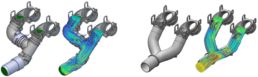
Before:
- 19 parts
- 86 grams
- Seals that can introduce errors during assembly
- Variable pipe thickness
- Pressure drop: 129 Pa
- Max speed: 16 m/s
After:
- 1 part
- 34.36 grams
- No seals
- Uniform pipe thickness
- Pressure drop: 19 Pa
- Max speed: 11.7 m/s
Is your production setup a limitation—or a strength? And are there new opportunities?
Get input on how hybrid production can support your business strategy.
Lose the kilos in the supply chain—not only at the gym
Lose the kilos in the supply chain—not only at the gym
By Frank Rosengreen Lorenzen, Director, Dansk AM Hub
The opinion piece was published on SMC.dk
Danish companies are in top shape when it comes to efficiency. We train diligently: optimising processes, reducing costs, and adjusting organisations. Yet many CEOs find that competitive pressure is increasing, supply chains are vulnerable, and innovation capacity is lagging. That paradox should set alarm bells ringing.
All too often, our strategic efforts are like going to the gym: we fine-tune what already exists, shed a few kilos, and become a little more efficient. It makes a difference—but not enough.
The real impact comes when we change the body’s very structure and move onto an entirely new track of sustainably healthier habits. For a company, that track is: a more flexible and resilient supply chain.
Supply chains must be redesigned from the ground up
Today, the supply chain is still treated as an operational matter—something that must be cheaper, faster, and more stable. But in a world marked by geopolitical uncertainty, bottlenecks, and rapid technological development, that is not enough. The supply chain has become a strategic competitive parameter. The manufacturers that win redesign the supply chain from the ground up. The rest keep training.
This is where additive manufacturing—industrial 3D printing—plays a far greater role than many senior executives have yet realised. Not as a gadget or a prototyping tool, but as a production alternative, because if you can print instead of milling or casting, you are not only mastering a new technology, but also an entirely different way of producing.
3D printing is a shortcut to better control
When Danish manufacturing companies use 3D printing strategically, they bring flexibility and control back home. They reduce dependence on global suppliers. They produce when the need arises—not months in advance. And they design products where function, production, and logistics are considered together from the outset.
KK Wind Solutions has redesigned components that reduce weight, the number of parts, and logistical complexity. Advansor has created more efficient products and gained greater control over critical components in its cooling and climate systems. Heatflow has improved energy efficiency and security of supply through redesign. The common denominator is not the technology, but the leadership choice: shaping the supply chain by mastering a new form of production.
The chain must be stronger—not only cheaper
What these examples have in common is not the technology, but the leadership decision behind it: without a strategic grip on the supply chain, it risks merely making a vulnerable structure cheaper—not stronger. 3D printing changes the rules of the game because it makes it possible to integrate design, production, and supply into a single decision. It shortens time-to-market. It reduces inventory tied up in stock. And it makes companies less dependent on external shocks. In short: it brings value creation back home.
AM plays a leading role
The way forward is not either-or. But ignoring the strategic value of additive manufacturing (AM)—its ability to change how we produce, for whom, and when—risks leaving your company behind competitors who are already leveraging these tools.
In a market where resilience, speed, and differentiation determine competitiveness, it is not about making the company lighter. It is about removing the heavy structures where they truly slow you down: in the supply chain.
New Tech Tour takes 3D printing across the country in March
The stage is set. The technology is ready. And interest is greater than ever. In March, Dansk AM Hub goes on tour, bringing 3D printing and Additive Manufacturing to companies across the country.
Tech Tour is a nationwide series of events where Dansk AM Hub—together with local companies, technology suppliers, and educational stakeholders—goes out to meet companies where they are. The objective is clear: to give companies an honest, practice-oriented insight into what 3D printing can do, and when it makes sense to use the technology in production.
A technology with momentum
3D printing is no longer niche or experimental. According to a new study prepared by Dansk AM Hub in collaboration with Statistics Denmark, the share of Danish companies using 3D printing has increased from 16% in 2018 to 30% in 2025. The audience is growing, and the questions are increasing.
“We meet companies across the country that are curious about 3D printing, but lack concrete examples, honest experiences, and someone to spar with. That is why we are now taking the technology on tour,” says Frank Rosengreen Lorenzen, CEO of Dansk AM Hub.
Live demonstrations and dialogue
At Tech Tour, companies can experience 3D printing up close. Not as PowerPoint slides, but through concrete cases, physical parts, and direct dialogue with those who work with the technology every day. Each stop on the tour brings together stakeholders from across the ecosystem—from companies already using 3D printing in their production to suppliers and educational stakeholders who can contribute knowledge about skills and upskilling.
There is room for questions, networking, and curiosity—and for deciding whether 3D printing is the next step in your own production, or whether the timing is not yet right.
From curiosity to the next step
Tech Tour is designed for companies that want to get closer to the technology—whether they are completely new, somewhat experienced, or already underway. The ambition is not to sell a ready-made solution, but to give companies a better basis for making informed choices about technology, investments, and skills.
“This is not about hype. It is about building understanding and showing how 3D printing can create value—both in production and in business,” says Frank Rosengreen Lorenzen.
Tour schedule – spring 2026
In March 2026, Tech Tour will visit Taastrup, Odense, Aalborg, and Kolding. Each stop has its own local character, but what they all share is a focus on dialogue, practice, and local companies.
Tech Tour will stop at:
- Prototal Denmark, Taastrup, 3 March
- FORCE Technology, Odense, 17 March
- Create it REAL, Aalborg, 18 March
- MDT A/S, Kolding, 19 March
Participation is free, and everyone is welcome.
We must dare to think differently in Denmark’s business and innovation system
Just over a year ago, the Draghi report clearly underlined an uncomfortable reality: If Europe continues as it has, we risk falling decisively behind—technologically, industrially and economically.
By Thomas Hofman-Bang, CEO, Industriens Fond
The opinion piece has been published in Børsen
Hardly anyone will have missed that both the EU’s and Denmark’s competitiveness is under pressure from the United States and China. In the worst case, we could end up as a European industrial museum, where the products, solutions and value creation of the future are developed elsewhere.
The pressure will only grow in the coming years. Denmark has more than 20,000 small and medium-sized manufacturing companies, which are among the best in the world within their niches. But that very specialisation can also become a challenge. When markets, technologies and geopolitical conditions change rapidly, the ability to rethink products, processes and business models becomes crucial to maintaining competitiveness.
Here, the Danish business and innovation system plays a central role. Public and private foundations, business hubs, clusters, GTS institutes and universities contribute every day to supporting companies’ development.
The system has many strengths, but the Draghi report also points to a need to continuously develop our instruments, forms of collaboration and ways of creating impact—not by discarding what exists, but by supplementing it with new approaches where it makes sense.
Seven years ago, at Industriens Fond we took our starting point in precisely that realisation in one specific area.
We could see that industrial 3D printing—Additive Manufacturing—was developing rapidly in our neighbouring countries’ defence, automotive and aerospace industries, while in Denmark the technology was still being used relatively narrowly.
Difficult for the small players
The potential for new products, shorter development times and more resource-efficient production was clear, but difficult for many SMEs to translate into concrete business.
That is why we—together with a group of Danish stakeholders—chose to test a different approach.
Instead of a traditional project, we established Dansk AM Hub as an independent commercial foundation with a clear purpose: to help small and medium-sized manufacturing companies create business through industrial 3D printing.
Experience shows that the model works.
In collaboration with Statistics Denmark, Dansk AM Hub has tracked the spread of the technology in Danish industry. Over seven years, the share of manufacturing companies using industrial 3D printing has increased from 16 to 30%.
This is not a given—especially in light of the fact that investments in other automation technologies such as industrial robots, according to the International Federation of Robotics, fell in 2024, despite Denmark’s otherwise strong position in the field.
Measurable impact
The point is not that this model can or should be copied one-to-one, or that one technology is more important than others.
The point is that when business support is organised close to companies’ concrete business challenges, and when there is room to test new organisational and operational approaches within the system’s framework, it can create measurable impact in companies.
If Denmark is to strengthen its competitiveness in a more uncertain and technologically complex world, it requires that we continuously develop our business and innovation system. Not through major reforms alone, but through practical experiments where new models can be tested, evaluated and—where they work—inspire other initiatives.
The Draghi report is a serious reminder that the status quo is not a guarantee of future strength.
At the same time, experience from, among others, AM Hub shows that within the existing framework there is scope to think differently—and thereby give Danish companies better conditions to compete and create value in the future.