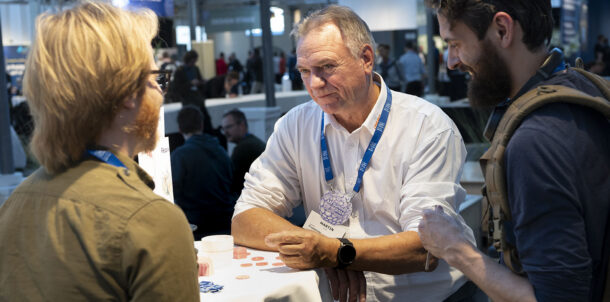

AM Summit 2022: The Movie
AM Summit 2022: The Movie
450 visitors – 44 speakers – 45 exhibitors!
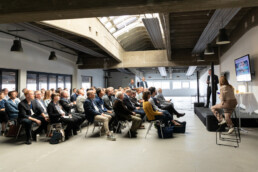
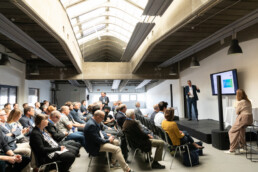
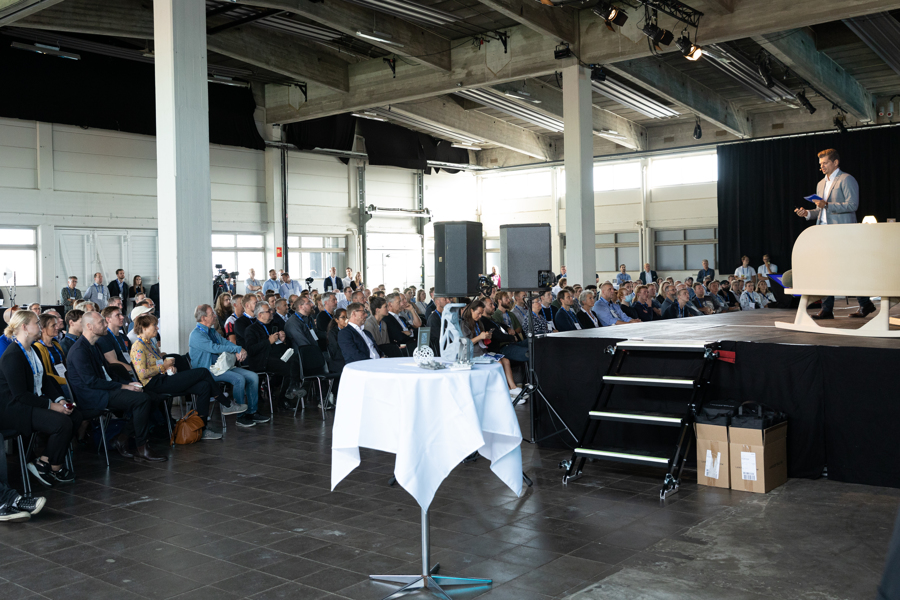
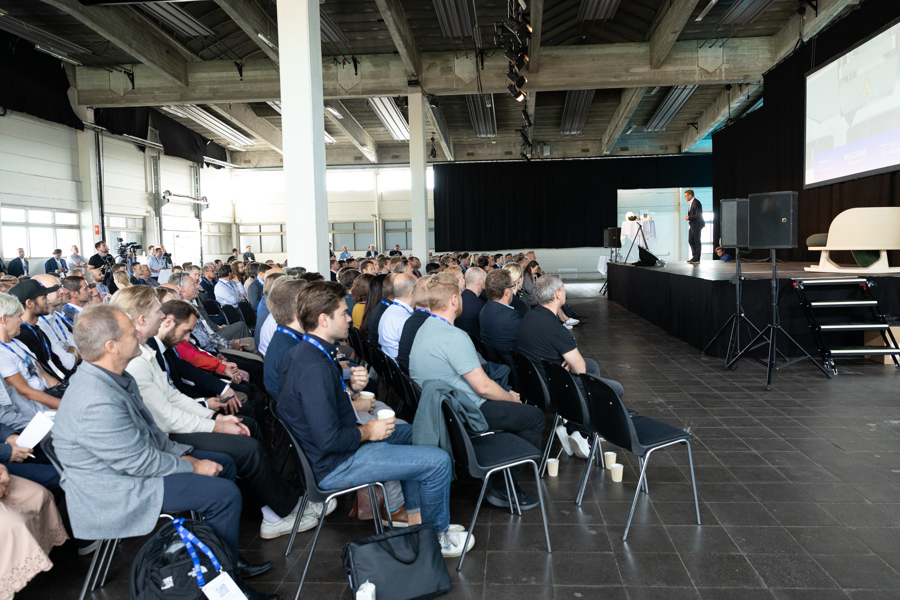
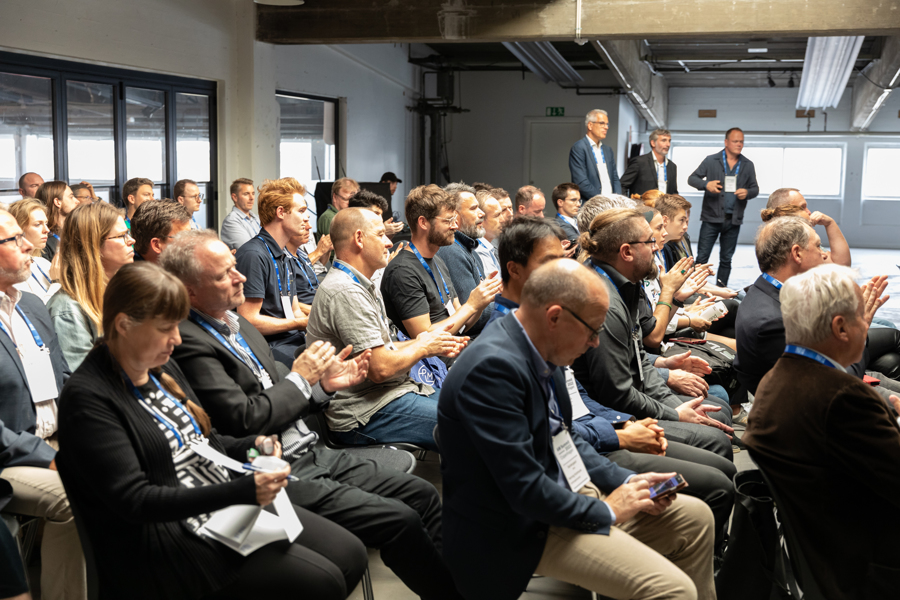
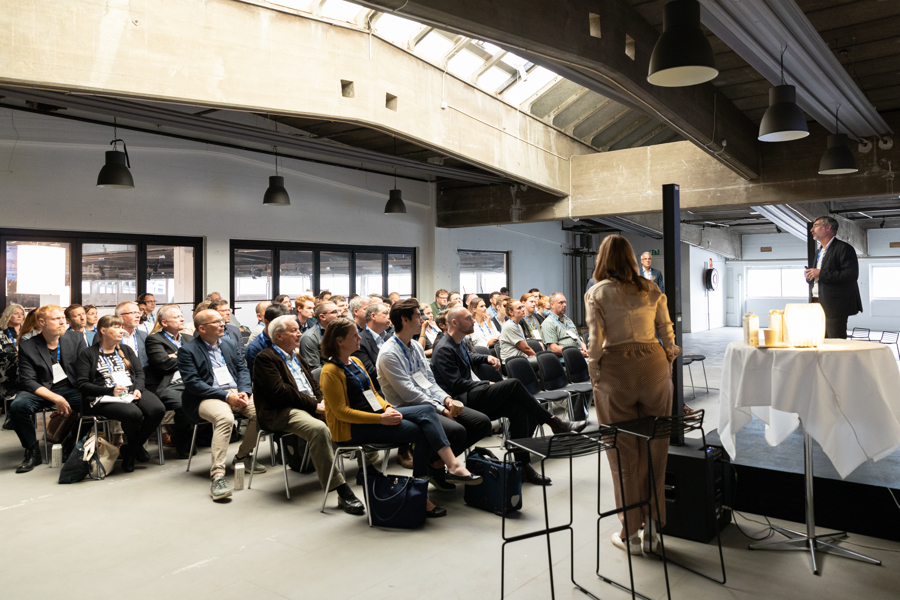
The fourth time was definitely the charm for AM Summit 2022. This year set another attendance record, with just over a 25% increase compared to 2021, and the highest attendance to date.
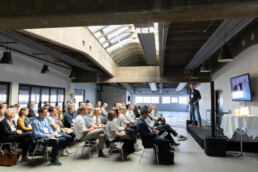
On Wednesday, September 7th, Danish AM Hub hosted the annual AM Summit—Scandinavia’s largest conference on additive manufacturing (AM) / industrial 3D printing. The theme of this year’s conference was ‘Additive Impact – additive manufacturing and 3D printing as a driver for sustainable manufacturing’, inspiring us with concrete solutions and ideas for how new technology such as 3D printing can help us produce more sustainably and competitively—with stronger and more circular business models and more robust supply chains.
Also see all the photos of the speakers and exhibitors!

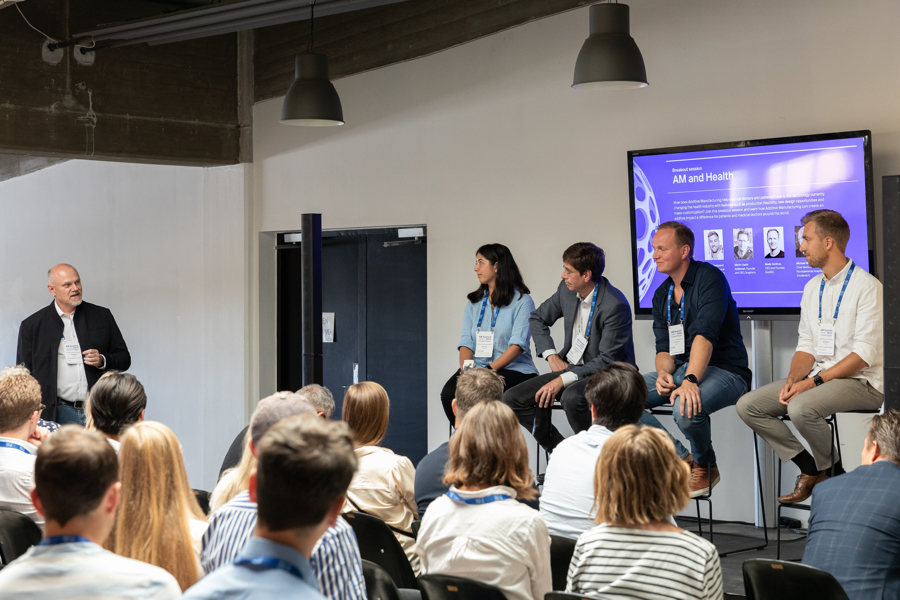
AM Summit 2022 breakout session: AM & Health
AM & Health
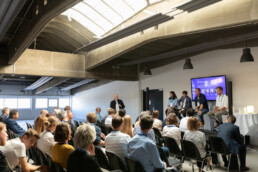
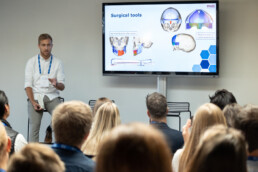
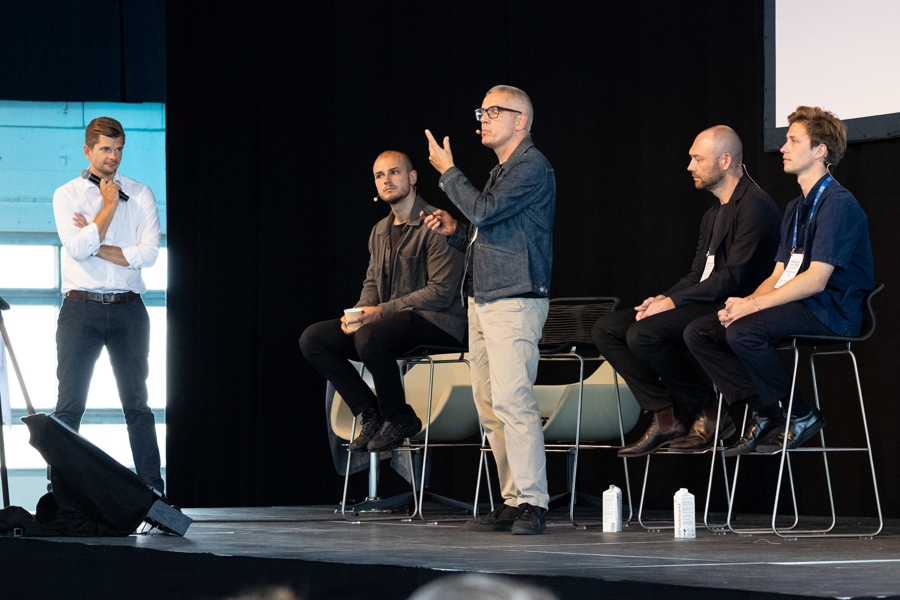
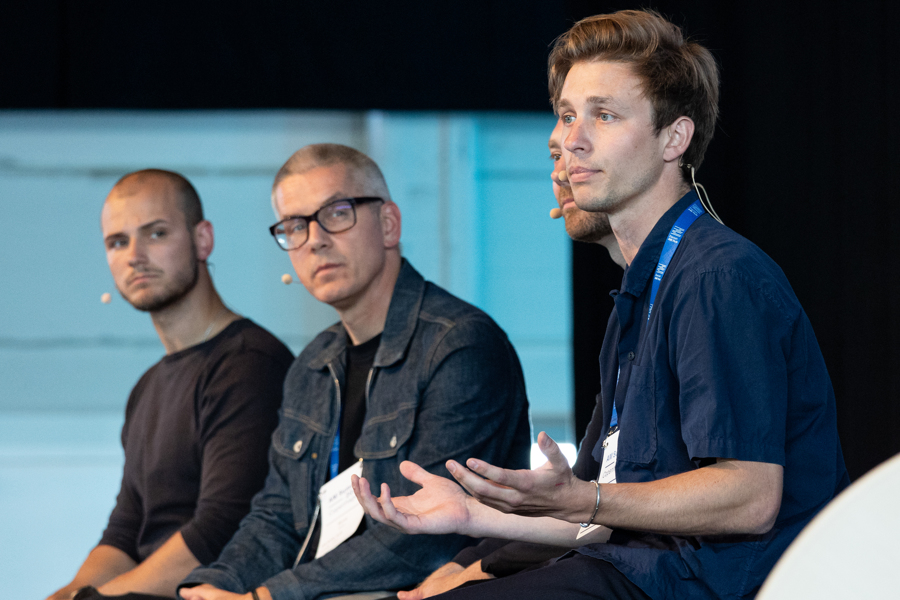
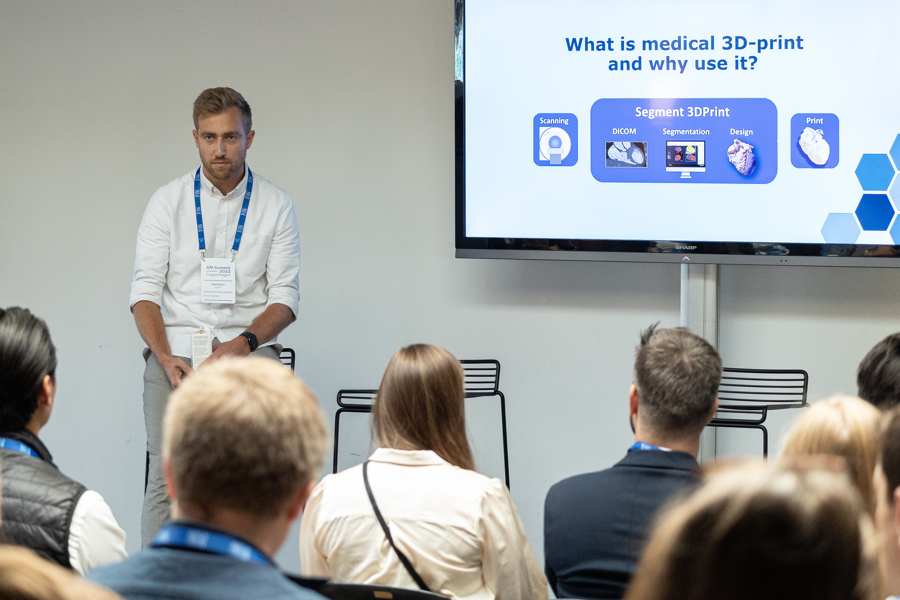
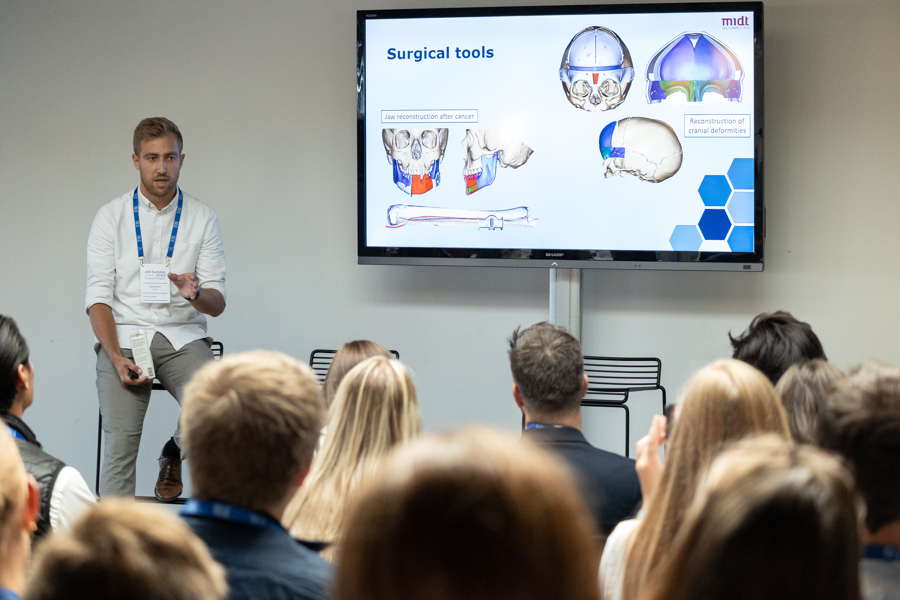
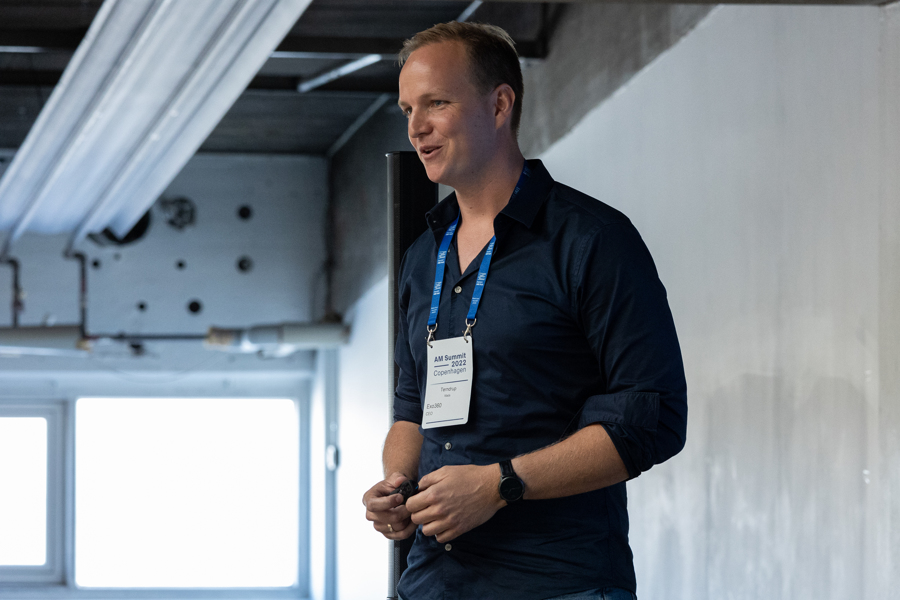
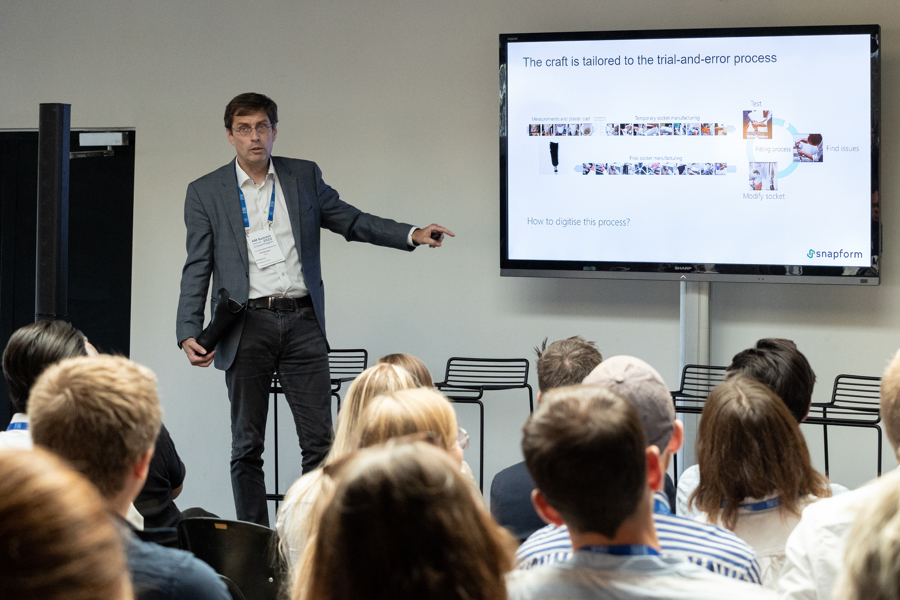
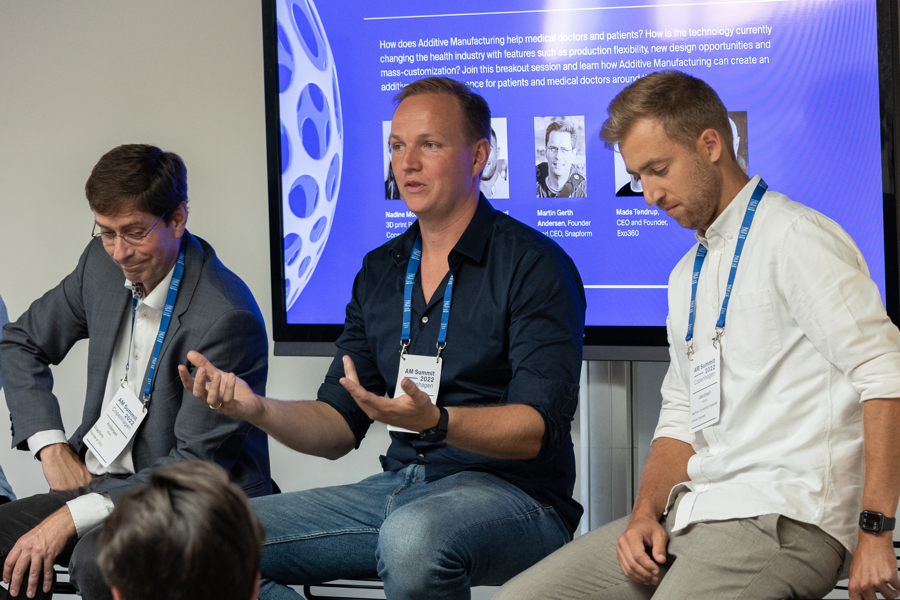
AM Summit 2022 breakout session: The breakout session on Additive Manufacturing in the healthcare sector focused on how the technology can help doctors and patients, and how 3D printing can explore new design opportunities, enable mass customisation, and create greater production flexibility.
The session was moderated by Michael Mølmer, Chief Medical Officer at Nordsjællands Hospital. The panel participants were:
- Nadine Moises, 3D Print Production Consultant, Formlabs
- Anders Mølgaard Jakobsen, Clinical Engineer and Project Manager, Aarhus University Hospital
- Martin Gerth Andersen, Founder and CEO, Snapform
- Mads Tendrup, CEO and Founder, Exo360
1 size fits 1!
We were joined by three manufacturers of customised solutions for the healthcare sector – all with the same overall conclusion: 3D printing provides opportunities that were not previously possible. With the new technology, they can now offer solutions tailored to the specific customer’s needs, whether prosthetics, casts, or surgical tools. The need for customised solutions is significant in the healthcare sector, as every customer has a different anatomy. Previously, this was either addressed with an inefficient generic solution or with very expensive and complex customised solutions. 3D printing offers the possibility of customising new products for customers in a more flexible, cost-effective, and value-optimising way. In summary, across the three areas, they can now offer better and cheaper products to customers. What’s not to like?
Regulations are still a hurdle…
3D printing is still a new way of manufacturing products and components within the industry. Unfortunately, all the panel participants are using significant resources to address regulatory challenges related to the new technology – a problem we need to overcome to give 3D printing a broad and commercial breakthrough in the industry. At present, 3D printing is treated as equivalent to traditionally manufactured products, which in some cases does not make much sense. Nevertheless, the panel participants strongly believe that this will change in the coming years, as more and more companies and hospitals focus on the technology in their production.
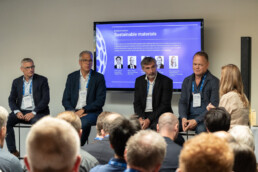
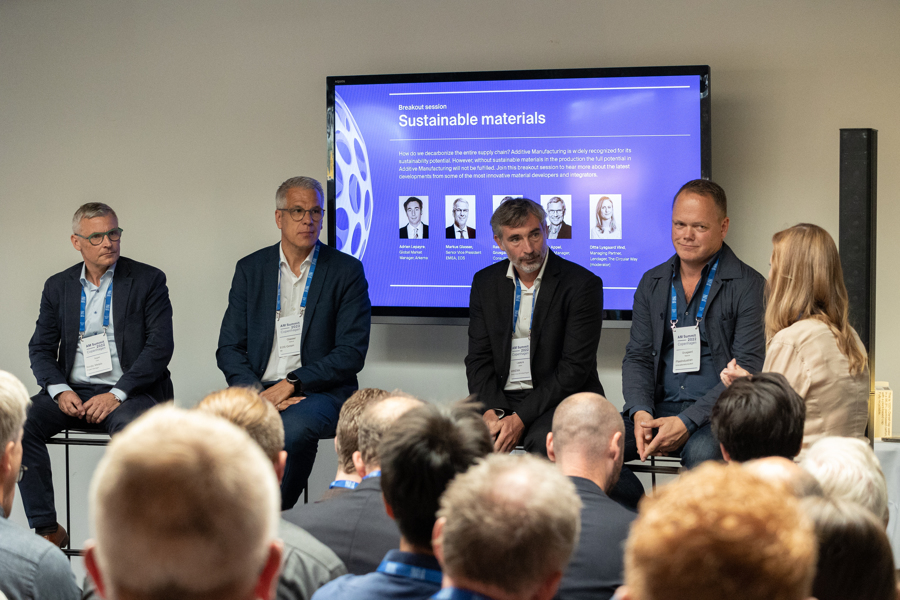
AM Summit 2022 breakout session: Sustainable Materials
Sustainable Materials
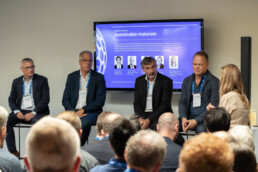
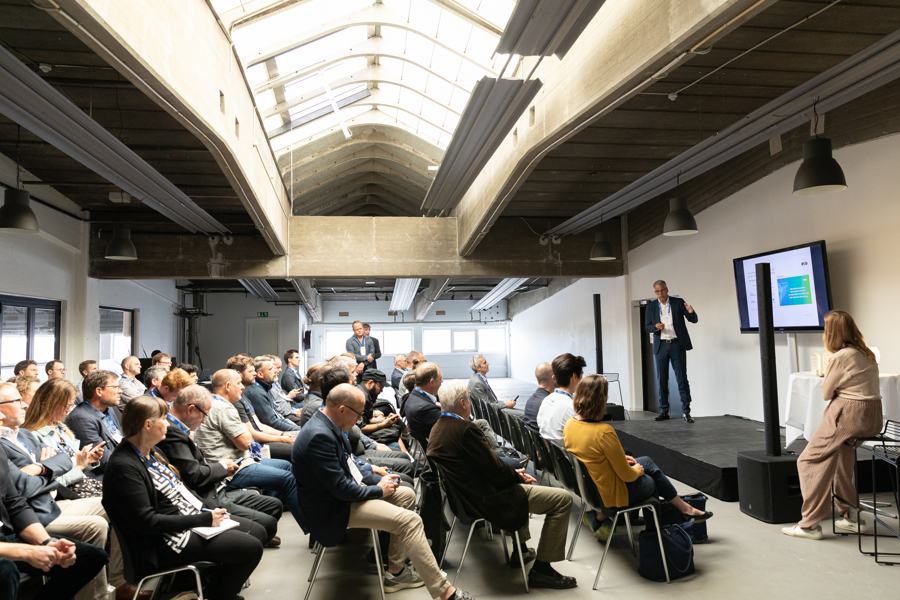
The AM Summit 2022 breakout session on Sustainable Materials focused on how we can decarbonize the supply chain by choosing and developing more sustainable materials. Additive Manufacturing is widely recognized for offering a range of sustainability benefits, such as reduced transport and less material waste. However, if the goods produced through Additive Manufacturing are not made from the most sustainable materials, we are not realizing the technology’s full potential. In this session, we focused on how to select and design new materials in order to achieve our sustainability goals.
The session was moderated by Ditte Lysgaard Vind, Managing Partner at Lendager. The panel participants were:
- Adrien Lapeyre, Global Market Manager, Arkema
- Markus Glasser, Senior Vice President EMEA, EOS
- Rasmus Kock Grusgaard, Innovation Consultant, The Danish Plastics Federation
- Niels Appel, Project Manager, Nordic Metals
Will bio-circular material become the new impact material?
Both Arkema and EOS presented their perspective on how PA11 made from castor beans is having a tremendous positive effect. PA11 has a low environmental impact, requires fewer non-renewable resources to produce, and has high thermal resistance. The material is used as powder in 3D printing production. In addition to the benefits in production, the material is also highly recyclable.
Traditionally, plastic is produced using crude oil. By rethinking how we produce plastic, we can both reduce pollution from the production process and stop using natural resources such as oil. As castor beans are grown in areas that are otherwise not suitable for cultivation, production creates new opportunities for farmers in these regions. Castor beans for PA11 are most often grown in India on fields that are otherwise unused, providing social benefits as well.
It is not only about how we produce goods, but also how we think about consuming them!
A key topic of discussion was also how we move from a linear system to a circular system. Nordic Metals collects scrap metal and turns it into new metal powder that can be used for 3D printing. A characteristic of metal as a material is that it does not degrade over time like plastic. Therefore, it is theoretically possible to recycle metal scrap repeatedly. Metal production is highly polluting today, but by recycling it in a smart way, we can mitigate pollution from production and stop using natural resources. According to a study from DTU, Nordic Metals’ method of producing metal powder has a 50% lower impact on global warming than the traditional method.
3D printing guides doctors towards better jaw and skull surgeries
Aarhus University Hospital
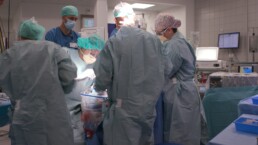
Future surgeries will be more precise, take less time, and be far more sustainable thanks to AM technology. At Aarhus University Hospital, surgeons and engineers have implemented 3D printing technology as part of the procedure when performing surgeries—solely to optimise outcomes for patients while also reducing CO2 emissions.

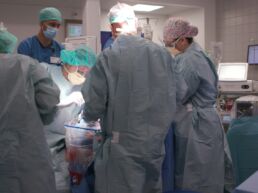
“With this technology, we can produce patient-specific models and individually adapted tools, and we can therefore create the complex geometries that the body is made up of,” says clinical engineer at Aarhus University Hospital, Anders Mølgaard Jakobsen.
At Aarhus University Hospital, surgeons and clinical engineers work together to develop and 3D print patient-specific cutting guides that help enable more precise surgeries. With the help of 3D printing, they can develop copies of the area to be operated on—for example, skulls, jaws, and other bones—and thereby design and produce tailored templates for each individual patient. In this way, operating time is reduced and precision is increased for a better outcome.
“With 3D printing, we can plan and create a predictable outcome for a surgery. In the past five years, we have not reoperated on a single one of the patients we have operated on in this way. That is a huge breakthrough,” says Johan Blomlöf, Chief Dental Officer at Aarhus University Hospital.
A 3D-printed model can also serve as a visual aid when the surgeon needs to explain to the patient what will be operated on and why. In addition, the surgeons use the model to agree on exactly where the incision should be placed. Previously, this decision was only finalised during the operation, but now the specialists—quite literally—draw a shared marker line on the plastic model before sending it back to the virtual laboratory of engineers Joakim Lindhardt and Anders Mølgaard Jakobsen. The major advantage of working virtually is that it makes it possible to perfect the incision and make changes if it turns out not to be optimal.
Lack of aids created frustration
A typical problem at the hospital in the past was that both plastic surgeons and maxillofacial surgeons experienced difficulties obtaining enough 3D-printed aids to treat all the patients who needed surgery. With a 3D-printed copy of the patient’s mandible, the surgeon can form a very precise picture of how the operation should proceed and even carry out trial surgeries before the actual operation to improve the quality of the outcome. The problem, however, was that these aids had to be ordered from abroad and therefore did not always arrive in time for patients who needed rapid treatment, which was a major source of frustration for the surgeons.
Aarhus University Hospital therefore hired engineers to help them reach solutions more quickly to the problems the surgeons faced. And after only about a year, they were already implementing their own 3D-printed aids in surgeries. Previously, departments at Aarhus University Hospital had ordered 3D prints from the USA or Belgium, but this was both expensive and time-consuming. A single cutting guide could cost DKK 30,000–70,000 and often required a surgeon to spend their free time on the phone to finalise the details. By comparison, it costs approximately DKK 60 to print a jaw at the print centre in Skejby once the printer and engineering salary have been paid.
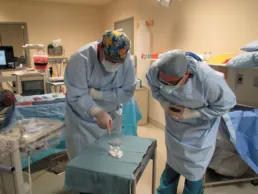
Results of using 3D technology
- Reduced cost of a cutting guide: from DKK 30,000–70,000 to approximately DKK 60 once the printer and engineering salary have been paid
- In-house production capability
- Better outcomes for patients
- Surgeons can work with greater confidence
- Shorter operating time
The technology can therefore deliver major savings for the healthcare system, as items can be produced in-house, making it independent of external suppliers. In addition, every single operation becomes more sustainable, as the items are produced in-house, thereby eliminating the need for imports from other countries.
“The obvious advantages of using 3D printing in healthcare are that we can improve outcomes for patients, surgeons can work with greater confidence, we achieve shorter operating times, we can produce at a much lower cost than buying it from abroad, and it is more sustainable not to produce and ship from abroad,” says Anders Mølgaard Jakobsen.
Is your production setup a limitation—or a strength?
And are there new opportunities?

The future lies in 3D-printed implants
The 3D-printed aids or cutting guides may only be in contact with the patient for up to 30 minutes, as the material used is not approved for longer periods. In the long term, the goal is to 3D print implants that will remain in the patient for life. So far, the print centre has primarily focused on bone-surgery specialties—i.e., maxillofacial surgery, orthopaedic surgery, neurosurgery, etc. Future areas of work could include gastrointestinal surgery, urological surgery, ENT surgery, and radiology.
“What we have seen so far is only the tip of the iceberg. There is a great deal of potential ahead of us, and we are constantly seeking to explore and continue developing 3D printing and 3D technologies in healthcare,” says Anders Mølgaard Jakobsen.
About the organisation
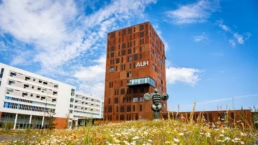
Aarhus University Hospital
Nørrebrogade 44, 8000 Aarhus C
Number of employees: approx. 12,000
Aarhus University Hospital (AUH) is a leading, highly specialised hospital that provides treatment at an international level.
About Aarhus University Hospital
- Aarhus University Hospital performs between 10 and 15 surgeries annually using 3D-printed cutting guides.
- Aarhus University Hospital 3D prints cutting guides in the material BioMed Clear, a resin from FormLabs. It takes 8–12 hours to print one cutting guide.
- According to a ranking of 2,200 hospitals by the American news magazine Newsweek, Aarhus University Hospital (AUH) is the 19th best hospital in the world and number nine in Europe.
- The primary task of Aarhus University Hospital is healthcare education, including the basic training of medical graduates and the specialist training of doctors, as well as research
Is your production setup a limitation—or a strength? And are there new opportunities?
Get input on how hybrid production can support your business strategy.
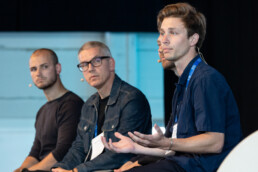
AM Summit 2022 breakout session: 3D Printing Sustainable Cities
Changing Paradigms
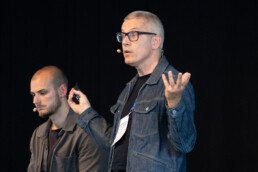
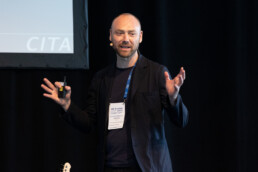
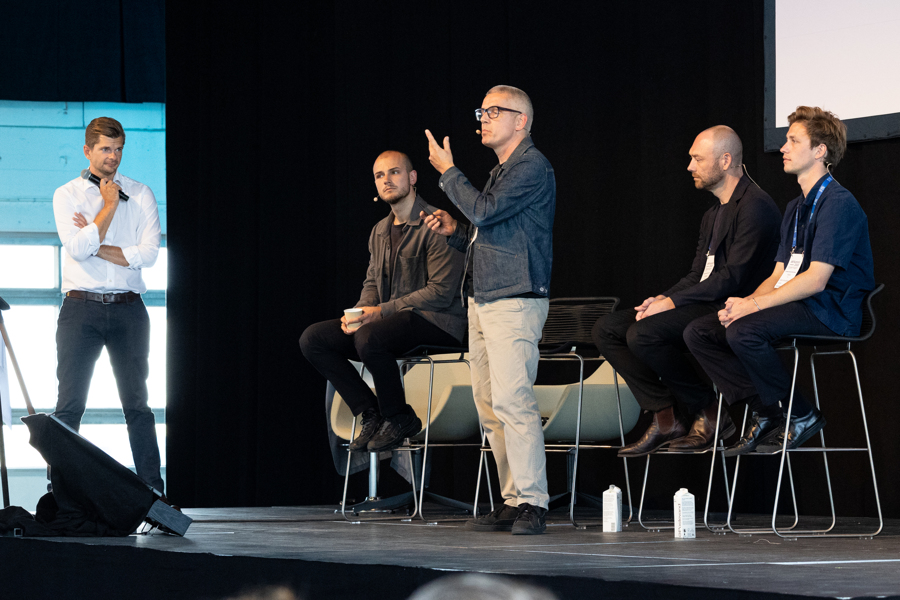
The AM Summit breakout session “3D Printing Sustainable Cities” focused on how additive manufacturing technologies can help build the sustainable cities of the future. 3D printing houses, systems, and components can help create more affordable housing options and even entire residential areas. The session addressed how 3D printing technology is the future of construction, with its multitude of unrealised sustainable and economic opportunities.
The breakout session was moderated by Frank Rosengreen Lorenzen, CEO, Danish AM Hub. The panellists included:
- Morten Bove, Founder and CEO, WOHN
- Sebastian Aristotelis, Co-Founder and Lead Architect, SAGA Architects & 3DCP Group
- Paul Nicholas, Associate Professor, CITA, The Royal Danish Academy, School of Architecture
- Henry Glogau, Architect, GXN Innovation
The construction sector is one of the most environmentally damaging industries globally, and yet despite this knowledge it has been very slow to respond. New technologies such as additive manufacturing offer major advantages and have the potential to significantly improve the environmental impact of construction and architecture.
Demonstrate how AM contributes to sustainable construction
The panellists agree that it is important to showcase what is possible and demonstrate the potential of AM for sustainable construction. This includes documenting resource streams and value streams. Architects and designers are early adopters, but there is also a movement among other actors in the construction industry, where the approach to construction projects is multidisciplinary by nature.
The shift towards using and developing renewable materials is underway, for example through cooperation between industry and academia. Scaling up 3D printing for construction projects is also in progress. From the perspective of CITA, The Royal Danish Academy, School of Architecture, sustainability is increasingly a focus for students. For example, students grow new AM materials such as mycelium, design their own tooling, and generally use AM technology to move from traditional methods to a more integrated process.
A key point highlighted by the panellists in the move towards a more sustainable construction industry is to build smaller and to support design for disassembly. Changing expectations of buildings and materials is also significant, which leads to the issue of regulation.
Regulation is not adapted to AM and new materials
Demand for sustainable construction is increasing, but regulation is not keeping pace. A key challenge in realising the potential of AM in construction is to drive changes in regulation and standards. New materials need to meet standards, especially regarding moisture and fire safety, and consequently insurance becomes a barrier to using new materials. Attention should therefore be directed towards finding faster and alternative ways for materials to enter the market.
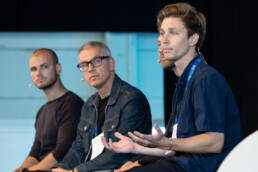
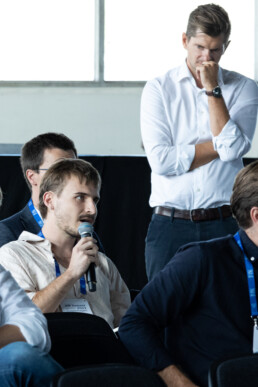
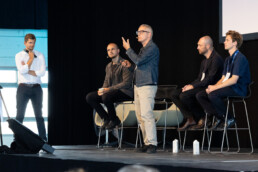
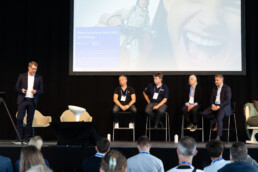
AM Summit 2022 breakout session: Changing Paradigms
Changing Paradigms
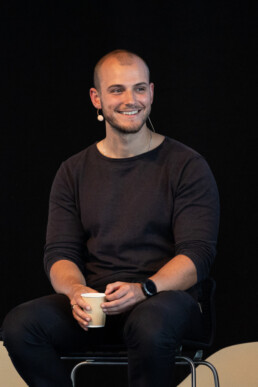
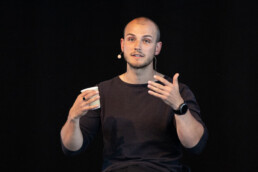
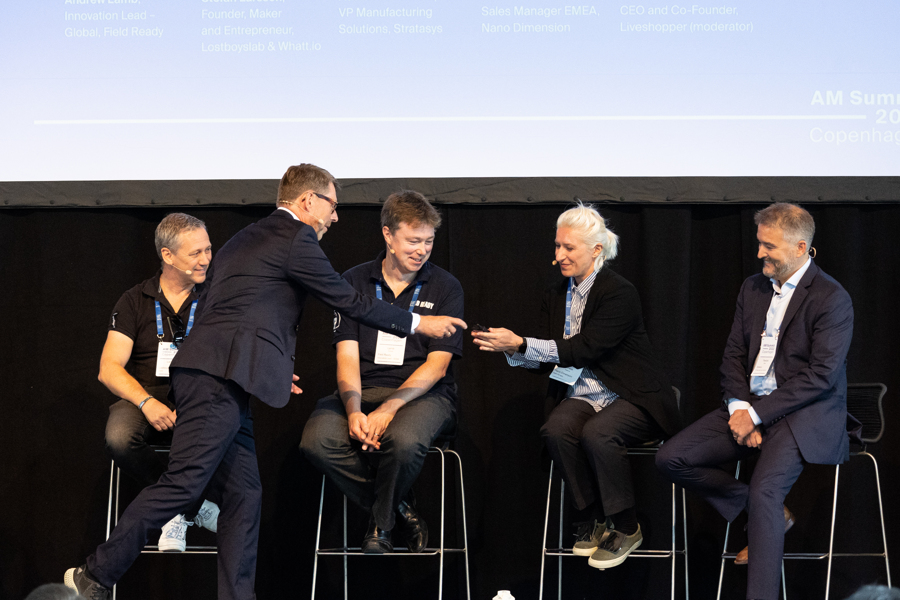
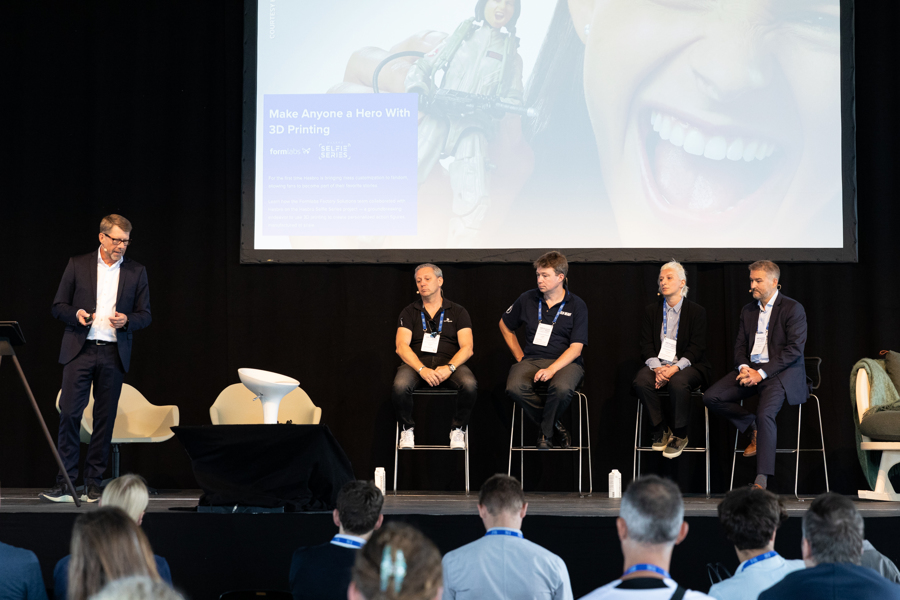
The AM Summit 2022 breakout session “Changing Paradigms” focused on how Additive Manufacturing has impacted—and will continue to impact—different manufacturing industries. The session brought together industry leaders using AM as an industry disruptor to drive a radical new way of designing, innovating, and producing products and components.
The breakout session was moderated by Tim Frank Andersen, CEO and Co-Founder, Liveshopper. The industry-leading panellists included:
- Andrew Lamb, Innovation Lead – Global, Field Ready
- Stefan Larsson, Founder, Maker and Entrepreneur, Lostboyslab and Whatt.io
- Adam R. Pawloski, VP Manufacturing Solutions, Stratasys
- Federica Chinese, Sales Manager EMEA, Nano Dimension
Although AM technology has increasingly been adopted by the manufacturing industry in recent years—and there are examples of how it has disrupted the industry and led to new ways of designing and manufacturing products—the panellists agree that there is still work to be done for AM to reach the so-called “Spotify moment”. One way to support this shift towards changing paradigms is for industry leaders to share successful examples. Two topics in particular were discussed in more depth: sustainable materials and distributed manufacturing.
Sustainable materials and the cost challenge
One of the panellists, from Lostboyslab, uses 90% recycled materials in its 3D-printed products. Recycled material is generally more expensive than virgin material. However, they find that their customers are willing to pay extra for sustainability and the “story” behind the material. Recycled fishing nets collected in Indonesia—where local fishermen are paid to collect waste from the ocean—are one example of recycled material being used. This addresses one of the biggest environmental challenges: removing waste from the oceans while securing an income for local fishermen.
For others, the cost of recycled materials—and, more broadly, the cost of 3D printing compared with other manufacturing methods—remains a barrier to wider adoption of AM in the manufacturing industry. To overcome this barrier, stronger collaboration across the AM ecosystem is needed. One point highlighted in this context is the need to produce and share data from early AM adopters to demonstrate that industry can adopt AM with low risk.
The untapped potential of distributed manufacturing
The potential of distributed manufacturing was discussed in connection with a question to the panel about what it will take for additive manufacturing to reach the “Spotify moment”. This requires changes to business models and the creation of distributed networks of partners or satellites to 3D print locally. For Field Made, a humanitarian organisation transforming aid logistics by manufacturing supplies in the field, there is an urgent need to map 3D printers across developing countries worldwide. Over time, this could make it possible to contract private makers and companies around the world to each deliver part of a single large order for 3D-printed devices. For this to become reality, it is also necessary to address regulatory implications related to quality control processes in distributed manufacturing.
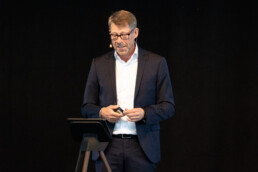
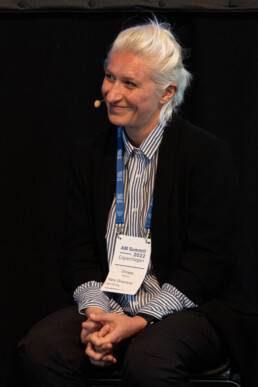
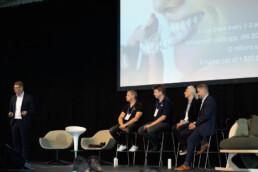
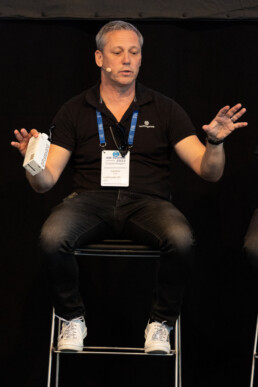
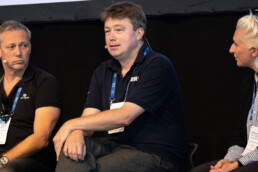
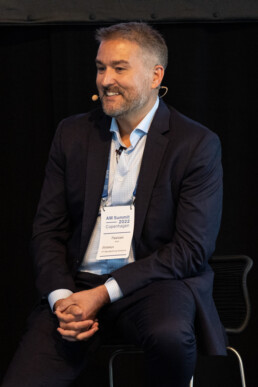
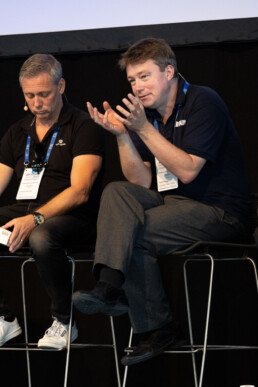
AM Summit 2022: Meet all the speakers
AM Summit 2022: See photos of this year’s speakers
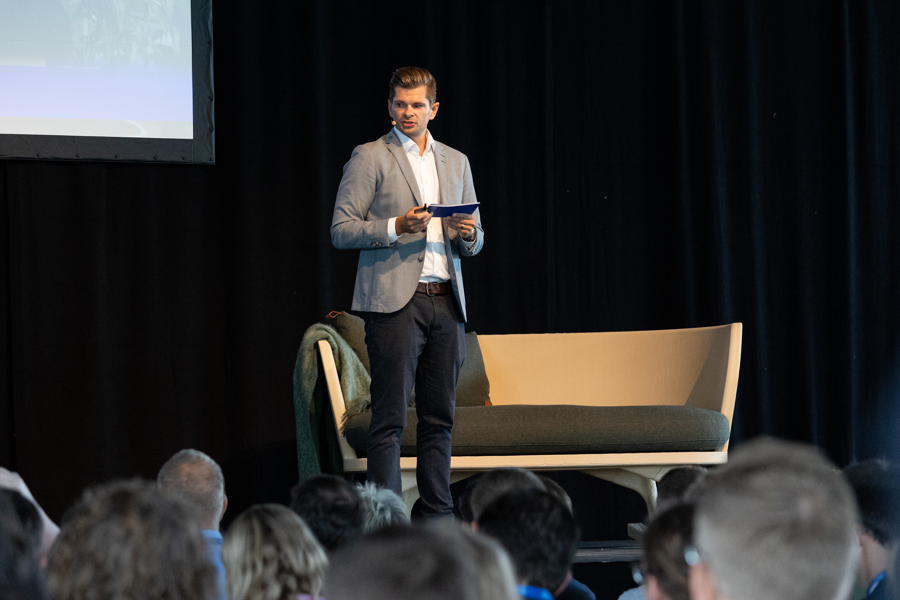
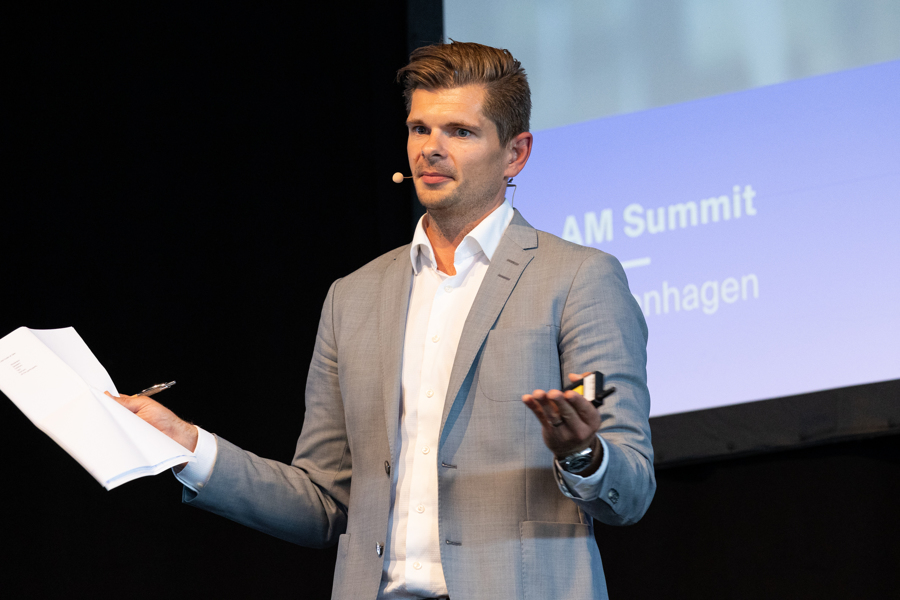
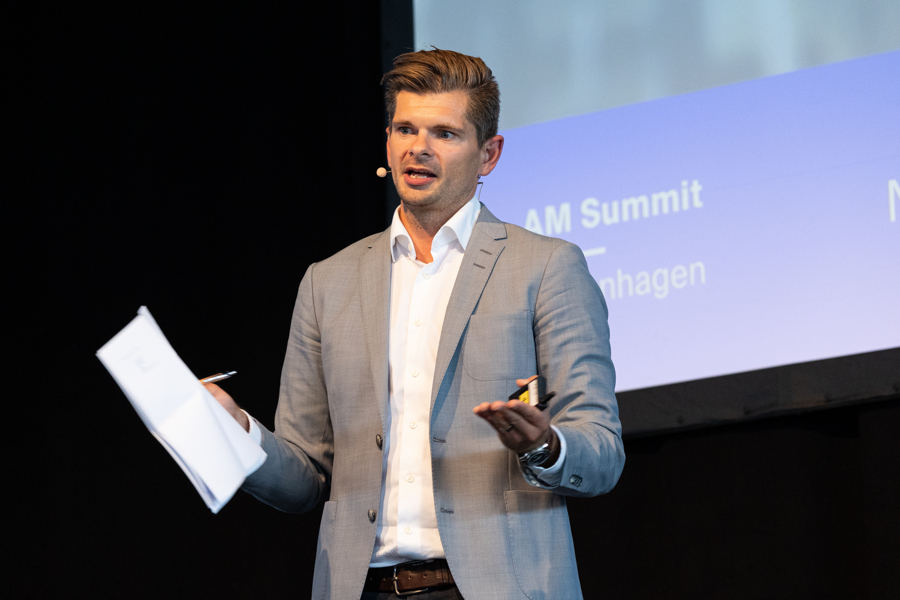
Frank Rosengreen Lorenzen
CEO, Danish AM Hub



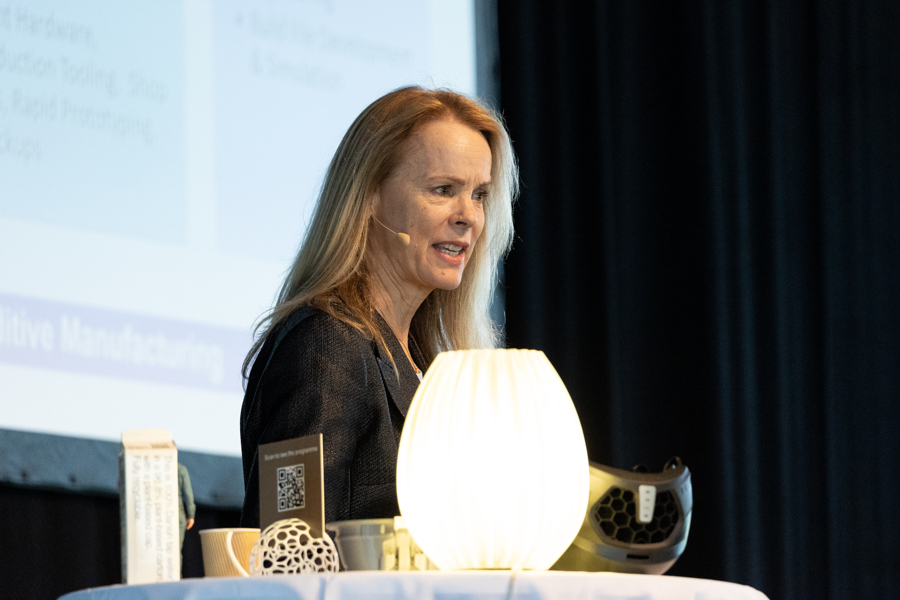
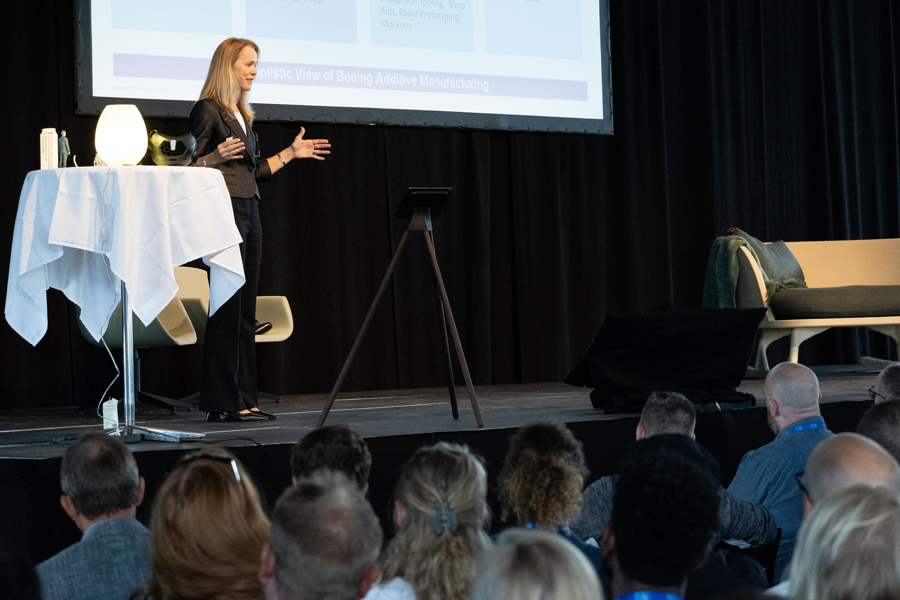
Melissa Orme
Vice President of Boeing Additive Manufacturing, The Boeing Company
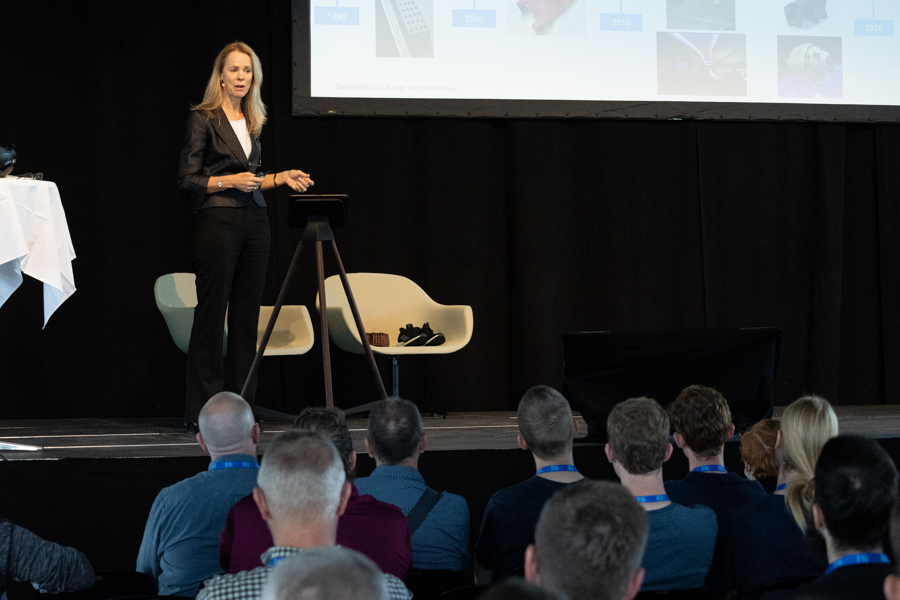
Session: Generative Design
* Introduction to Generative Design by Tim Frank Andersen, CEO and Co-Founder, Liveshopper
* Design for Additive Manufacturing (DfAM) panel presentations by Sigurd Vigen Pedersen, AM Consultant, Danish Technological Institute
* How to rethink design with AM technology by Mathieu Pérennou, Additive Manufacturing Solutions Director, Hexagon Manufacturing Intelligence
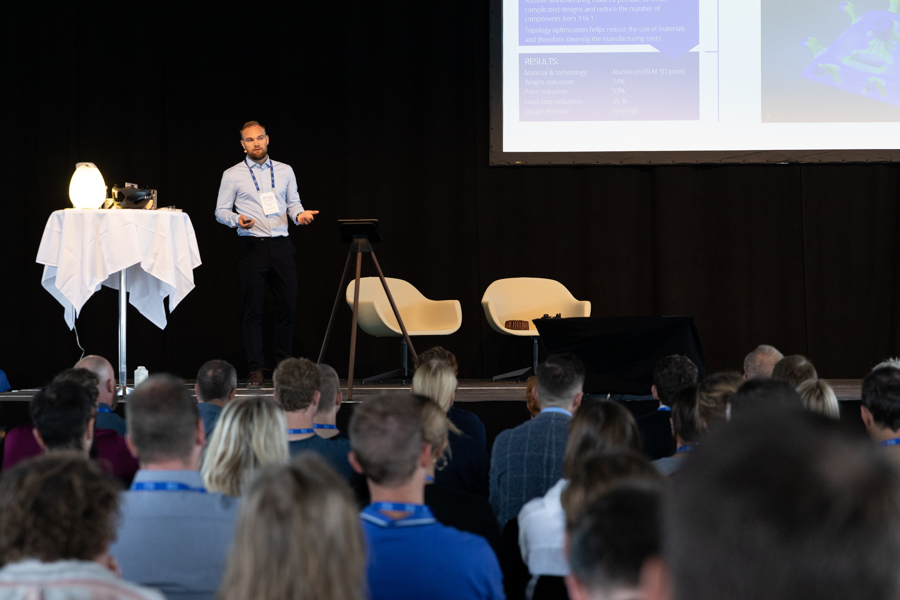
Cecilia Edebo
CEO, CELLINK

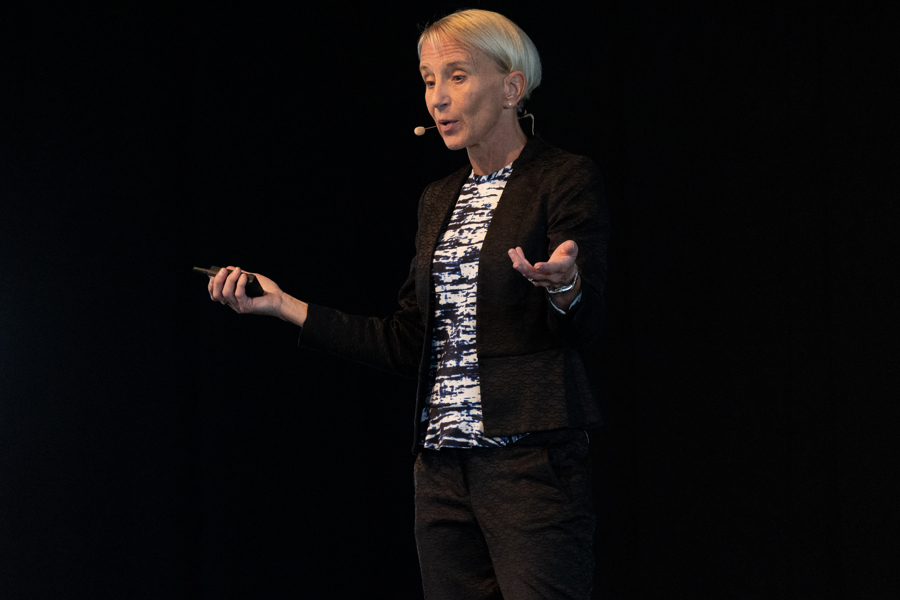
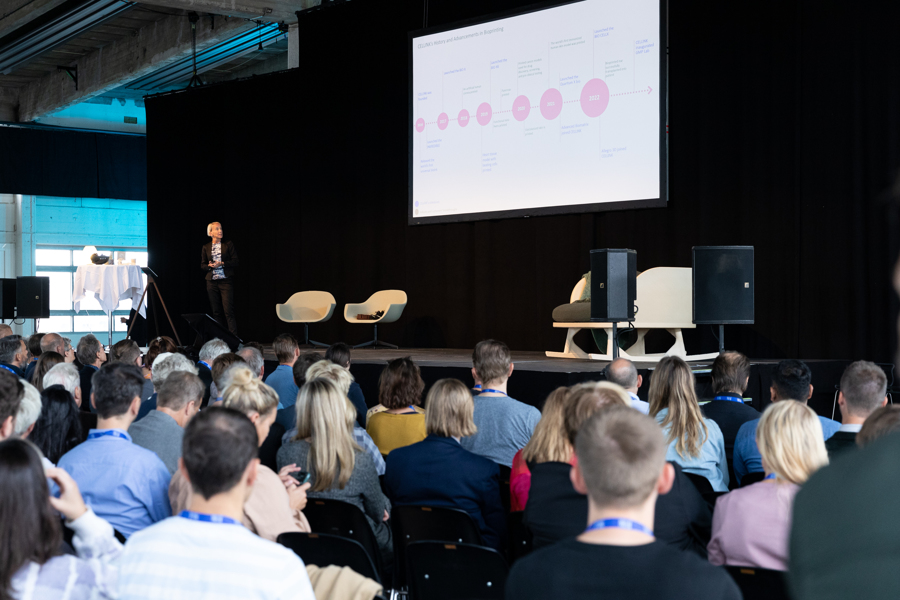
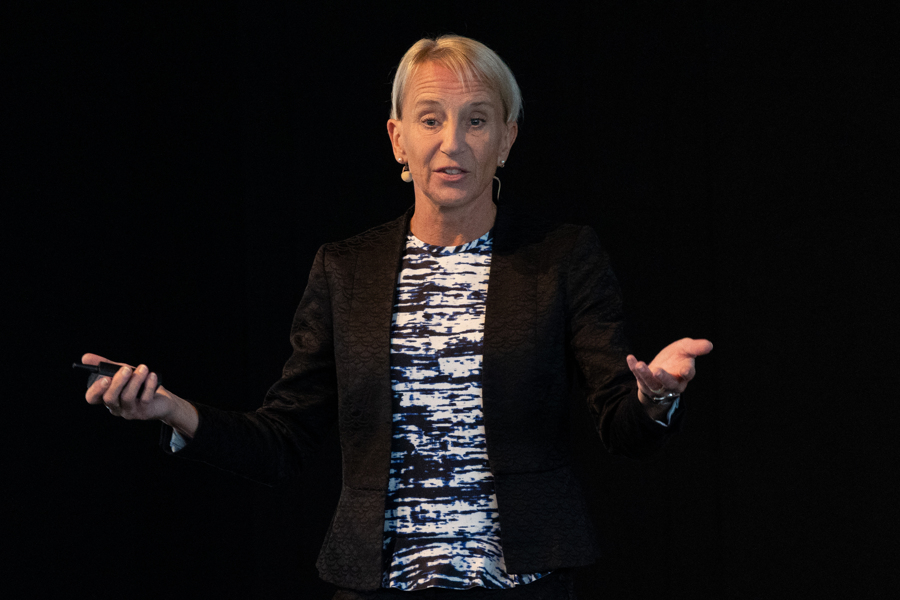
Dualtalk: AM Technology Creates Sustainable Production of Insoles
* Jeremie Pierre Gay, Founder and CTO, Create it REAL
* Marcel Domenghino, CEO, GeBioM GROUP
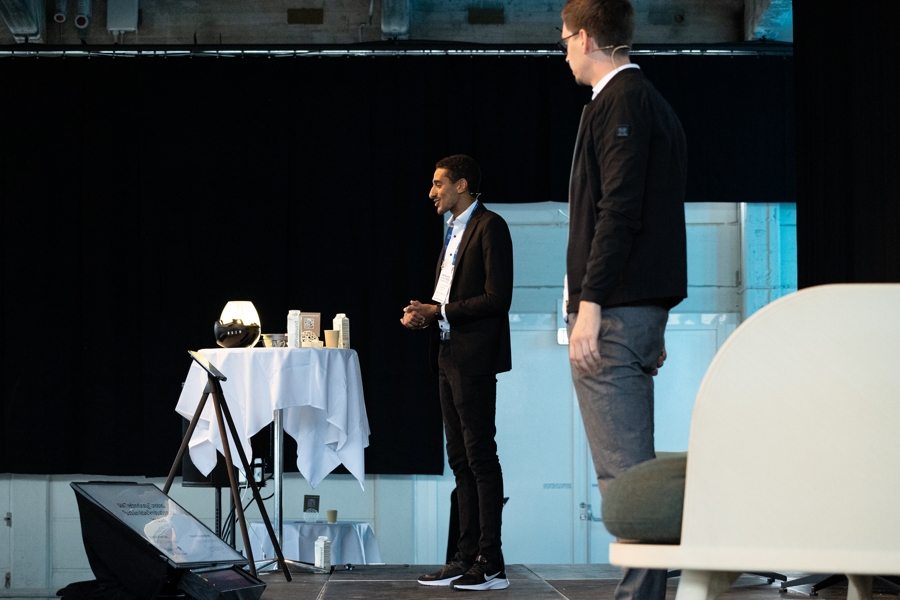
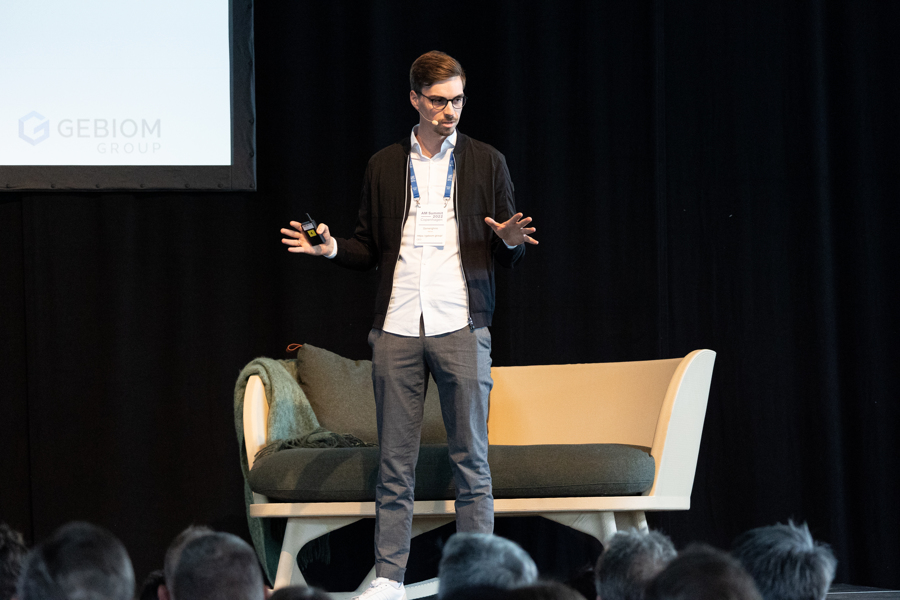
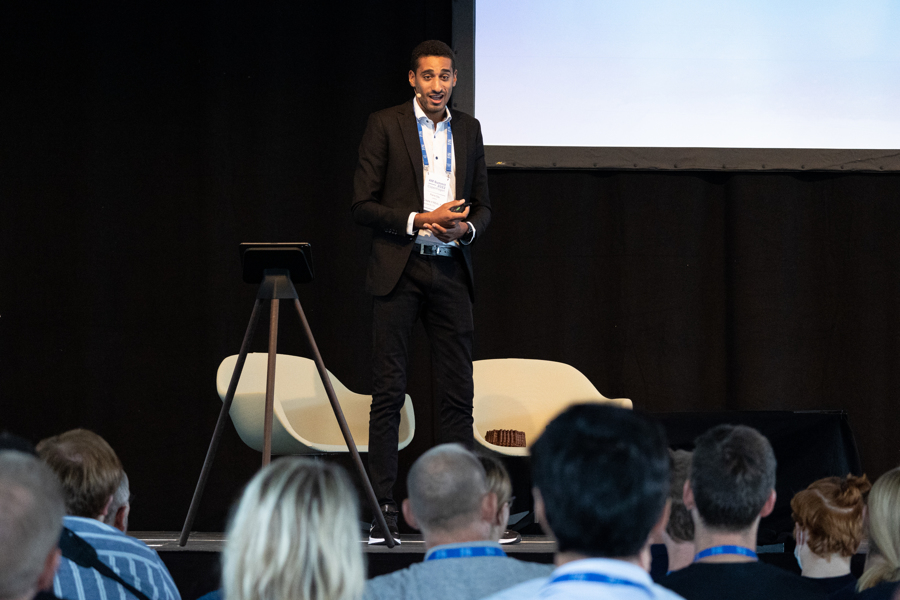


Breakout session: Changing Paradigms
* Andrew Lamb, Innovation Lead – Global, Field Ready
* Stefan Larsson, Founder, Maker and Entrepreneur, Lostboyslab and Whatt.io
* Adam R. Pawloski, VP Manufacturing Solutions, Stratasys
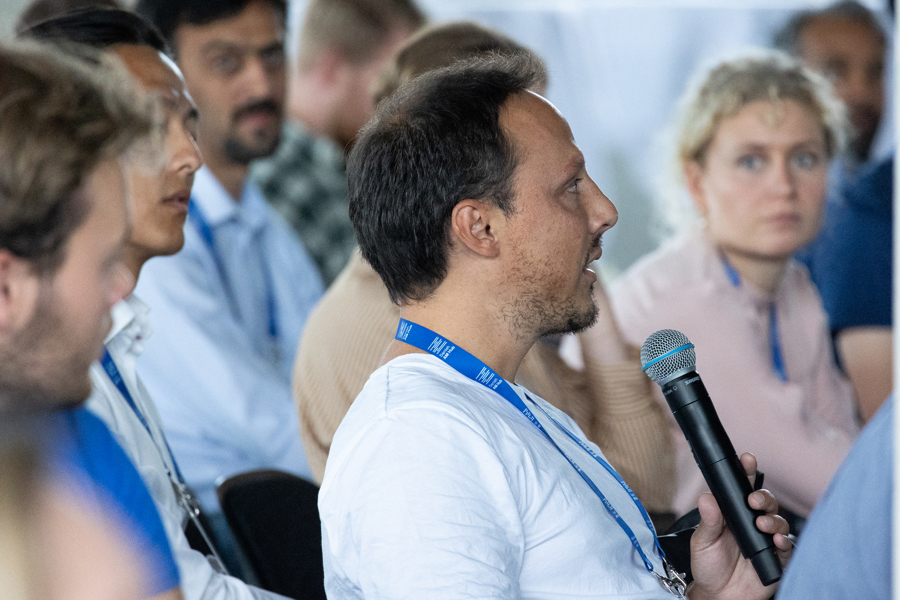
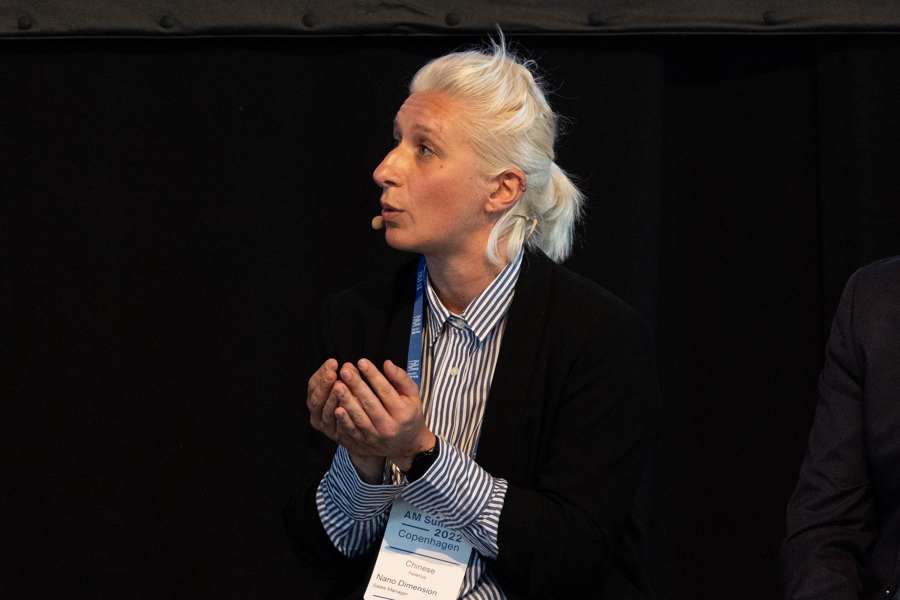
* Federica Chinese, Sales Manager EMEA, Nano Dimension
Moderator: Tim Frank Andersen, CEO and Co-Founder, Liveshopper

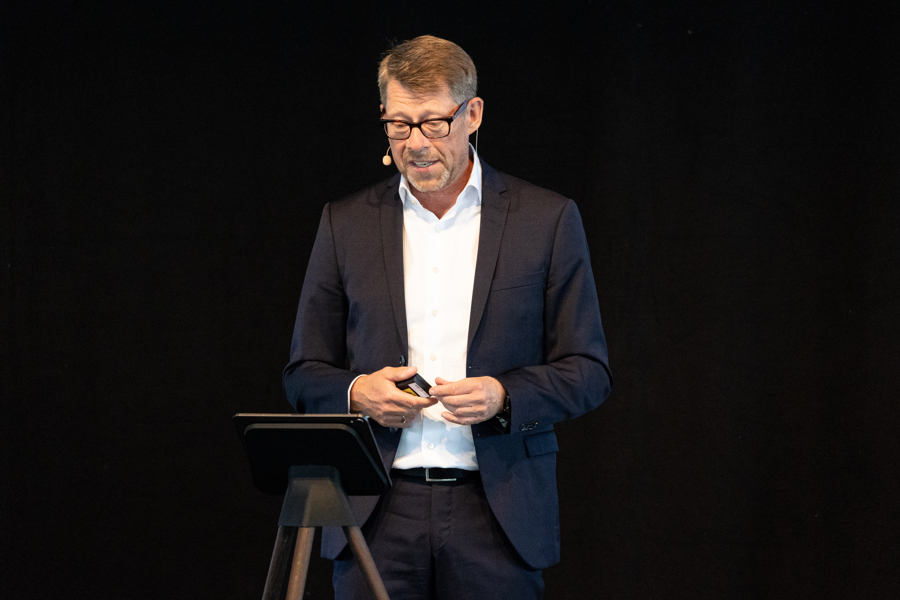

Breakout session: Sustainable Materials
* Adrien Lapeyre, Global Market Manager, Arkema
* Markus Glasser, Senior Vice President EMEA, EOS
* Rasmus Kock Grusgaard, Innovation Consultant, The Danish Plastics Federation
* Niels Appel, Project Manager, Nordic Metals
Moderator: Ditte Lysgaard Vind, Managing Partner, Lendager; The Circular Way


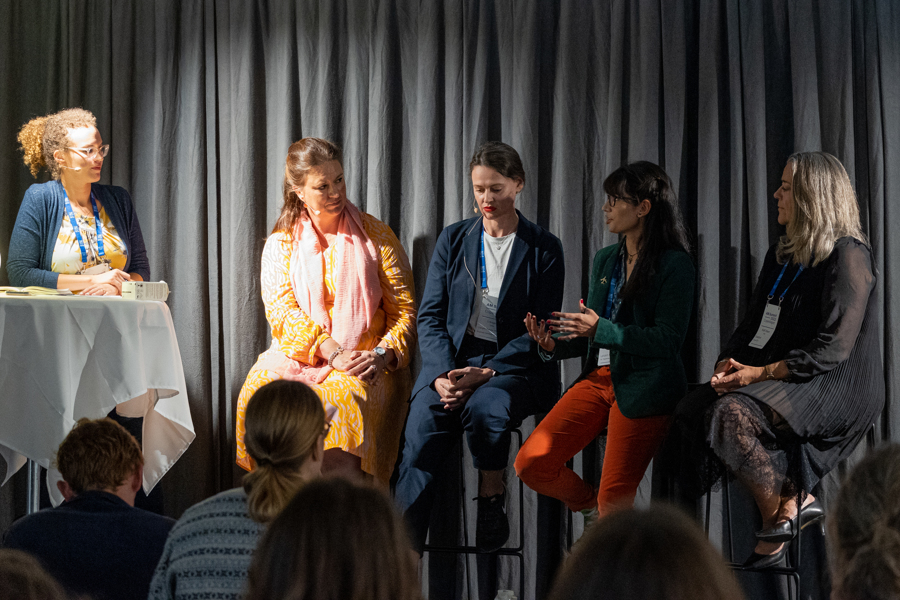
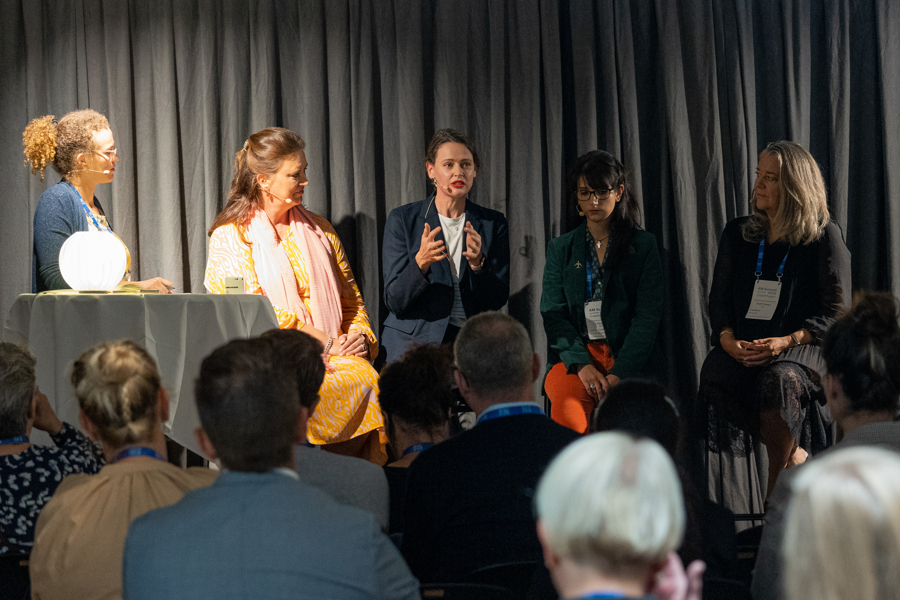
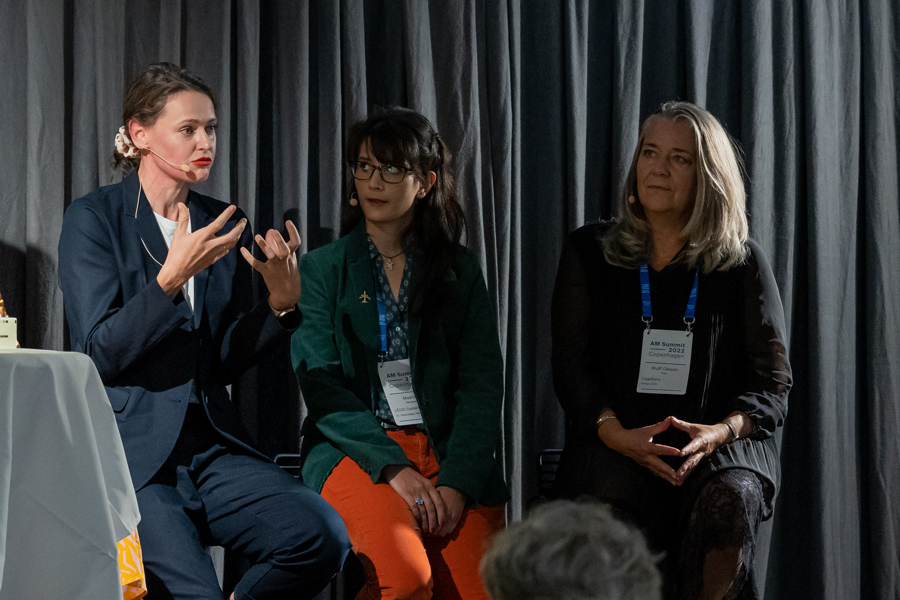
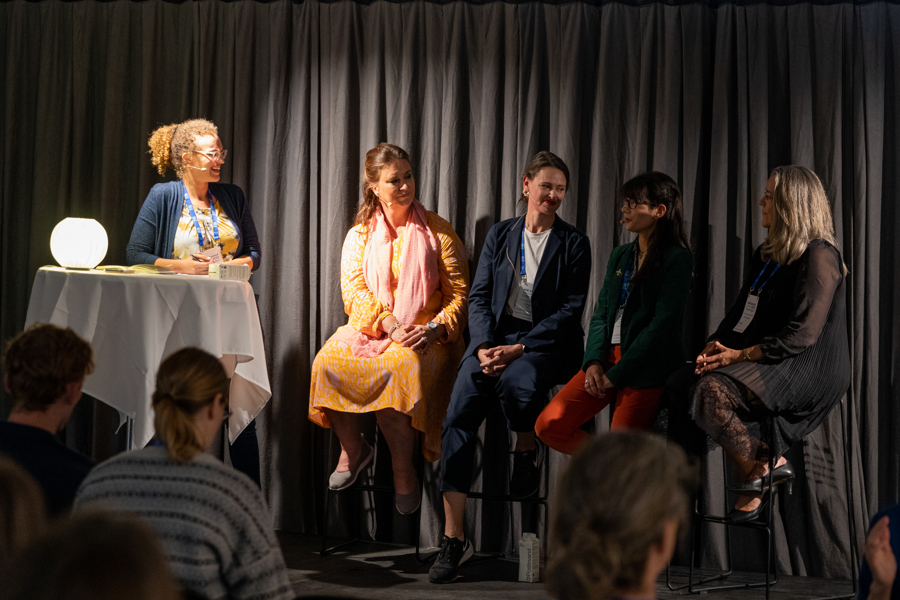
Breakout session: Meet the Women in 3D Printing
* Thea Wulff Olesen, Group CEO, Ossiform (fka. Particle3D)
* Stefanie Brickwede, Managing Director, Mobility Goes Additive & Head of AM, Deutsche Bahn
* Mandaná Moshiri, Senior Technology Manager, The LEGO Group & Wi3DP Ambassador Denmark, Women in 3D Printing
* Greta d’Angelo, AM Business Development Lead, Gränges Powder Metallurgy
Moderator: Nora Touré, Founder and Chairman of the Board, Women in 3D Printing (Wi3DP)
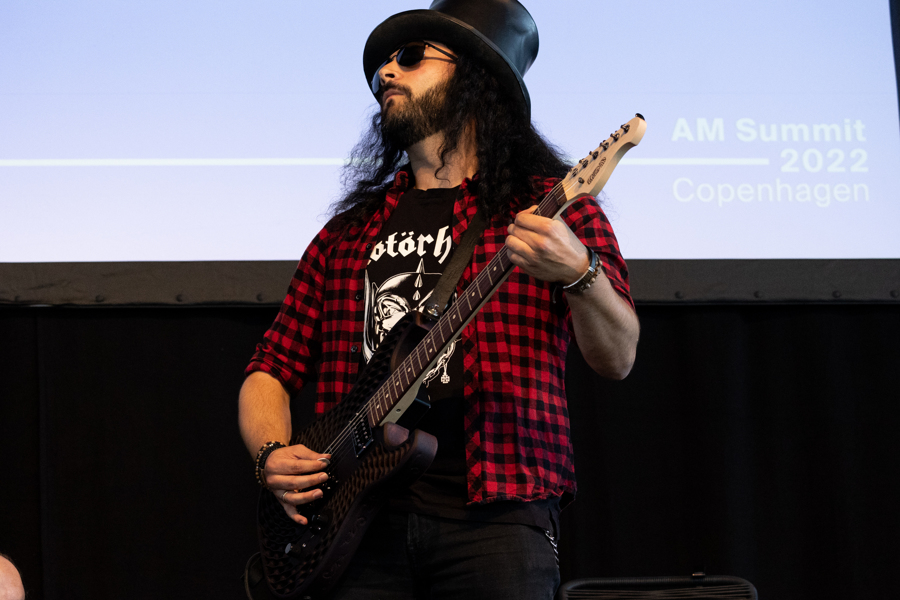
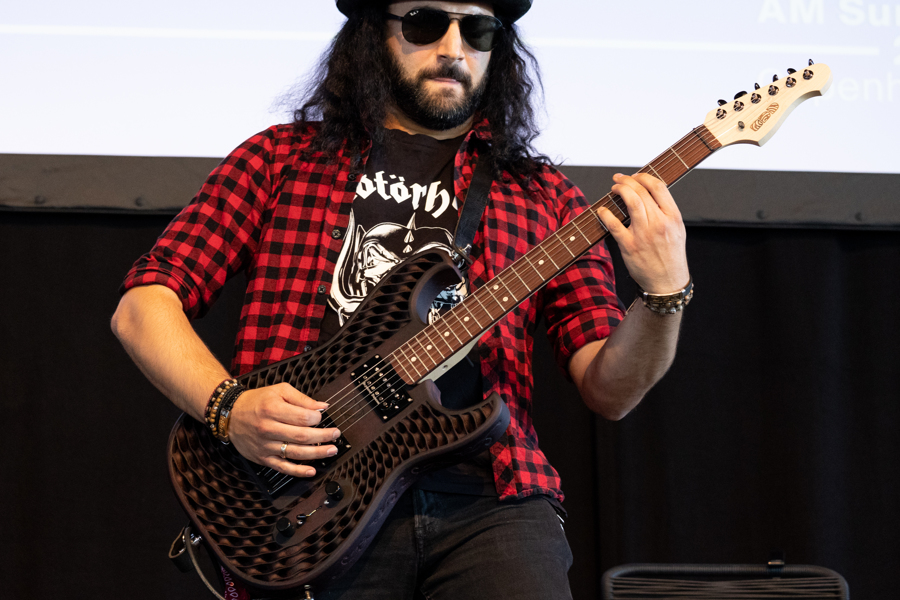
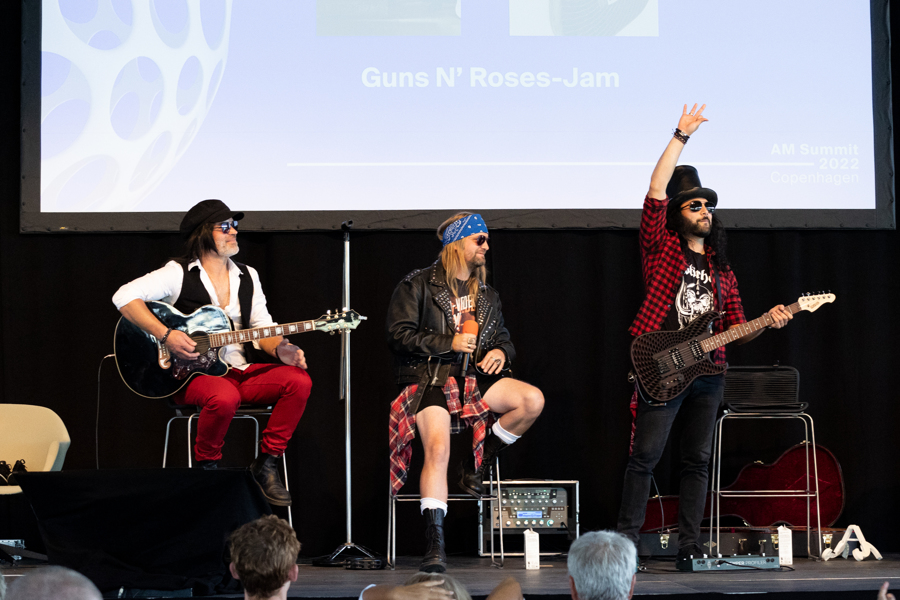
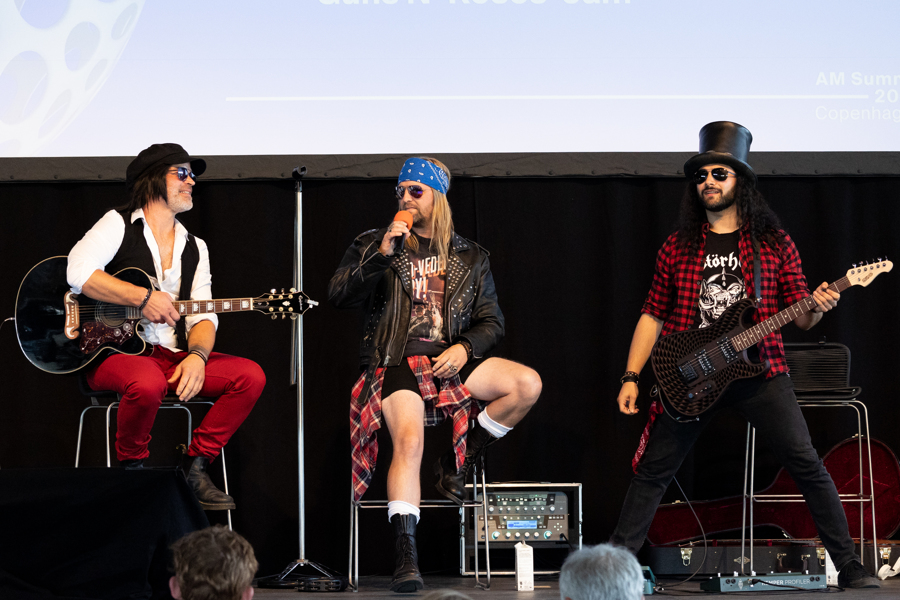
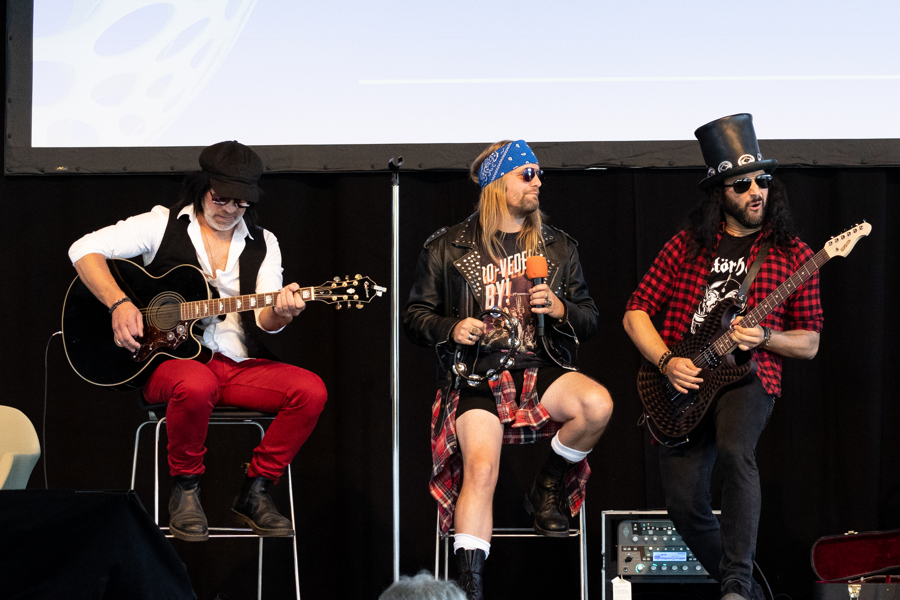
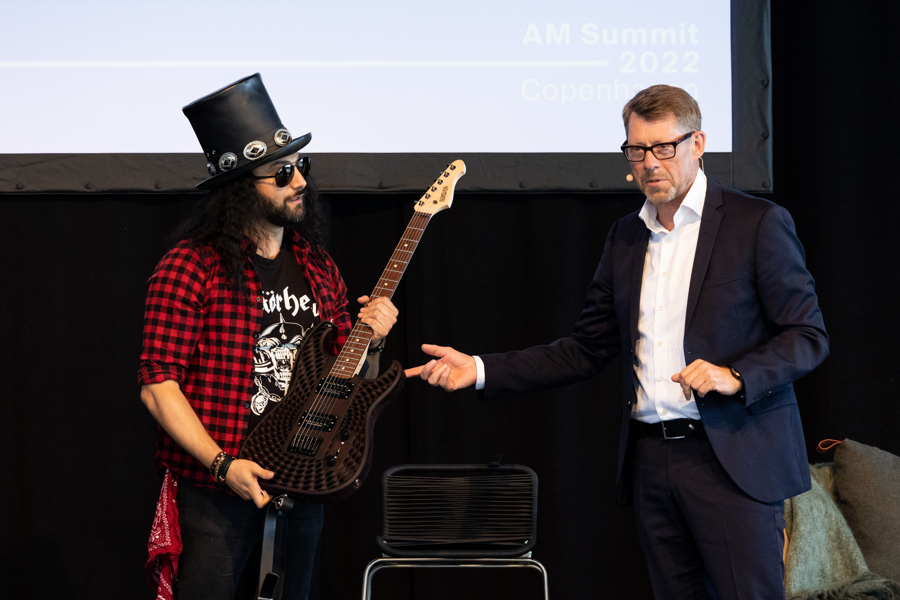
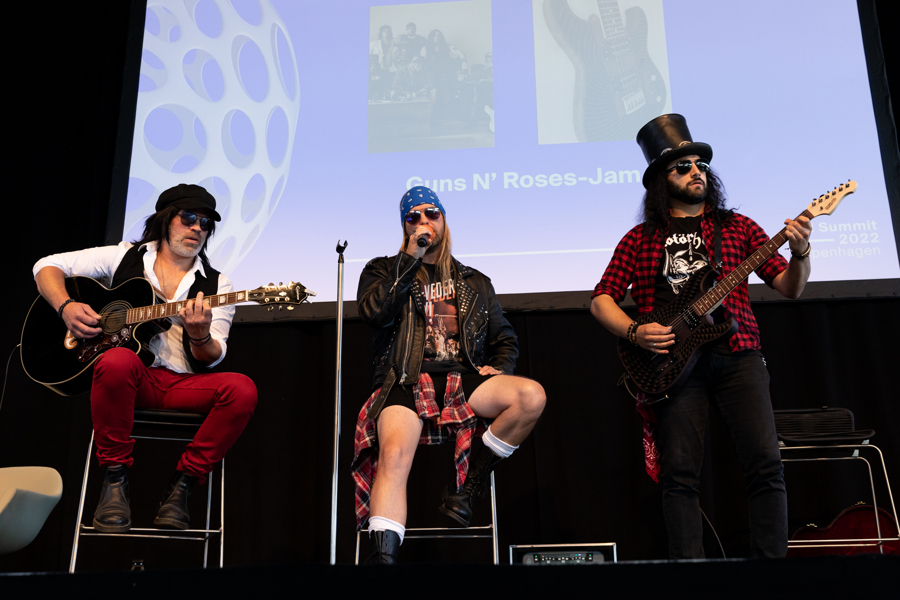
The Sound of 3D Print
* Music by Guns N’ Roses-Jam
* Olaf Diegel, Professor of Additive Manufacturing, Creative Design and Manufacturing Lab, University of Auckland
Breakout session: 3D Printing Sustainable Cities
* Morten Bove, Founder and CEO, WOHN
* Sebastian Aristotelis, Co-Founder and Lead Architect, SAGA Architects & 3DCP Group
* Paul Nicholas, Associate Professor, CITA, The Royal Danish Academy, School of Architecture
* Henry Glogau, Architect, GXN Innovation
Moderator: Frank Rosengreen Lorenzen, CEO, Danish AM Hub

Breakout session: AM and Health
* Nadine Moises, 3D Print Production Consultant, Formlabs
* Anders Mølgaard Jakobsen, Clinical Engineer and Project Manager, Aarhus University Hospital
* Martin Gerth Andersen, Founder and CEO, Snapform
* Mads Tendrup, CEO and Founder, Exo360
Moderator: Michael Mølmer, Chief Medical Officer, Nordsjællands Hospital



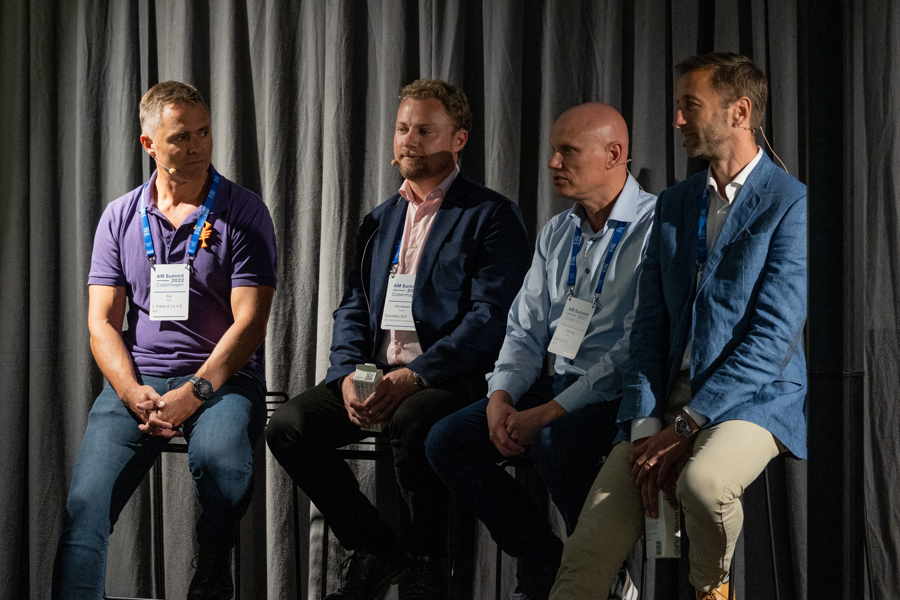
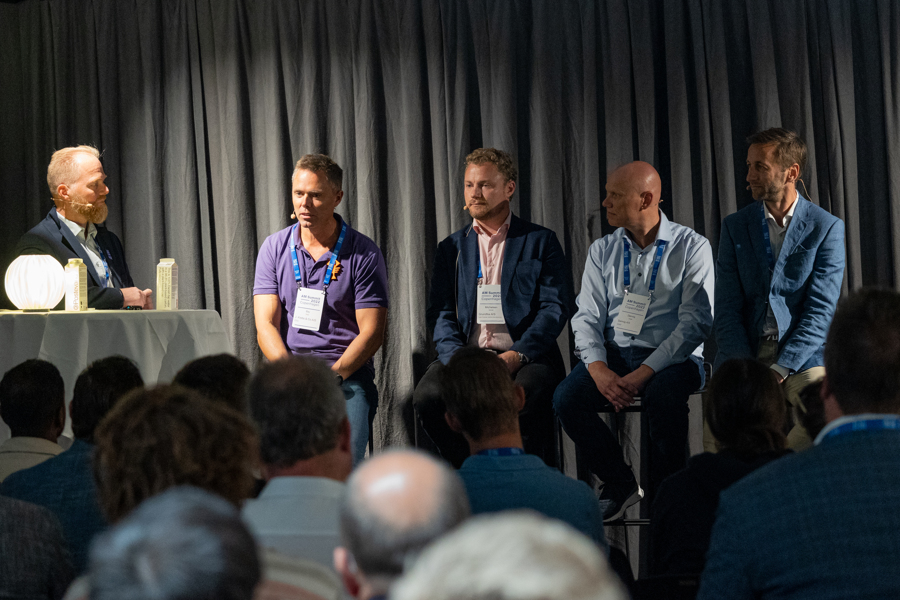
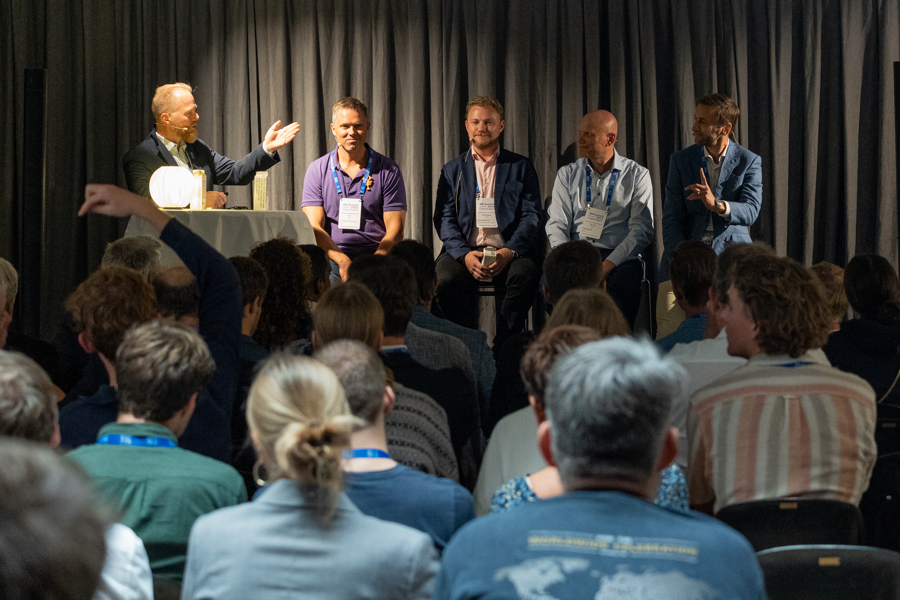
Breakout session: Learn from Danish Experts (in Danish)
* Michel Honoré, Specialist and Project Manager, 3D Print & AM Technology, FORCE Technology
* Peter Bay, Managing Director and Owner, J. Krebs & Co.
* Sander Skovhus Michelsen, Lead Engineer, Additive Manufacturing, Grundfos
* Jesper Damvig, COO, Prototal Damvig
Moderator: Steffen H. Schmidt, CTO, Danish AM Hub

Dualtalk: How 3D Print Helps Restore Marine Biodiversity
* Ida Krabek, Senior Director, Head of Sustainability, Ørsted
* Enrico Dini, CEO, Monolite UK Ltd. (D-Shape)
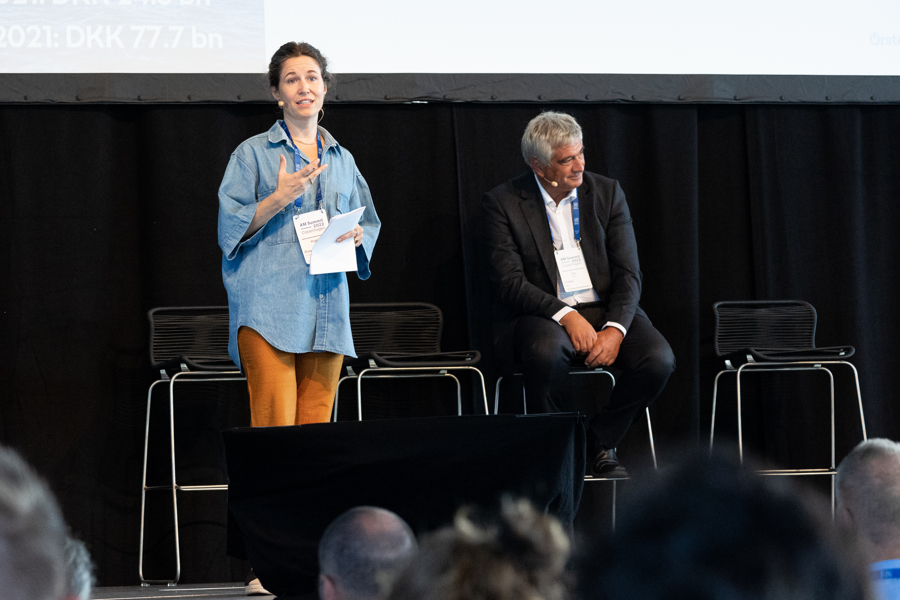
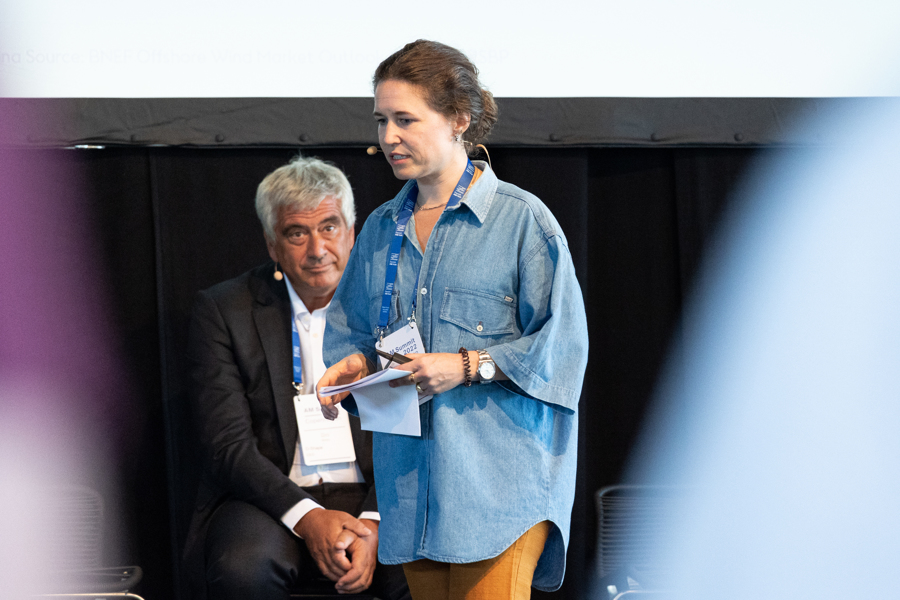
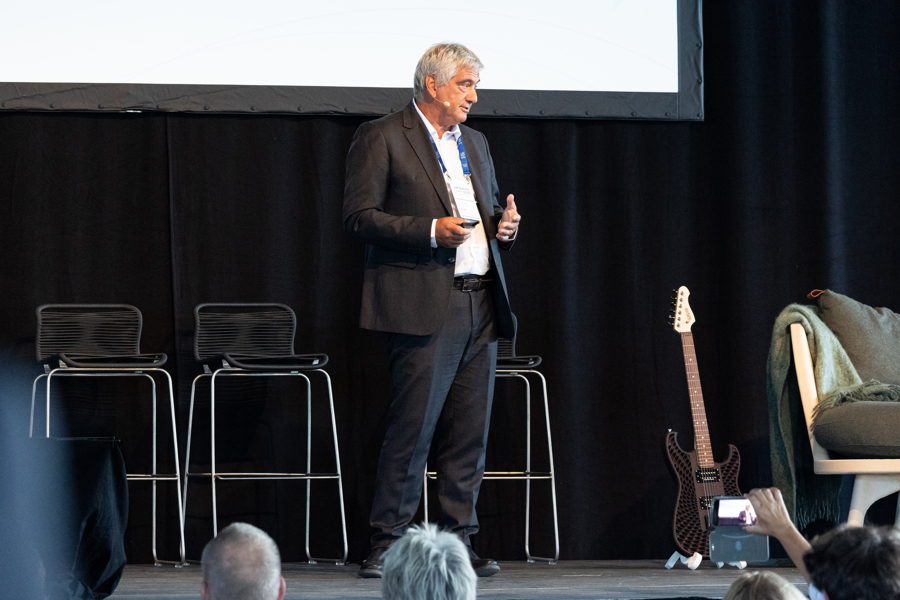
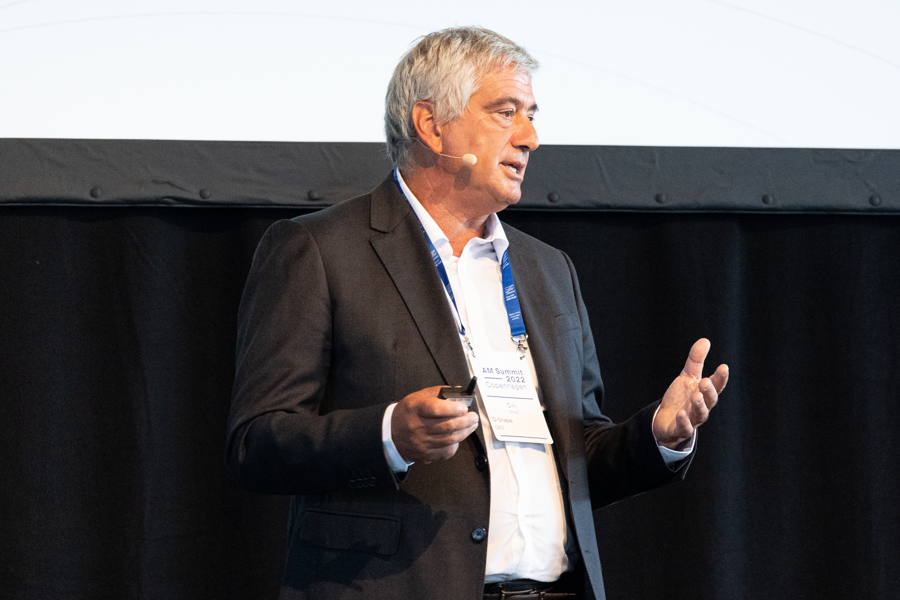
Connie Hedegaard
Former European Commissioner for Climate Action and former Danish Minister for the Environment

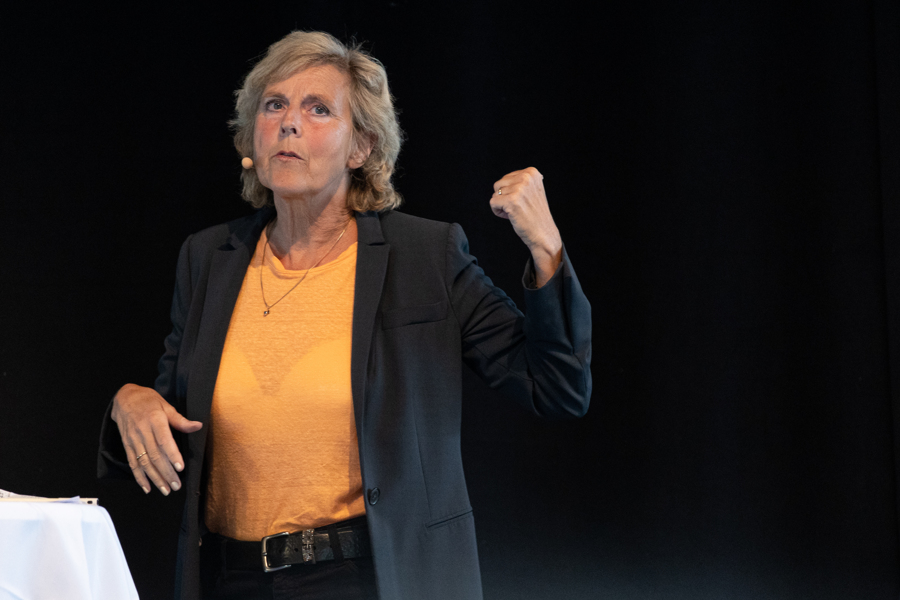
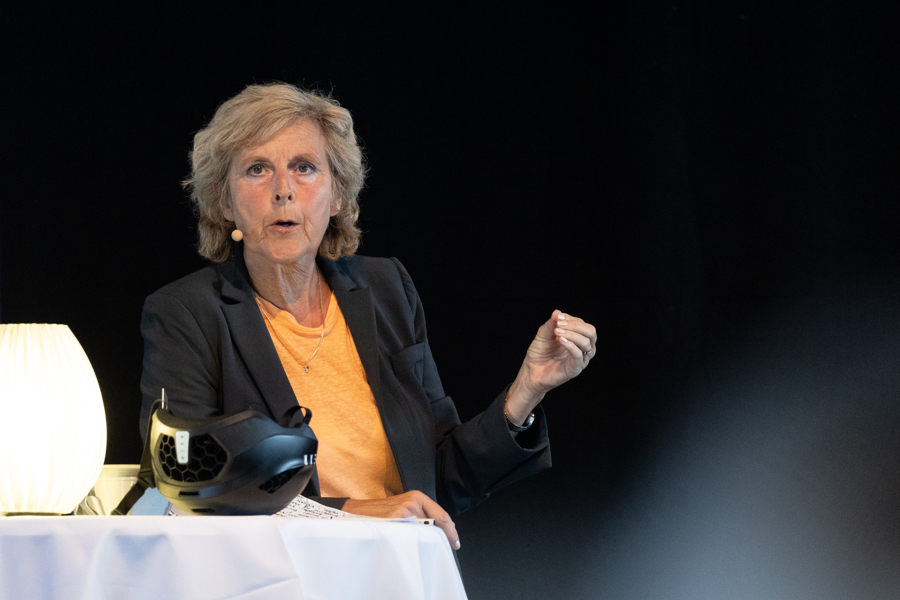
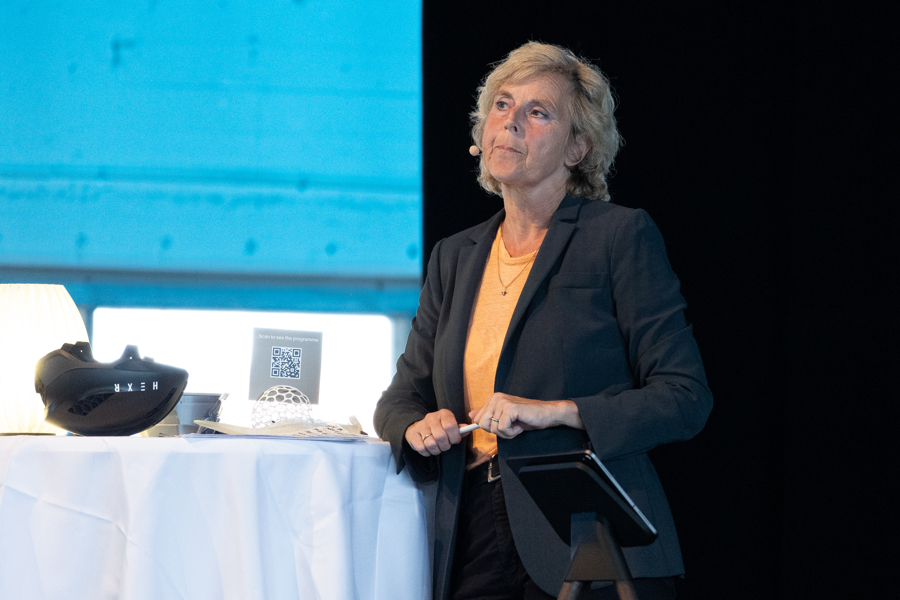
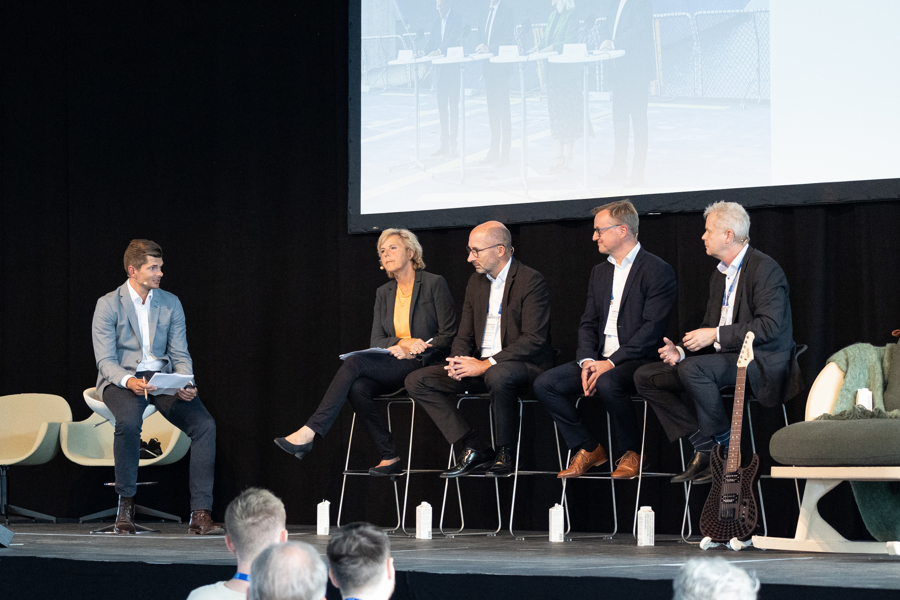
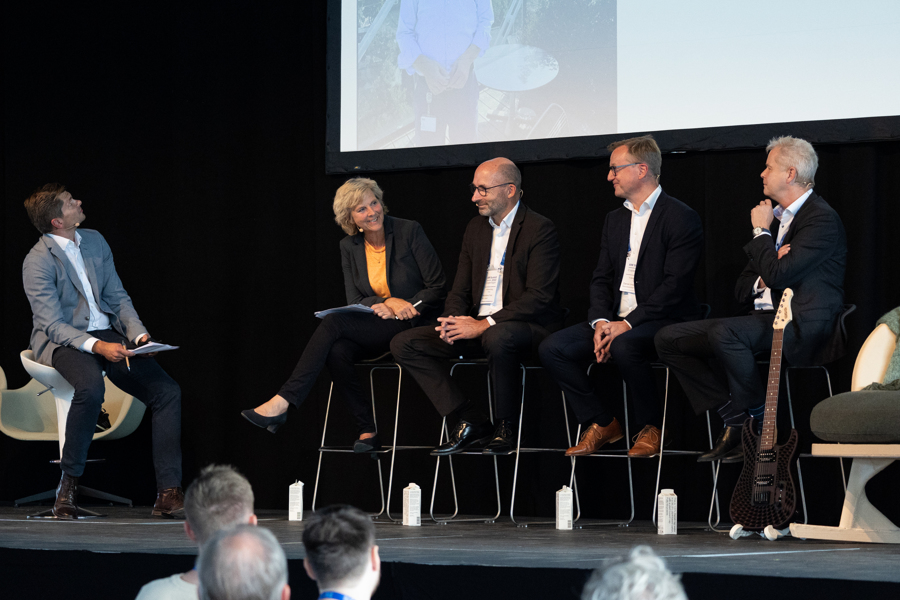
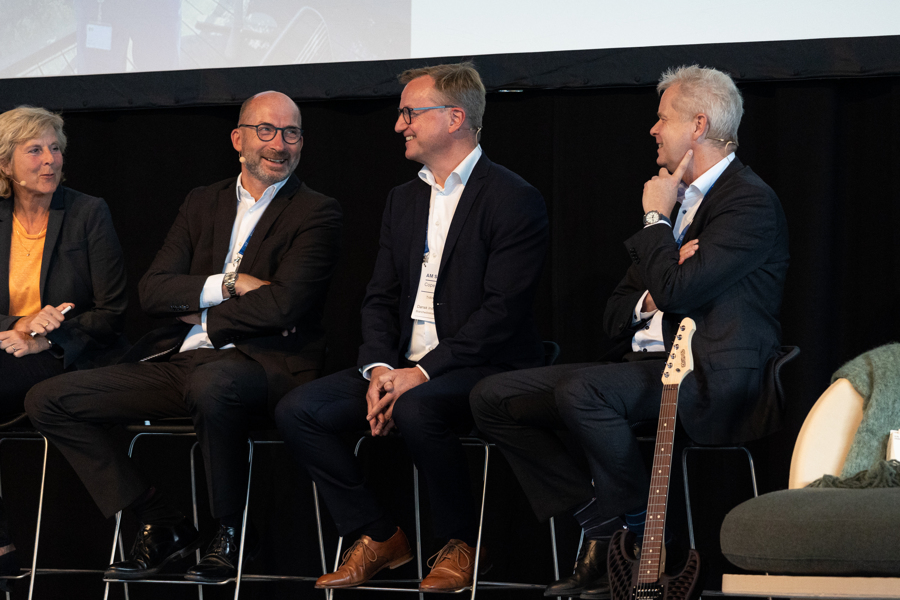
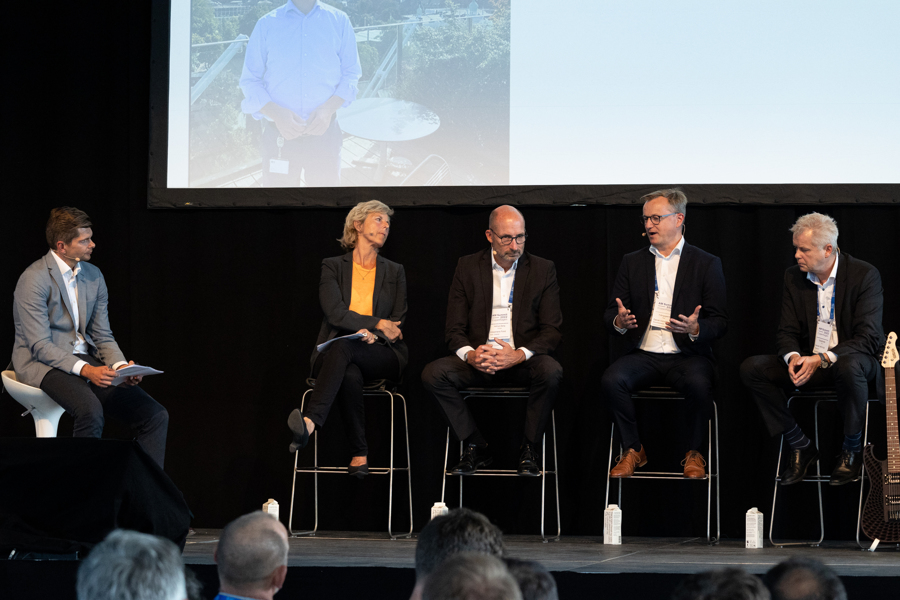
Panel session: How can we use new technology to make Denmark the greenest manufacturing country in the world?
* Connie Hedegaard, Former European Commissioner for Climate Action and former Danish Minister for the Environment
* Poul Skadhede, Founder, Valcon and Chairman of Danish AM Hub
* Thomas Hofman-Bang, CEO, The Danish Industry Foundation
* Peter Trillingsgaard, Director, The Federation of Danish Manufacturers, Confederation of Danish Industry
Moderator: Frank Rosengreen Lorenzen, CEO, Danish AM Hub

More people than ever gather for sustainable 3D printing conference
More people than ever gather for sustainable 3D printing conference
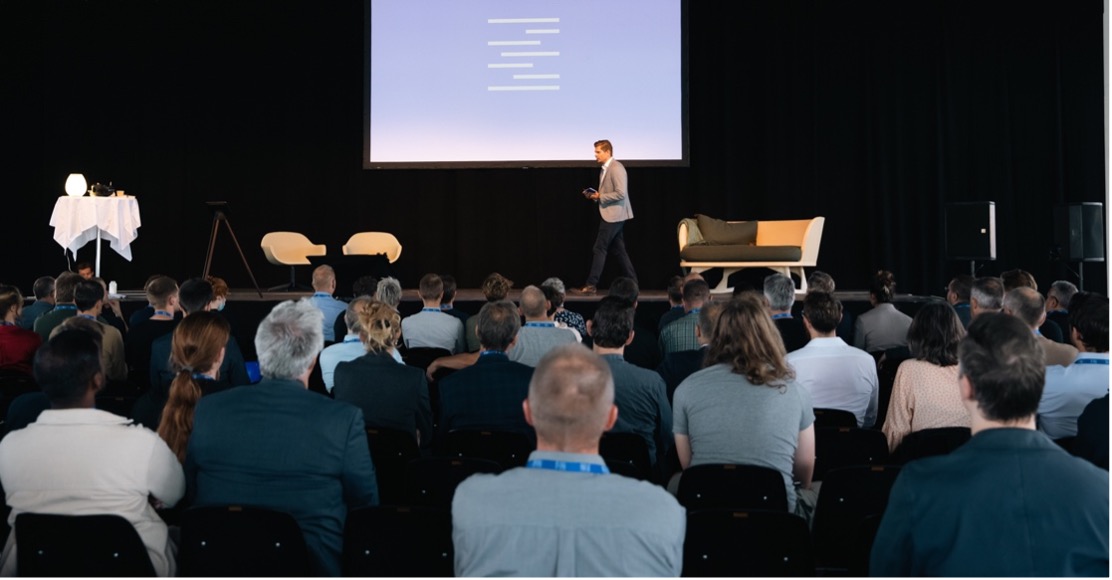
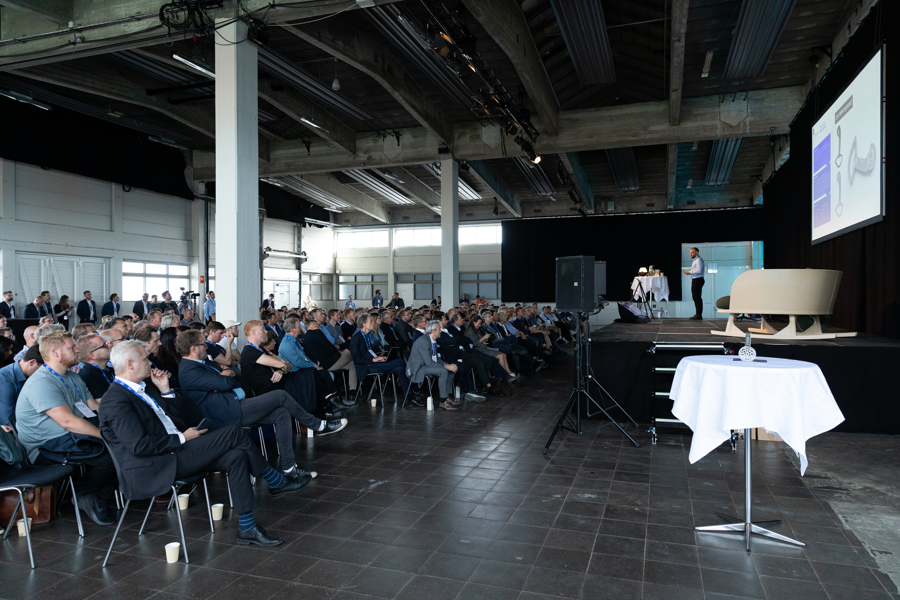
The fourth time was definitely the charm for AM Summit 2022. This year set another attendance record with almost 450 visitors—an increase of just over 25% compared to 2021 and the highest attendance to date.
On Wednesday, September 7th, Danish AM Hub held the annual AM Summit—Scandinavia’s largest conference on additive manufacturing (AM) / industrial 3D printing. Visitors were inspired by insights into the latest developments and innovations in additive manufacturing and 3D printing from 44 speakers and 45 exhibitors.
“We succeeded in addressing an important and timely challenge by focusing on more sustainable production, and by extension increased innovation and competitiveness among manufacturing companies. The growing interest and commitment from both Danish and international visitors demonstrate that Denmark has a leading role when it comes to new technologies,” says Poul Skadhede, Chairman of the Board of Danish AM Hub.
The theme of this year’s conference was ‘Additive Impact – additive manufacturing and 3D printing as a driver for sustainable manufacturing’. Under this theme, 44 speakers took the stage with concrete solutions and inspiration on how new technology such as 3D printing can help us produce more sustainably and competitively—with stronger and more circular business models and more robust supply chains.
Danish AM Hub works to strengthen the competitiveness of the Danish business community by promoting the use of AM and 3D printing, and helps companies take the first steps towards more sustainable production, with AM providing the opportunity for local on-demand production with less transport and lower CO2 emissions.
“The fact that we once again set a record in terms of the number of visitors at AM Summit confirms what we experience on a daily basis—that the ecosystem and interest in the technology’s potential and possibilities grow every day, and that more and more people are becoming aware of the technology. New technologies can change the way we design, develop, and produce, and 3D printing is a crucial technology for creating positive development and contributing to a green transition across our manufacturing companies,” says Frank Rosengreen Lorenzen, Director of Danish AM Hub.
Danish AM Hub is initiated and supported by the Danish Industry Foundation.
More people than ever gather for a green 3D printing conference
More people than ever gather for a green 3D printing conference
The fourth time is certainly just as lucky for AM Summit 2022, which once again set a record this year with nearly 450 visitors—an increase of just over 25% compared with 2021 and the highest number of participants in the conference’s history.
On Wednesday, 7 September, Dansk AM Hub hosted the annual AM Summit—Scandinavia’s largest conference on additive manufacturing (AM) / industrial 3D printing—where guests met no fewer than 44 speakers and 45 exhibitors, who inspired with the latest developments and trends in 3D printing.
“Many strong forces succeeded in addressing an important and timely challenge by focusing on sustainable production and, in turn, stronger innovation and competitiveness in manufacturing companies. The growing interest and engagement from both Danish and international stakeholders show that Denmark has a leading role when it comes to new technologies,” says Poul Skadhede, Chairman of the Board of Dansk AM Hub.
The theme in 2022 was ‘Additive Impact – additive manufacturing and 3D printing as a driver for sustainable manufacturing’. Under this theme, 44 speakers took the stage with concrete solutions and inspiration on how companies can get started with AM technology and leverage its many opportunities and great potential for more sustainable production.
Dansk AM Hub works specifically to make Denmark a global leader in applying additive manufacturing for more sustainable production—where less waste is generated, less material is used, there is less need for transport, and less CO2 is emitted.
“That we are once again setting a record for the number of guests at AM Summit confirms what we experience every day—namely that the ecosystem and interest in the technology’s potential and opportunities are growing almost daily, and that more and more people are discovering the technology. New technologies can change the way we design, develop, and produce, and here 3D printing is a crucial technology for creating positive development and contributing to the green transition in our manufacturing companies,” says Frank Rosengreen Lorenzen, CEO of Dansk AM Hub.
Dansk AM Hub is initiated and supported by Industriens Fond.
Live from AM Summit 2022: Guns N’ Roses rocks on a 3D-printed guitar
Live from AM Summit 2022: Guns N’ Roses rocks on a 3D-printed guitar
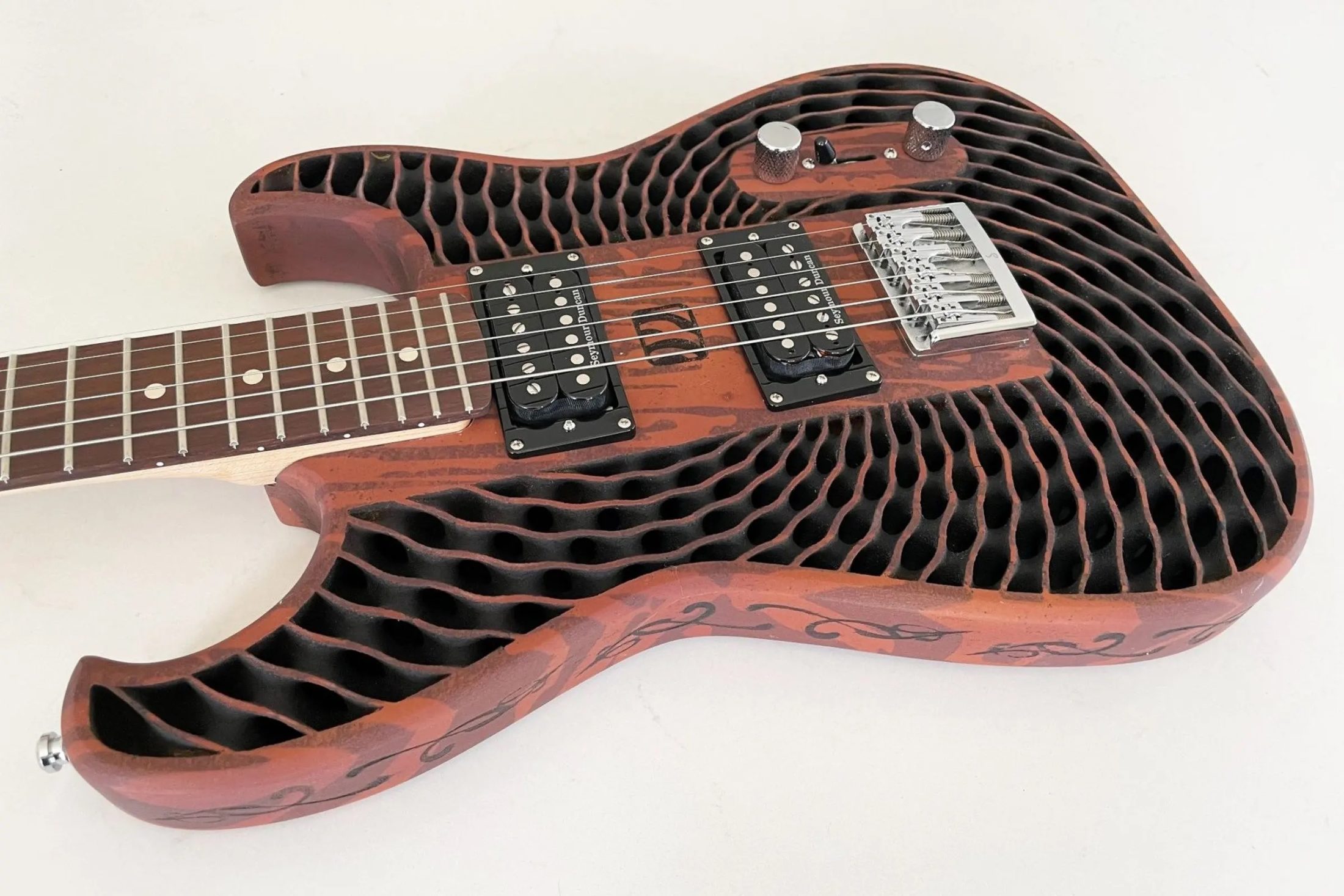
You have probably never considered what rock music would sound like on a guitar that is 3D-printed from recycled sawdust. But if you are even the slightest bit curious or interested, Dansk AM Hub invites you to a concert at AM Summit 2022 – Scandinavia’s largest conference on Additive Manufacturing (AM) / industrial 3D printing – on Wednesday, 7 September in Copenhagen.
Here, we will experience how music emerges from 3D printing with a visit from Olaf Diegel, who has developed and printed an electric guitar from recycled sawdust: The Green Axe. At the conference, the guitar and its sound will be tested by Peter, Michael and George from Europe’s best Guns N’ Roses cover band – GNR-Jam – who have promised to rock out with the biggest solos on the guitar.
“I design my guitars to push the limits of what additive manufacturing can do. That’s why my designs are purposefully geometrically complex, so they could not be manufactured any other way”, says Olaf Diegel, who is a professor of AM at Auckland University and the man behind the design:
“My latest guitar – the Green Axe – is 3D printed out of wood. And, to me, that is amazing because we are taking waste material that would, otherwise, go to landfill or incineration, and transforming it into high-value products. That’s proper sustainability”.
This year, AM Summit focuses on how new technology such as 3D printing can help us manufacture far more sustainably and competitively, with stronger and more circular business models, more resilient supply chains, and more sustainable production with less waste, less material, less transport, and lower CO2 emissions.
AM technology opens up entirely new and limitless opportunities to design products in a new way, both in terms of visual expression and tailored to the individual user – or in this case, perhaps a particular sound.
“And you can design products using different materials that may be more sustainable. That is the fundamental, remarkable and still unrealised potential of AM: that through the technology we can be so incredibly precise in the way we design and produce that we can get very close to how nature would grow it. The Green Axe is probably the greenest 3D-printed guitar,” says Frank Rosengreen Lorenzen, CEO of Dansk AM Hub.
At the conference, a wide range of speakers will take the stage and share their views on what the future of manufacturing will bring, how leading players in the field are already working with AM, and how to get started with the technology. Among other things, we will hear how Boeing is incorporating 3D printing into the aviation industry, how CELLINK works with bioprinting – i.e., 3D printing of living tissue for the production of bones and living tissue – and how Danish company Create it REAL 3D-prints insoles within a circular business model. We will also be inspired in a panel debate on how we can leverage new technology to make Denmark the greenest manufacturing country in the world, including by former minister and EU Commissioner Connie Hedegaard.
To make room for even more inspiration, the programme will also include more breakout sessions than in previous years, addressing the development of AM technology across six themes: new materials for more sustainable production, how 3D printing challenges different manufacturing industries, gender diversity in industry, sustainable construction, developments in our healthcare sector, and a session with some of Denmark’s leading experts in the field.
The conference is for everyone interested in the development and impact of AM technology and who wants to learn more, be inspired, and network. With exciting speakers and the large AM exhibition, the conference is a forum for exchanging knowledge and experience, and a unique opportunity to let creative stakeholders present their qualified perspectives on the latest technology, trends and developments, as well as the future of the AM industry.
Read more about AM Summit here.