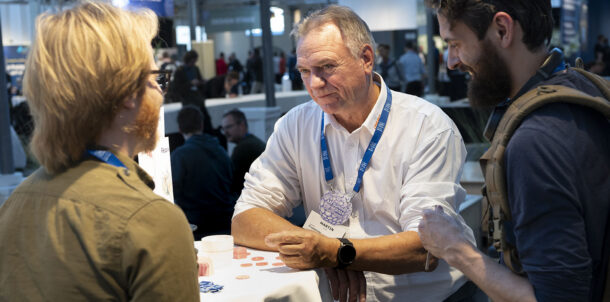

Danish AM Report 2021: Potential for a sustainable future
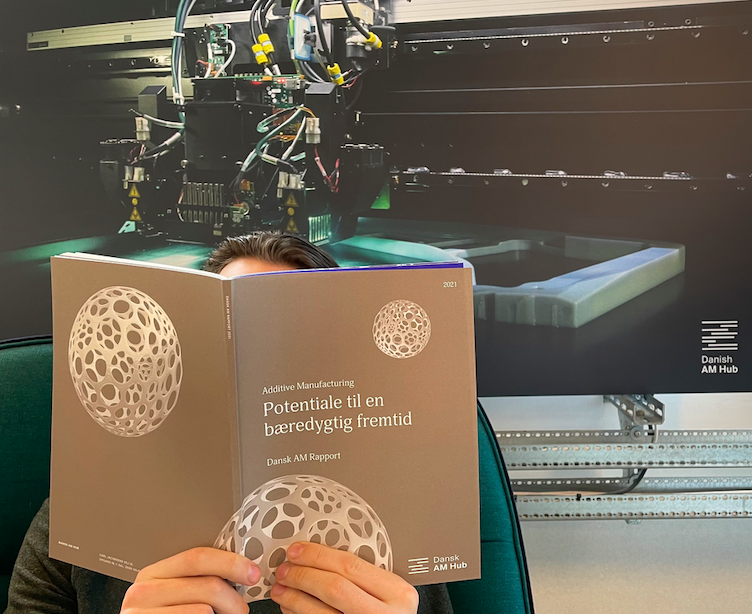
Danish AM Report 2021: Potential for a sustainable future
Mention 2020 and you inevitably mention the coronavirus pandemic. COVID-19 shaped most of the past year, creating increased awareness of AM technology as a powerful tool—even in times of crisis.
The acute demand for medical equipment activated, among other things, “Maker” movements, which 3D printed protective equipment and were able—with short response times—to deliver it to hospitals in need. In addition to hospitals, SMEs with global supply chains were severely affected by the crisis due to production shutdowns and logistical delays around the world. This created a need to produce locally instead, and AM technology is an obvious option here—something several Danish manufacturing companies also experienced and adopted.
Despite the pandemic, the green agenda remains important—if not more important. AM technology holds significant sustainable potential, which many Danish manufacturing companies have already experienced, but which many more must and will discover.
The link between AM and sustainability is close and highly relevant, and together with our ecosystem stakeholders, Dansk AM Hub has a role in highlighting this—especially to manufacturing companies. Therefore, we continuously launch initiatives with a focus on sustainability, so that the Danish ecosystem is developed around AM technology.
In addition, industrial metal 3D printing must be further developed. Metal AM opens up a wealth of new opportunities, but is not yet widespread among Danish manufacturing companies. However, several service providers and educational institutions have engaged in development projects in this area, enabling Danish companies to access knowledge about metal AM and test the technology.
Download the report below and read more about this. Here you can also get a status update on AM in Denmark and learn more about both AM developments in the past year and what Dansk AM Hub is looking ahead to in 2021.
Enjoy reading!
Download the Danish AM Report 2021:
Facts about the report
- Dansk AM Hub published the “Danish AM Report” for the first time in early 2019. This year’s report is the third in the series, which annually takes the pulse of developments within AM.
- The report is aimed at stakeholders in the Danish AM ecosystem as well as Danish manufacturing companies, especially SMEs.
- If you have any questions, please contact info@am-hub.dk.
About Dansk AM Hub
Dansk AM Hub is Denmark’s national focal point for Additive Manufacturing, with the aim of strengthening the competitiveness of Danish industry by promoting the use of Additive Manufacturing and 3D printing. There is a particular focus on small and medium-sized enterprises and the development of new business models that can lead to growth, innovation, and sustainable solutions.
Dansk AM Hub is initiated and developed by Industriens Fond.

AM Hub puts horsepower into metal printing
3D metal printing is the solution if Danish manufacturing companies are to keep pace with developments and demand, especially from abroad. That is why Dansk AM Hub, in collaboration with Herning Municipality, is hiring someone to raise awareness and increase the use of 3D metal printing.
While the classic Volkswagen rolls off the assembly line and onto the world’s roads, the new Czinger Vehicles rolls out of a 3D metal printer. The car is 100% digitally manufactured, from headlights to exhaust pipe, and with only 80 parts compared with the Volkswagen’s nearly 3,000 parts. The Czinger is produced in the USA and is a good example of what 3D technology can do. With 3D production comes exciting design, high durability, and the ability to create structures that would otherwise be impossible. This is an interesting development in the automotive industry and something German car manufacturers are also paying particular attention to.
And this can create both challenges and opportunities for hundreds of Danish companies that today are suppliers to the German automotive industry, if they do not keep up with developments.
“We are facing the electrification of the entire automotive industry, where many Danish players have core competencies. To ensure their competitiveness, small and medium-sized metal companies must integrate 3D metal printing into their production and business model,” says Frank Rosengreen Lorenzen, CEO of Dansk AM Hub, an organisation established by the Danish Industry Foundation specifically to promote additive technologies in Danish industry.
In Denmark, we have around 400 Danish companies that supply everything from batteries to small components to German car factories. If they learn to master the many advantages of the rapidly advancing 3D metal printing technology, they can be frontrunners in a key technology and play a significant role in the electrification of the automotive industry, while also creating many more jobs.
And that is precisely why Dansk AM Hub is in the process of hiring a person who, based in Herning, can cover all of Jutland. With three 3D metal printers available at educational institutions in Herning and several other printers in the boot of the car, he will ensure that manufacturing companies in Jutland become aware of the opportunities and can easily get started using the new technology—among other things by offering to lend them a printer temporarily so they can experience the many benefits before potentially investing in one themselves.
“In Central Jutland, there are strong metal crafts and traditions, and there are particularly many metal companies in the Herning area. At the same time, there is a culture and spirit of daring to set the bar high and collaborate across interests, as well as a belief that industry and production are an important part of the future and key to Danish competitiveness,” says Frank Rosengreen Lorenzen.
Herning welcomes AM and 3D
Herning Municipality also strongly believes in the potential and development of 3D metal printing, and the municipality has allocated DKK 1.5 million to the area over the next three years.
That is why Herning Municipality has also established the Mid- and West Jutland 3D MetalAlliance together with Herningsholm Erhvervsskole & Gymnasier, AU Engineering in Herning, DAMRC, and the Business Council Herning & Ikast-Brande, with the aim of strengthening the adoption of 3D metal printing.
The three-year grant from Herning Municipality will, among other things, be used to create a shared employment and office community for AM Hub and the 3D MetalAlliance in Herning, so that the two organisations can jointly strengthen efforts to increase the use of 3D metal printing.
“We look forward to welcoming AM Hub to Herning and to collaborating with them through the 3D MetalAlliance. In our area, we have a large share of manufacturing companies, especially within the metal industry. We must safeguard this position of strength and develop it further, including by creating the best possible conditions for the industry’s technological and digital transformation,” says Henrik Kjeldsen, Head of Business Development in Herning Municipality.
“The collaboration with AM Hub can help us realise our ambition more quickly and effectively to create a centre of excellence that will give Danish industry access to knowledge, training, and qualified labour within 3D metal printing,” Henrik Kjeldsen assesses.
A bigger vision
At Dansk AM Hub, they hope that many others will follow Herning Municipality’s example and embrace the many advantages of 3D printing to improve both production and the end product—since digital manufacturing can deliver better designs almost fully tailored to the customer’s specific wishes, in sustainable material and without transport.
Within metal 3D printing, there is strong international growth—especially in the sale of materials, where metal saw growth of 28% last year, and metal 3D printing is making impressive inroads into the production of end-use components.
“It is crucial that our skilled Danish metal companies keep an eye on this technology and, through our initiative in Herning, have the opportunity not only to get started but also to progress without requiring major investments. We must be first in the race,” says Frank Rosengreen Lorenzen, who has a clear vision for Danish industry:
“Perhaps the time has come for us to show the world how, through this technology, you can produce a CO2-neutral electric car MADE IN DENMARK.”
See coverage of the initiative at, for example, TV MIDTVEST
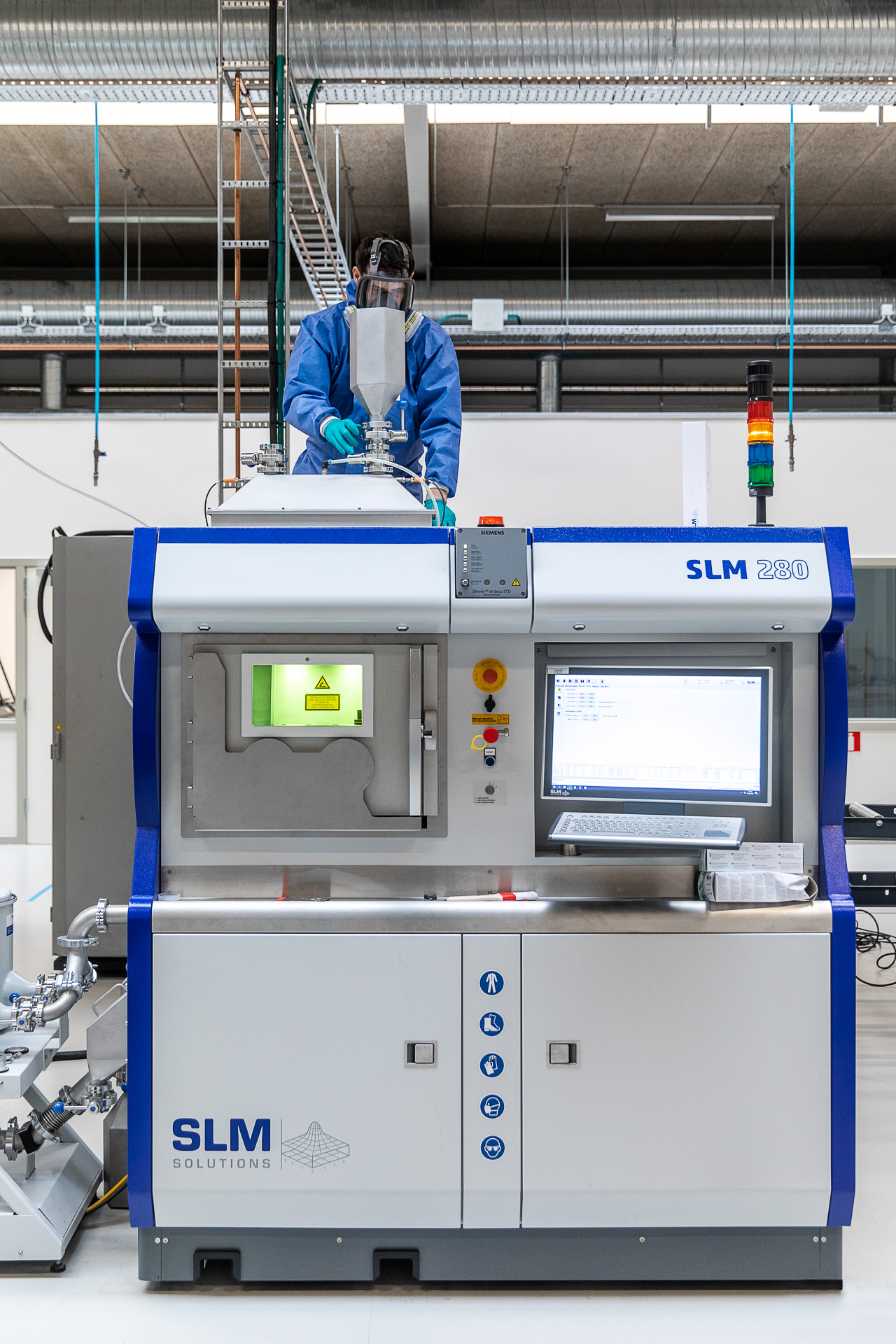
3D metal printer at AU Herning. Photo: AU Herning.
Knowledge centre opens 3D labs at three vocational schools
Knowledge centre opens 3D labs at three vocational schools
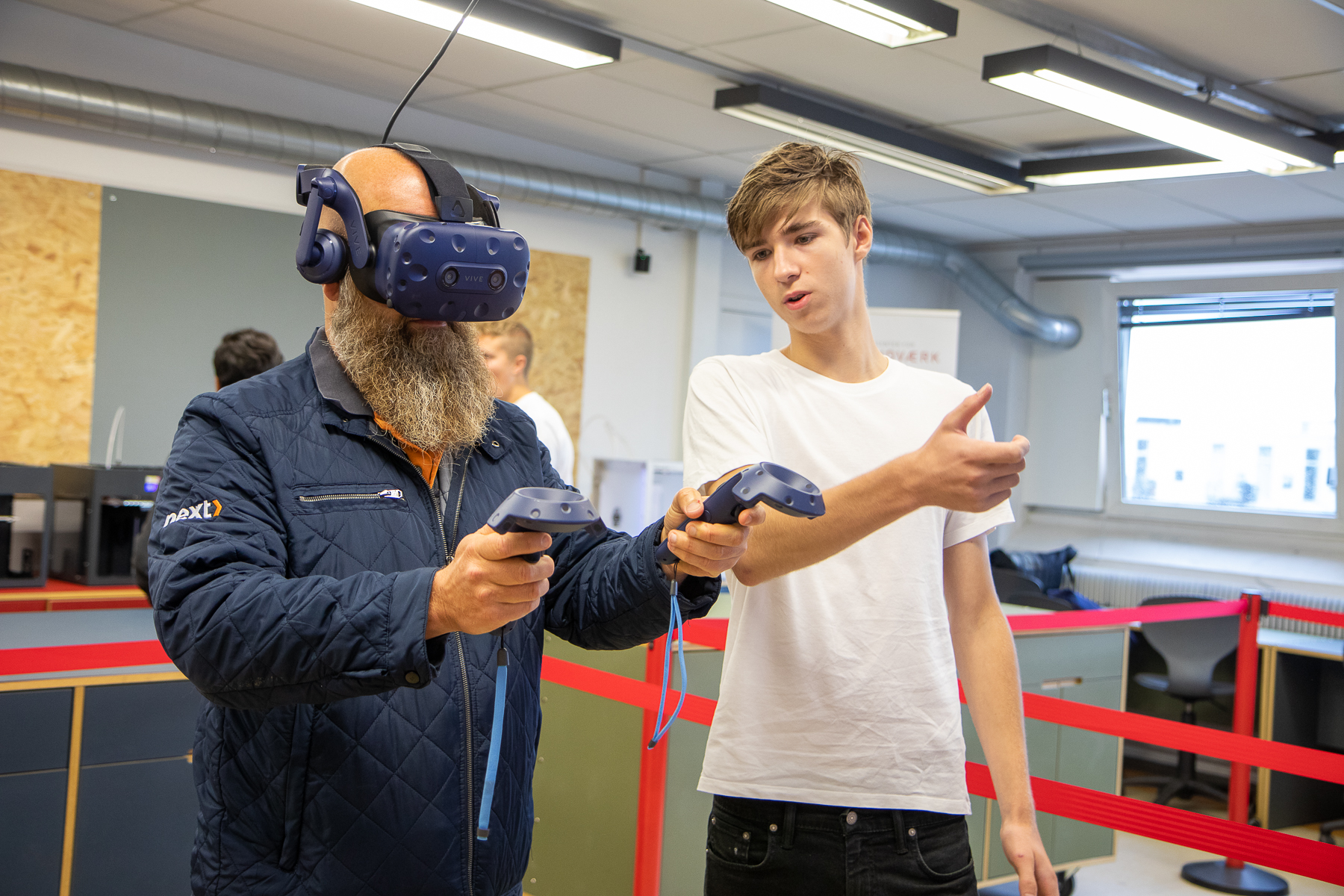
Vocational school students can now get hands-on with 3D technology, and the construction trades are at the forefront of making use of the opportunities.
The Knowledge Centre for Crafts – Design & Architecture is opening three 3D laboratories at three major vocational schools across the country. Going forward, vocational school students will be able to experiment in their teaching with 3D printers, Virtual Reality, laser cutters, 3D design, etc. The opening took place on Thursday at Techcollege in Aalborg, Mercantec in Viborg and at Next Education Copenhagen.
The three 3D Labs have been established to develop vocational education programmes, so that it will hopefully become more attractive for young people to pursue an education where they use their hands—while also having the opportunity to play with the latest technology.
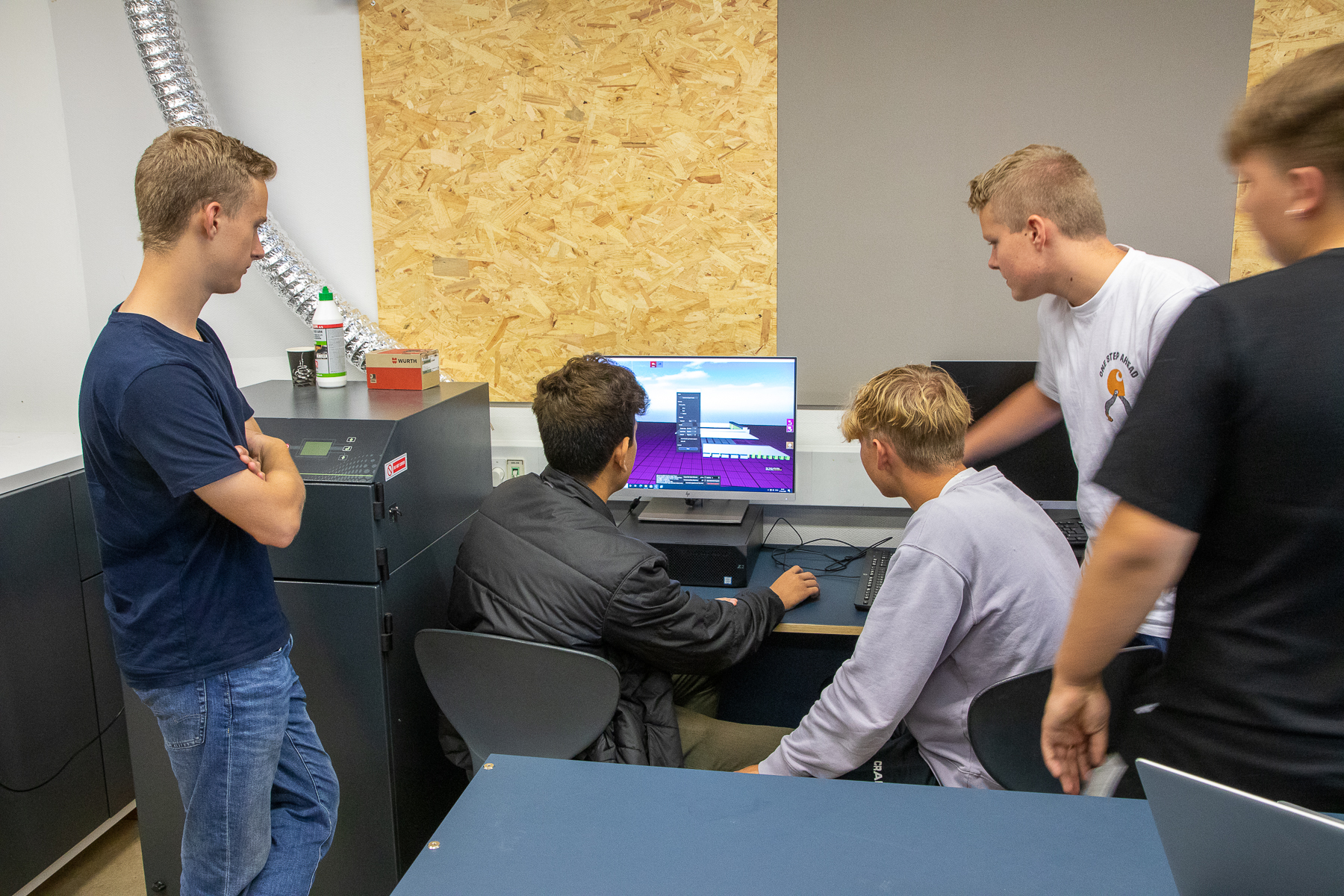

Ole Heinager, Managing Director at Next Education Copenhagen and Chair of DEG, emphasises the importance of future-proofing education: “If our young students and apprentices do not leave with this understanding of technology, they will be in for a shock when they truly enter the labour market.”
In Aalborg, enthusiasm is high, and carpentry student Philip Gerdes can already see the future: “There is no doubt that it will also make its way to, for example, construction sites, so if we as carpenters are missing a specific piece for a corner, we can print it instead of having to order it,” he says.
The investments at the three schools are intended to bring vocational school students into 21st-century 3D technology—a technology that is still advancing rapidly and that visualises problem-solving in a completely new way: “It has been really great, and a completely new way of looking at things. It gives a whole new angle and a new perspective,” says Simon Alexander Arnby, an eux carpentry student.
His classmate, Claus Hønborg, has only just been introduced to VR, but already uses it instinctively and quickly. He says about the possibilities of the 3D lab: “It’s better than sitting and drawing on a computer. You can see what it’s like, and what it feels like to be in there.”
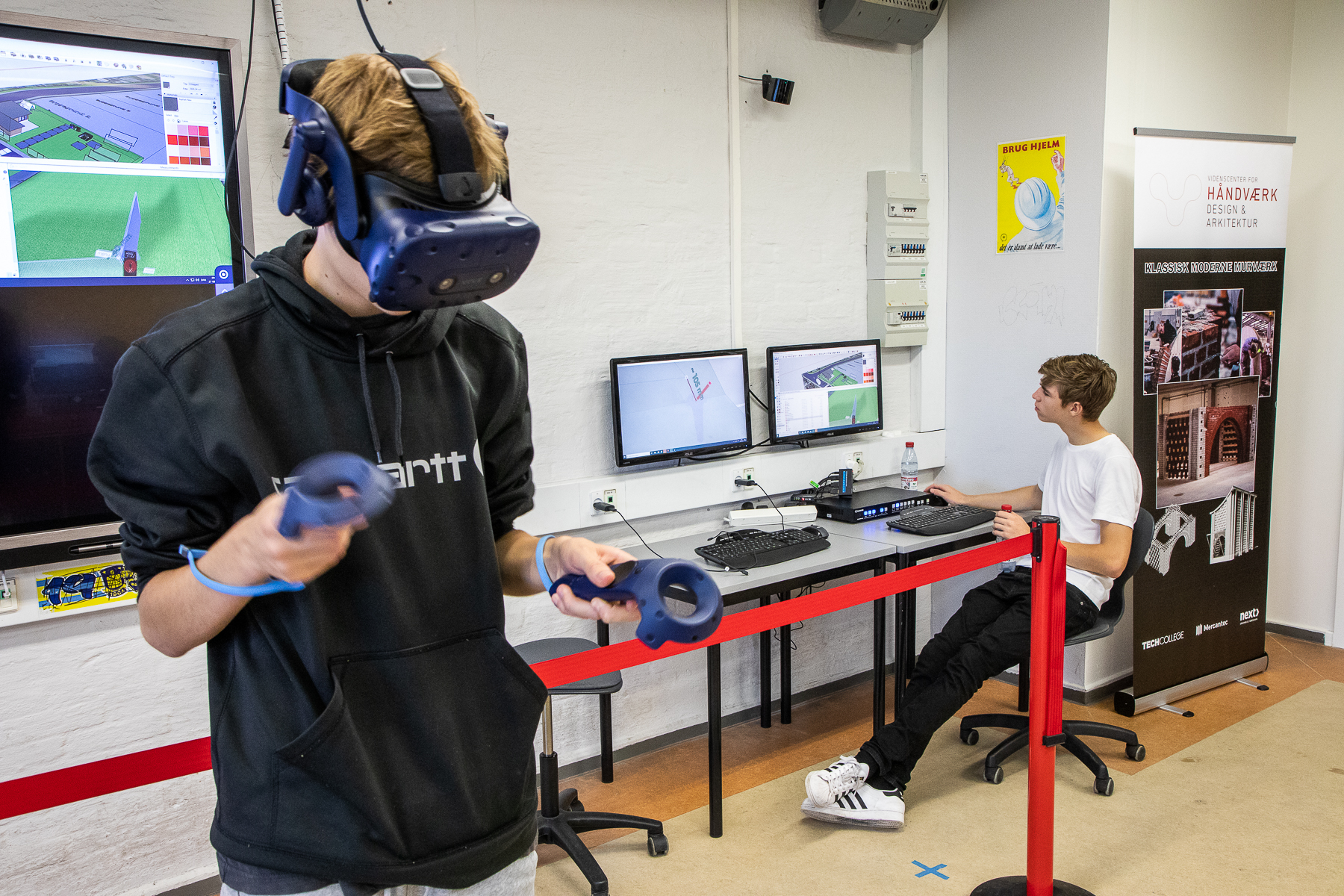
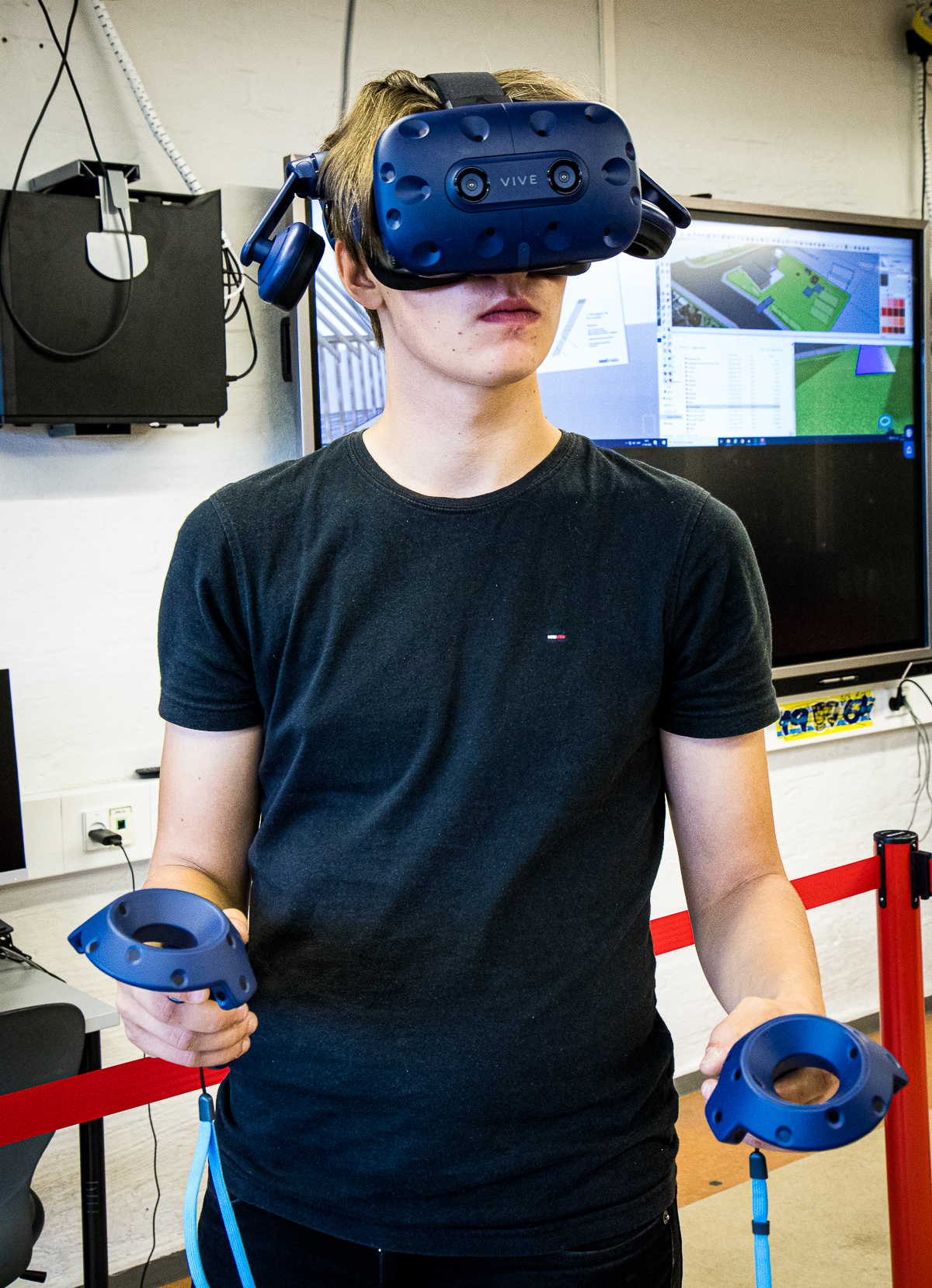
Overall, the most important thing is that students are allowed to experiment with 3D and get a sense of the possibilities. The equipment creates attractive, technology-focused teaching for young people, and the opportunity to immerse themselves in 3D, VR and laser cutters.
“It’s great to have access to all that equipment. It makes it a bit more enjoyable to be told on Monday morning that you have to sit and draw all day,” Claus Hønborg concludes.
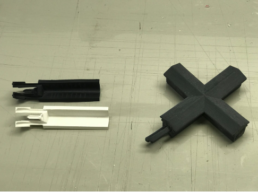
3D printing has cut eight weeks off DAFA’s development time for new products
DAFA A/S

At DAFA, they manufacture products in foam, rubber and plastic materials for construction, industry and wind energy—such as gaskets, sealing tapes, and sound- and vibration-damping solutions. In short, everything in foam and rubber—anything that can dampen, protect and seal. It could be in a speaker fitted in a car door, in a display in a car dashboard, in an oven door, in a kitchen appliance or a power drill, or in a wind turbine that needs to be sealed against rainwater.
DAFA has now also invested in a 3D printer. This follows their participation in Dansk AM Hub and Center For Industri’s 3DP Try Out, where companies can borrow a printer for a month.
Henrik Pedersen is a Project Manager at DAFA and explains that their decision to explore 3D printing and invest in their own printer is to meet customer needs within the segment known as “moulded gaskets”. This requires specially manufactured tooling, and by 3D printing the design they can verify it immediately.
“Normally, it is a long process from having the product drawn to receiving the first samples from moulded tooling, which typically takes between 6–10 weeks depending on how complex it is. We would very much like to skip that process so we can validate the design by creating a 3D model. If we then print a 3D model, we essentially have the answer immediately, which we can test in our application or send directly to the customer, and we can make adjustments straight away. When the customer is satisfied, we order the tooling. You effectively save a prolonged development process, and you save a lot of tooling,” explains Henrik Pedersen.
This means that when you order the tooling, it is correct the first time, and for our customers that is a major time and cost factor that we reduce.
Results from programmes with Dansk AM Hub
- Cut eight weeks off the development process
- Faster to the customer
- Enables printing at the hardness customers request
DAFA took part in 3DP Try Out at the beginning of 2020 and has since invested in its own printer and received orders for some of the items they have 3D printed and sent to customers.
“This means we have cut eight weeks off the development process, and the customer gets verification that this design fits into the construction before we order moulds. So for us, it means we reach the customer faster and have a higher likelihood of winning an order. At the same time, the customer also saves time compared with having to go back and modify the tooling. In our view, this gives them better service than they would have received before, when they had to wait. So we have only positive experience with 3D printing,” says Henrik Pedersen.
Is your production setup a limitation—or a strength?
And are there new opportunities?
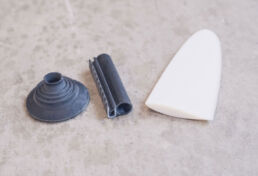
An enthusiastic sales team
DAFA’s sales team has also welcomed the 3D-printed prototypes, because they can deliver prototypes within one working day.
“If you receive an enquiry, as a salesperson you can prepare by having a model printed before the first sales meeting, so you actually have a model with you that you can show the customer and use as a basis for discussion—and it is always nice to have something in your hands, so there is not far from idea to order. And ultimately, that is one of the reasons we have invested in 3D printing—to generate more revenue,” says Henrik Pedersen, who expects DAFA to use 3D printing both internally and for customer enquiries.
About the company
DAFA A/S
Holmstrupgårdvej 12, 8220 Brabrand
Number of employees: 98
DAFA Building Solutions for the construction sector, focusing on holistic and environmentally friendly solutions that seal and make buildings durable and sustainable.
For DAFA, investing in 3D printing is a strategic initiative intended to increase their development speed. They have invested in a significantly more advanced 3D printer than the one they used in the project. With it, materials can be mixed digitally—that is, a very hard and a very soft material can be blended digitally—so they can decide the hardness they print at, and they can combine a hard and a soft rubber in the same print.
“This makes it possible to print at the hardness customers request, whereas if we had invested in a slightly cheaper technology, we would have had a hard, rubber-like material, but not at all in the soft variants we need. That is why we have chosen to invest in a machine that is a bit more expensive, but is more aligned with the world DAFA is part of—namely rubber and moulded components,” concludes Henrik Pedersen.
Is your production setup a limitation—or a strength? And are there new opportunities?
Get input on how hybrid production can support your business strategy.
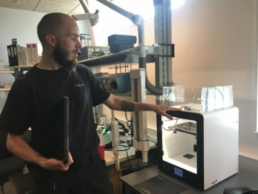
With 3D printing, Aabentoft gives wheelchair users control
A/S Aabentoft

At Aabentoft in Hornslet, they are accustomed to creating specially designed and customer-customized products. And now they have a new tool for precisely that.
At the beginning of 2020, a new machine arrives at Aabentoft. It is only on loan, but it turns out to be quickly replaced by one of their own purchased machines. Aabentoft has participated in Dansk AM Hub and Center for Industri’s 3DP Try Out. Here, companies borrow a 3D printer for one month at a time, and then it’s just a matter of getting started.
At Aabentoft, they handle sales, service, and total solutions within the REHAB and MEDICO industries. Total solutions for controlling joystick-operated electric wheelchairs, as well as all forms of service and repair for electric wheelchairs and other types of assistive devices, are one of the company’s strengths. All wheelchair users are unique, which requires the chair to be equally unique.
Where 3D printing makes a lot of sense for Aabentoft is with the many specially produced assistive devices they make for, e.g., wheelchair users. This could be people with reduced muscle strength who cannot operate the panel or joystick on the standard-produced control panel of the wheelchair. Here, one can quickly design a unit, button, new joystick, or whatever the individual needs to be able to operate a wheelchair.
Results from programmes with Dansk AM Hub
- With 3D printing, you can tailor a product
- Reduce development and production time
- Specially produced items
“Normally, you would have to produce many units of, for example, print holders, plug adapters, and the like, but with 3D printing, you can tailor a product and create a single unit customized for the individual user,” says Rasmus Koch, Technician at Aabentoft.
At the same time, it often takes a long time to get these customized products manufactured, and here the company also sees great potential in being able to reduce the development and production time for these items by making them with 3D printing.
Is your production setup a limitation—or a strength?
And are there new opportunities?
“We often produce specially made items, so for what we do, 3D printing is a really good medium, and something we look forward to exploring further,” says Per Aabentoft, Director at Aabentoft.
Per Aabentoft is not sure there will be an immediate financial gain from 3D printing right now, but he is quite certain they can make a better product by being able to produce the customized holders and other things that can make a world of difference for, e.g., a wheelchair user who would not be able to operate a control panel on the wheelchair without a specially adapted unit that, for instance, allows them to turn knobs with the palm of their hand instead of their fingers or similar.
About the company
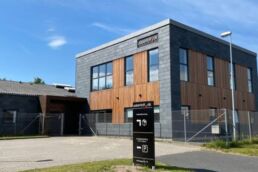
A/S Aabentoft
Løgtenvej 93, 8541 Skødstrup
Number of employees: 25
High-level professional technical assistive device service as well as assistive devices within ASK, Cognition, Sensory Room, arm supports, robotic arms, eating aids, etc.
At Aabentoft, they have invested in their own 3D printer after participating in 3DP Try Out and have high expectations for what can be achieved in the long term with 3D printing.
“I see great potential in niche production, that we can create small units that are 100% specialized for the individual user,” concludes Rasmus Koch.
Is your production setup a limitation—or a strength? And are there new opportunities?
Get input on how hybrid production can support your business strategy.
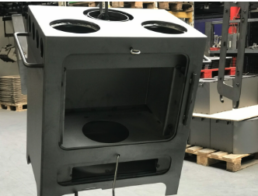
3D printing brings development projects to life at the wood-burning stove manufacturer
HWAM A/S
At HWAM in Hørning, they manufacture wood-burning stoves. The stoves have electronic control, so they can be controlled via an app, as there is an electronics box under the stove that regulates the air supply. This controls the temperature and oxygen level and ensures clean combustion. It is for this electronics box that HWAM has been experimenting with 3D printing.
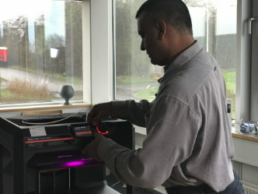
At the beginning of 2020, Dansk AM Hub and CFI arrive at HWAM with a box. In the box is a MakerBot 3D printer, which is installed and set up in HWAM’s canteen the following month. They are part of Dansk AM Hub’s 3DP Try Out project, which provides a printer to companies for one month at a time. This type of printer produces in plastic, which does not immediately seem to fit with wood-burning stoves, but at HWAM they make a box for the intelligent control in plastic, and in the past month new prototypes for the box have been 3D printed.
“We borrowed a 3D printer because we thought it was really exciting. We work quite a bit with plastic, including this electronic control unit, which sits in a plastic housing, and it was interesting that we could start printing prototypes ourselves, so we could quickly see what things look like,” says Jakob Tophøj, Project Manager, HWAM, and continues:
“It is actually quite complex with all the different elements and connections a module consists of, for example a motor mount, a lower part and an upper part. By printing prototypes, we can see how it all fits together. And of course, you save a lot of time by being able to print something like that overnight instead of having to wait two to three days to have it delivered from a subcontractor.”
During the month HWAM borrowed the 3D printer, both the development department and the design engineering department have been using it and have gained a very good picture of how it can be used, and that there are many smart ways to develop with a 3D printer.
In relation to our development projects, it means that you can quite quickly see whether things fit together, whether it can be pressed together, whether the holes align. When you press it together, it is important that you can see that everything runs completely smoothly. You can see that immediately, says Jakob Tophøj.
Results from programmes with Dansk AM Hub
- Clearly an improvement and an acceleration of the development process.
- With 3D printing, we can print it overnight, and then already the next day we can see the result.
- Strategically, 3D printing can shorten HWAM’s lead time for many development products
The normal procedure for a development project would otherwise be to have some moulds made, for example by a manufacturer in China, and it takes a long time to get the first prototypes back. After that, they have to be assembled, and only then can you see whether they fit together. With 3D printing, you can see whether things fit together immediately.
“When we need prototypes made, it normally takes two to three weeks to get them from Asia. We get our moulds from Belgium in about 14 days. With 3D printing, we can print it overnight, and then already the next day we can see the result, so it clearly speeds up the process. So there is no doubt that this is the future,” says Jakob Tophøj.
This means that the company saves a great deal of development time by using 3D printing, because you can very quickly test whether things fit together.
Is your production setup a limitation—or a strength?
And are there new opportunities?
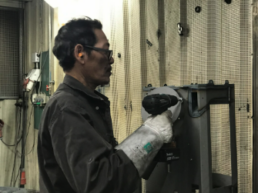
“We have, among other things, made a smoke ring that we had 3D printed, and it is very quick to see whether it fits, because normally that is something that has to be cast in cast iron, and there is a fairly long lead time from our supplier when he has to make prototypes, so it is clearly an improvement and an acceleration of the development process,” says Jakob Tophøj, Project Manager, HWAM.
And he is also in no doubt that this is something HWAM should continue working with.
Strategically, 3D printing can shorten HWAM’s lead time for many development products. Here, the company is also looking with interest at metal printing, with a wish to be able to make prototypes of their metal products without having to produce them first to see whether they fit together. This will provide a clear optimisation of their development time. But Jakob sees many possibilities once 3D printing has come through the door and you can print everything from auxiliary tools to everyday items, to production aids or whatever you need.
About the company
HWAM A/S
Nydamsvej 53, 8362 Hørning
Number of employees: 94
HWAM A/S is one of Denmark’s largest manufacturers of architect-designed, environmentally friendly wood-burning stoves.
The entire organisation has been watching the printing
Jakob says that the organisation has responded very positively to the printer, which has been printing away in the canteen, so every time people took a break, they would stand and watch very closely, follow what it was printing, and ask about it—so there has been a lot of interest.
In the long term, HWAM expects that this is something they will be able to save a lot of money and time on using—and it will be easy to test new ideas, even those that may initially seem a bit crazy, but which actually end up being a very good solution, or very good business.
Is your production setup a limitation—or a strength? And are there new opportunities?
Get input on how hybrid production can support your business strategy.
Denmark’s 3Shape makes the unattainable accessible to everyone
3Shape
Denmark’s 3Shape makes the unattainable accessible to everyone
With the mission “innovate to improve patient care”, 3Shape has taken the dental market by storm with technology that enables treatments and quality that would otherwise not be possible.

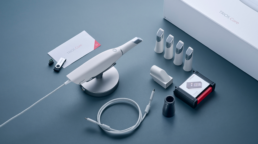
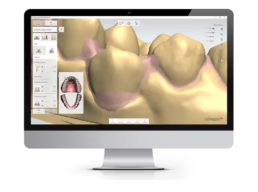
3Shape develops scanners and software that, combined with 3D printing, make treatments available that would otherwise be unattainable. Dentists get tools that enable them to create dentures, false teeth, and much more far more precisely, faster, and at lower cost.
3Shape’s story actually begins with hearing aids—or, more precisely, scanners for producing custom hearing aids. And with a contract with Widex, the foundation for the major growth success that 3Shape has become was already in place. The hearing-aid market has been turned completely upside down by 3Shape’s scanners and the industry’s 3D-printed production. From large factory halls with people in white coats using grinding machines—bending, painting, and gluing—to 3D printing and assembly of electronics, design, and software.
In 2005, 3Shape entered the dental market and has gone from being a start-up to having nearly 1,600 employees worldwide and a gross profit that increased by 6,721% from 2012 to 2016.
So what is it they can do?
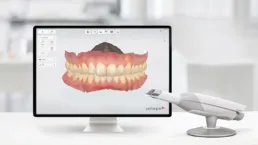
3Shape’s scanners and software, which can be used for, among other things, 3D printing, enable mass customization production—i.e., mass production of individual products. You can produce many units in a single day, yet they can all be different. For example, models of people’s teeth that used to be made as plaster impressions with many more steps and far greater inconvenience for the patient. So not only do you make production faster and cheaper; you improve quality for patients and, in a way, democratise the market, because more people will be able to afford dental work when it can be done using new methods.
The dental industry is not as quick to change as the hearing-aid industry. Dentists do many different things: braces, dentures, implants, bridges, crowns, etc. A great deal of this can be made with 3D printing, and if you ask David Fischer, Director of R&D Software at 3Shape, a great deal will be made with 3D printing in the future.
“New technology is coming in everywhere. All dentists will have a scanner—just like X-rays today. And once you have the scanner and it is easy to design the products, the next step is obvious: a 3D printer in the clinic, so you can produce on site.”
He adds that there will still be specialised products that need to be made in laboratories, but that the new technological possibilities will also change the labour market for dentists and technicians in the industry.
Is your production setup a limitation—or a strength?
And are there new opportunities?
Where does the workforce belong?
With traditional methods, there were many manual steps, and much of the work around teeth is handcrafted. These skills are built up over a long time, because much of it is in the hands when teeth have to be built and made to look as lifelike as possible.
So, in addition to getting a different product, there will also be a need for a different set of skills and labour.
And according to David Fischer, that is not a bad thing, because not many people train for the craft that was previously needed. Production is time-consuming, so a large part of it would be sent to China or other lower-cost countries anyway, and it therefore also takes longer than it does with scanning and 3D printing.
By introducing 3D printing into production, there is a need for different people and skills. You need to know something about computers and technology. But it is not a work of art that has to be in your hands.
“What we see today is a machine. It uses electricity and runs on its own. Then there is post-processing, but the overhead for that does not justify sending it to China. And that moves the work back to where the product is to be used,” says David Fischer.
For 3Shape and David Fischer, the advice to other companies about 3D printing is clear:
“3D printing sounds fancy. But it is relatively simple. You add material instead of removing it. If you are considering whether you could use 3D printing, the best advice is simply to go for it. It can easily be with one small printer to start with, but get employees involved—then new ideas emerge and you continuously gain new experience,” concludes David Fischer.
About the company
3Shape
Niels Juels Gade 13, 1059 Copenhagen
Number of employees: approx. 1,600
3Shape’s award-winning dental laboratory and intraoral scanners. Digital solutions for dental specialists that digitise dental care and improve the patient experience.
About 3Shape
- 3Shape was founded in 2000 by Tais Clausen and Nikolaj Deichmann.
- In 2017, the company generated revenue of DKK 1.56 billion, compared with DKK 942 million in 2016—growth of 60% in one year.
- Profit for 2017 was DKK 457 million after tax, corresponding to just under 30% of revenue.
- 95% of 3Shape’s sales are exports.
- 3Shape has offices and development departments in 20 countries.
- The hardware is produced at a factory in Poland.
- 3Shape has nearly 1,600 employees, of whom approximately one third work in research and development.
- In 2016, the Danish business daily Dagbladet Børsen named 3Shape the Gazelle Company of the Year, among other reasons because the company’s gross profit on dental equipment had increased by 6,721% over the past four years.
Is your production setup a limitation—or a strength? And are there new opportunities?
Get input on how hybrid production can support your business strategy.
HYTOR solves customers’ challenges through 3D printing
HYTOR A/S
HYTOR today comprises both HYTOR Fluid Solutions and HYTOR Tools Solutions. As an innovative, service-oriented group, it designs and engineers innovative system solutions based on hydraulics, and also sells process and instrumentation components through HYTOR Fluid Solutions, while HYTOR Tools Solutions focuses on the delivery, service, and calibration of specialised tool solutions.
Design, engineering, assembly, and testing are carried out in its own workshop. The company is also a certified service and calibration workshop for hydraulic and electric tools.
The product range includes the market’s best-quality products, meeting all safety and certification requirements. HYTOR is therefore currently certified to ISO 9001, ISO 14001, and OHSAS 18001.
Results from programmes with Dansk AM Hub
- Significantly shorter lead time—specifically, by a factor of four.
- Significant reduction in costs for the in-house solution
- Shorter and more efficient approval procedure.
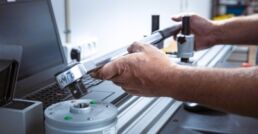
Through HYTOR Tools Solutions, the wind turbine industry is primarily serviced, as well as the supply chain, general industry, and the contracting sector, with specialised tools mainly within torque tightening technology, including torque tightening tools, lifting tools, tensioning tools, nut splitters, torque wrenches (65,000 Nm), and flange tools.
With a “mobile workshop” and trained service technicians, HYTOR Tools Solutions is able to service the customer on-site with repair, service, and calibration of specialised tools, and can also assist customers with particularly difficult tasks, primarily within wind turbine installation and servicing.
On this basis, HYTOR Tools Solutions acts as the customer’s problem-solver and is ready to modify existing solutions both from the headquarters in Esbjerg and on-site at the customer’s premises.
In close collaboration with Center for Industri, HYTOR Tools Solutions has initiated two different projects within torque tightening for the installation and servicing of wind turbines.
Project: COUNTER KEY
A changed need paved the way for a new development of counter-hold wrenches for bolts used when assembling nacelles for wind turbines. The concept was a user-friendly release counter-hold, which is not currently available on the market and therefore had to be created from scratch.
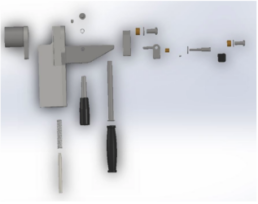
Technicians at HYTOR designed a prototype, which formed the basis for a 3D-print PROTOTYPING project. The design of the release counter-hold consisted of a total of 23 different components, including components such as springs, bolts, spacer and retaining rings, and rubber handles.
A MAKERBOT Replicator 3D printer was made available to HYTOR Tools Solutions by AM-HUB in collaboration with Center for Industri, so that the development and manufacturing process of the prototype release counter-hold was close to the developers.
The prototype release counter-hold (a proof of concept) for this highly complex special tool was produced in just a few days, which was crucial to the total time required to complete the development of the release counter-hold. Integrating 3D printing in the development phase made it possible to reduce the overall lead time from concept to actual tool by a factor of five. The total development cost amounted to one tenth compared with the costs of a conventional prototype—3D prototype printing compared with a prototype from a tool manufacturer.
Is your production setup a limitation—or a strength?
And are there new opportunities?
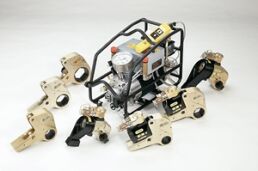
Project: HYDRAULIC TENSIONING TOOL
A modification of the tool in question was necessary to solve an issue that arose due to lack of space.
Using a scan of the existing special tool, a 3D model of the relevant tools was immediately produced, which could then be processed and adjusted on-site to achieve the correct design for the torque-tightening task within the space available around the bolt.
The customised 3D model became a decisive factor, and thus the basis for an actual modification of the specific tool. Based on the 3D model, the tool manufacturer could modify the special tool so that it matched the given torque-tightening task.
It took one week from the problem arising at the wind turbine manufacturer until HYTOR Tools Solutions arrived at a solution, without having to make use of the manufacturer. Not only was a significant time saving achieved, but the costs of the development process were one tenth of what the costs would have been for a new special tool, modified with a risk of damage.
In this case, a MAKERBOT Replicator 3D printer was also made available to HYTOR Tools Solutions by AM-HUB in collaboration with Center for Industri
About the company
HYTOR A/S
Guldborgsundvej 1, 6705 Esbjerg Ø
Number of employees: 23
HYTOR has decades of experience in special tools for torque tightening.
Conclusion
Both cases have demonstrated a significantly shorter lead time—specifically, by a factor of four—enabled by prototyping using 3D printing.
Furthermore, the costs associated with the in-house solution have been reduced significantly compared with the estimated costs associated with delivery from an external supplier.
The approval procedure, both internally and externally, has been short and the process has been efficient for the partner and not least the end customer.
Two cases in which the company sees many opportunities, both due to the rapid development phase and certainly also the costs associated with the development phase. At the same time, it has helped to reinforce an already strong collaboration between all parties.
Perspective
In both cases, prototyping was carried out using a loaned Makerbot Replicator printer from Dansk AM Hub / Center for Industri, which enabled the company to solve the task in its own workshop and at the same time obtain proof of concept with all stakeholders. A process that delivered major benefits both in terms of time and financially.
“It has been incredibly easy to work with the 3D printers; the software and materials are easy to use, and Center for Industri has provided valuable input regarding the possibilities and all the practical aspects.”
Klaus H. Rasmussen
HYTOR Fluid Solutions
“We see strong opportunities for using 3D printing in our continued collaboration with our customers; among other things, it gives us the opportunity to make product adjustments in collaboration with the manufacturer much faster than before.”
Anne Mette Lorentzen
Marketing Manager
Is your production setup a limitation—or a strength? And are there new opportunities?
Get input on how hybrid production can support your business strategy.
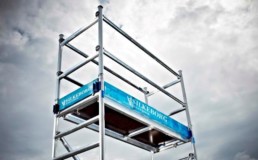
Silkeborg Stigefabrik reduces prototyping from four weeks to four days
Silkeborg Stigefabrik

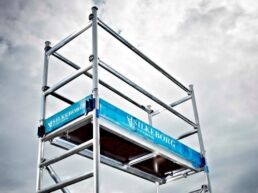
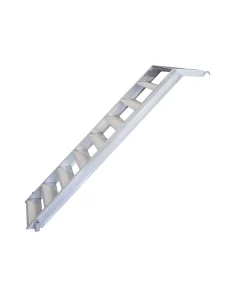
Alimak Group Denmark A/S is, through its brand Silkeborg Stigefabrik, Denmark’s largest supplier of ladders in wood, aluminium and fibreglass, as well as mobile lifts, scaffolding and bespoke solutions.
In addition to professional ladders for, among others, tradespeople, window cleaners and chimney sweeps, Silkeborg Stigefabrik also offers a wide range of products for private customers. The Silkeborg Stigefabrik brand has Denmark’s largest selection of ladders, scaffolding and stairways—and works with the leading manufacturers in the Nordic region, who ship the goods directly from the factory to your front door. In addition to the private segment, the markets are generally industry, contractors, building trades and the wind industry.
Project background
In recent years, Alimak Group Denmark A/S has had plastic components produced by external suppliers in the Far East, including India. Alimak Group Denmark A/S does not develop its prototypes in-house, as it does not have a machine set-up capable of handling these tasks. Alimak Group Denmark A/S has therefore sought a process—development/manufacture of a prototype/proof of concept—that can shorten lead time ahead of tooling and the final physical version.
Until now, the prototype task and responsibility have rested with Alimak’s Indian subcontractor, and the company has therefore been dependent on long delivery times for a given prototype—up to 4 weeks. It has also often turned out that the prototype in question was not quite as expected. As a result, a further 4 weeks has frequently been added to the process before the final prototype reached final approval in Silkeborg.
Results from programmes with Dansk AM Hub
- Reduced lead time: From 4 weeks to 2–4 days (minimum 85.7% reduction)
- Estimated cost reduction of approx. 50%
The process
Alimak Group Denmark A/S receives a 3D CAD file from a customer. Based on this file, Alimak now produces a 3D print of the part, which is sent to the customer. The prototype is evaluated by the customer, who either approves it or indicates changes and corrections, which are then made in the drawing file. Alimak Group Denmark A/S then produces another 3D print for final approval by the customer.
Is your production setup a limitation—or a strength?
And are there new opportunities?
The process
In collaboration with the programme through Dansk AM Hub, Center For Industri and Alimak initiated a joint development project focusing specifically on PROTOTYPING. The company was provided with a Makerbot Replicator 3D printer as part of its technology assessment process.
At Alimak, a technology assessment was therefore carried out first. Here, four items (within the main areas of development/prototyping, production/AM and tooling) were selected to be included in this process. Files, drawings, cost calculations, etc. were included in the preparation of the technology assessment analysis. Alimak printed parts in-house on a Makerbot Replicator 3D printer and benchmarked this against external execution and conventional manufacturing technology.
During the process, Alimak was able to work with files received from customers—for 3D printing and to carry out proof-of-concept tests. With 50% infill, print time is 3–4 hours to manufacture the component.
About the company
Silkeborg Stigefabrik
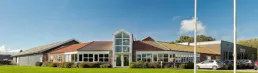
Adidasvej 2, 8653 Them
Number of employees: 14
Alimak Group Denmark A/S is, through its brand Silkeborg Stigefabrik, Denmark’s largest supplier of ladders in wood, aluminium and fibreglass, as well as mobile lifts, scaffolding and bespoke solutions
Benefits
This programme can be completed over 2–4 days, thereby reducing lead time compared with the original process of up to 4 weeks. In addition, during the process Alimak can adjust design parameters such as design, infill and material selection, etc., if necessary to increase strength, heat tolerance, etc. of the 3D-printed component.
In addition to the time-related benefits, there is also an estimated cost reduction of 50%.
“We were able to complete the 3D printing process and deliver a 3D-printed component to the customer in 3–4 days—where it would normally take up to 4 weeks.”
Henrik Gadgaard, Production/Purchasing Manager, Silkeborg Stigefabrik
In addition to the direct value creation at Alimak mentioned above, greater value is also created for Alimak’s customers, as well as strategic value for Alimak through a stronger relationship with the customer.
Following the TRY-OUT programme, the company’s management made a strategic decision to acquire its own 3D printer for the business in Silkeborg.
Is your production setup a limitation—or a strength? And are there new opportunities?
Get input on how hybrid production can support your business strategy.
A new way of thinking
Johs. Pedersen A/S

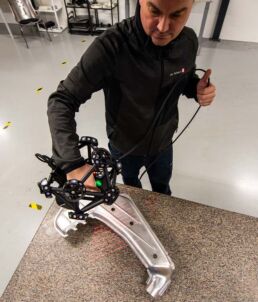
When Johs. Pedersen decided to get started with 3D printing, their focus was on metal printing, as they primarily produce metal spare parts. They went through a programme at Dansk AM Hub with Danfoss, got answers to many questions, and gained the confidence to begin exploring the technology gradually, without major investments.
When Johs. Pedersen had the opportunity to borrow a 3D printer from Dansk AM Hub for one month through 3DP Try Out, they began printing and drawing on the experience they had gained from the AM Inspire programme.
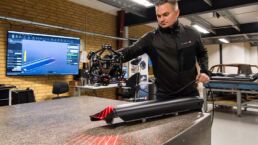
Since then, 3D printing has truly become established at Johs. Pedersen, who have not only purchased a 3D printer, but also set up their own 3D printing centre in the 43-year-old machine factory.
They print models and holding fixtures, and it has generated great enthusiasm within the company.
Is your production setup a limitation—or a strength?
And are there new opportunities?
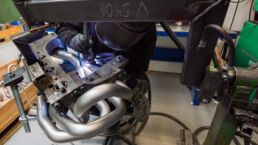
“It changes your mindset and gives you a different way of thinking,” says Jesper Knudsen, Head of Technical Department at Johs. Pedersen.
According to Jesper Knudsen, using 3D printing saves both time and money, and also opens up a world of possibilities for what can be produced going forward.
About the company
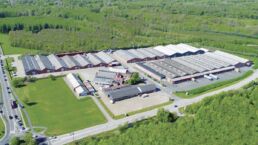
Johs. Pedersen A/S
Hjulmagervej 2, 8800 Viborg
Number of employees: 49
Johs. Pedersen A/S is a modern Danish machine factory equipped with advanced machining and assembly facilities.
About Johs. Pedersen
The JP Group has been a 100% family-owned company since its establishment in 1975.
They are engaged in the production of sheet-metal parts, exhaust systems, and oil and petrol tanks for the automotive industry. The products are sold partly via JP Group A/S and partly directly to the classic-car divisions of major car manufacturers, including Porsche and Mercedes. Manufacturing and refurbishment of interior components for the rail industry.
Is your production setup a limitation—or a strength? And are there new opportunities?
Get input on how hybrid production can support your business strategy.